
By Agha Iqrar Haroon
As Pakistan has redefined its Afghan policy amid changing geopolitical realities, reports coming from KP suggest that the local Pashtun population has stood against TTP, Afghans and Afghan Taliban and is now asking them to leave Pakistan. The evolving dynamics between Pakistan’s Pashtuns and Afghan (refugees) reveal the deep socio-economic and psychological scars left by decades of regional conflict. The Afghan Jihad, once considered a triumph of faith and strategy, has transformed into a burden borne disproportionately by Pakistan, particularly its border communities.
Around July 2021, officials sitting in cozy offices in Islamabad started stressing that Afghan Taliban had changed and “new” Taliban had given up on their hardline approach of Mullah Omar and were endorsing tolerance and coexistence. However, journalists such as me who had been covering the Afghan issue since the early 1980s were not ready to buy this ‘new narrative’ because several like me know the history of Afghans and Afghan Taliban and learn from history. Alas, Pakistan’s bureaucracy always promotes the ‘forget past and move on’ phrase that historically is very dangerous. History cannot be forgotten, and nobody can move forward by disengaging historical perspective and lessons except the majority of policymakers sitting in Islamabad. We are fond of ‘writing’ history of our own choice that usually has no connection with ground realities, and that is why this practice results in more disasters than before. For the first time in Pakistan, after losing billions of dollars’ economy, peace of the society and population over half a million (over 100,000 since 2006 and over 400,000 during Afghan Jihad (booby trap season), Pakistan as a state is accepting and promoting historic realities of Pakistan-Afghan relationship. Thank God sanity prevails. This all is happening due to blunt acts of Afghans and the Afghan Taliban regime, that adopted traditional approaches to manipulate rather fabricate the Durand Line issue, turning a blind eye to the safe havens of anti-Pakistan terrorist groups, failure of the Taliban in establishing an inclusive government, allowing women’s equal access to education and employment opportunities, and protecting religious and ethnic minorities worried the policymakers in Islamabad and other neighboring nations. The greatest victim of pseudo actions of the last 45 years is Pakistan’s Pashtun population that is now standing to reclaim their social and economic status that they lost under the dust of “Afghan Jihad”.
This writer will try to examine the evolving relationship between Pakistan’s Pashtun population and Afghan refugees, particularly in the Khyber Pakhtunkhwa (KP) and former Federally Administered Tribal Areas (FATA). Historically, Afghan migration (Ansar-Mohajireen rhetoric) during and after the Soviet–Afghan War (1979–1989) reshaped the socio-economic landscape of Pakistan’s border regions.
“My grandfather told us we protected Pakistan from Afghan aggressions since independence. But everything changed after Pakistan launched the Afghan Jihad. Since then, we have become second-class citizens, while Afghans enjoyed state privileges.”
Current developments including Pakistan’s repatriation campaign of undocumented Afghans in 2023–2025 reflect a significant policy and social shift. Available information, UN reports, field interviews with the local population overtly expressing economic grievances, and growing anti-Afghan sentiment and local resistance.
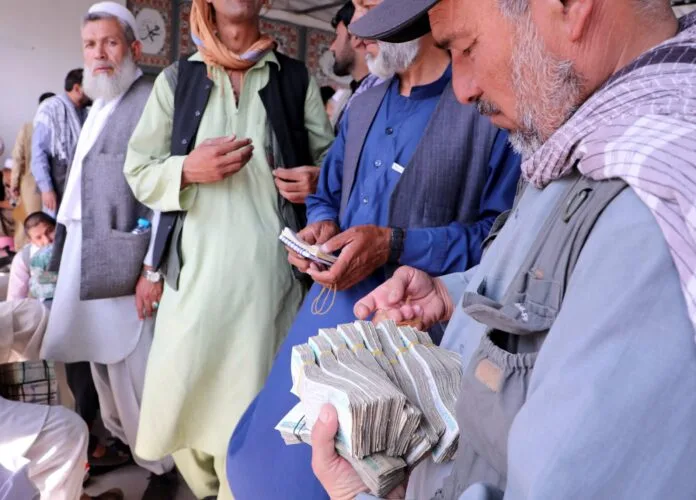
The relationship between Afghan refugees and Pakistan’s Pashtun communities has been defined by complex layers of shared ethnicity, religious solidarity, and political manipulation. For decades, Afghan refugees were portrayed as “brothers in faith,” especially during the anti-Soviet Jihad. Recent reports indicate that locals in these regions have become increasingly vocal against the continued presence of Afghans, accusing them of consuming limited local resources, engaging in crime, and undermining community stability. These tensions coincide with Pakistan’s new policy to expel over 1.7 million undocumented Afghans by 2025 (Government of Pakistan, Ministry of Interior, 2023). For many local Pashtuns, economic penetration of Afghans represented economic displacement of Pakistani Pashtuns. Traditional Pashtun traders lost control over key sectors particularly the transport business, dry fruit trade, and smuggling routes previously central to their livelihoods. Analysts such as Harrison (2009) and Fair (2014) argue that this dynamic contributed to the marginalization of local Pashtuns, who perceived themselves as “dispossessed in their own homeland.”
Unverified but recurring reports from districts such as Bajaur, Kurram, and North Waziristan describe incidents of local resistance against Afghan nationals and Taliban affiliates. Some locals reportedly blocked the movement of armed Afghan Taliban members, demanding their withdrawal from Pakistani territory. Because both sides are heavily armed, potential clashes have been avoided so far, though the environment remains volatile (Dawn, 2025).
In one reported case, the family of an abducted trader in Bajaur retaliated by kidnapping relatives of a local Tehreek-e-Taliban Pakistan (TTP) commander—an incident reflecting the breakdown of traditional authority and the emergence of community-led retribution. Locals argue that the KP government’s soft stance for the last 10 years toward Afghans has allowed criminal networks to thrive. Alleged involvement of Afghan groups in narcotics trafficking, extortion, timber smuggling, and land grabbing has been cited as major causes of resentment (International Crisis Group, 2023).
The majority of the Pashtun population trace the roots of their dissatisfaction to the state’s Afghan policy during the 1980s, when Afghan Mujahideen and refugees were portrayed as strategic assets. Over time, this created a dual hierarchy within Pashtun society: Afghans with state backing, and local Pashtuns suffering under security operations, economic neglect, and political disenfranchisement.
As one young resident from Bajaur, Zaryab Gull, expressed:
“My grandfather told us we protected Pakistan from Afghan aggressions since independence. But everything changed after Pakistan launched the Afghan Jihad. Since then, we have become second-class citizens, while Afghans enjoyed state privileges.”
This generational narrative underscores how historical grievances have evolved into ethno-political consciousness, transforming the local perspective on the Afghan presence.
Meanwhile, the Afghan Taliban regime has sought to manipulate the situation through social media propaganda. Official and semi-official Afghan accounts portray Pakistan’s military establishment as the sole antagonist while attempting to appeal to Pashtun unity across the border. This campaign aims to create divisions between the Pashtun population and the Pakistani state, a tactic consistent with hybrid warfare strategies observed since 2021 (SIGAR, 2024).
However, grassroots sentiment across KP suggests that discontent is community-driven rather than state-imposed. Ordinary Pashtuns express frustration over decades of economic loss, security instability, and demographic pressures stemming from Afghan settlement.
The only silver lining in the whole situation is that in 2023, Pakistan launched a formal repatriation policy for undocumented Afghans, citing security and demographic concerns. The Ministry of Interior (2023) reported that as of October 2025, more than 1 million Afghans had voluntarily returned, while another 600,000 faced deportation. For local Pashtuns, this campaign represents a long-overdue correction of demographic imbalance and an opportunity to reclaim control over regional trade and labor markets.
References
Dawn. (2025). Locals resist presence of Afghan Taliban in border districts. Karachi: Dawn Media Group.
Fair, C. C. (2014). Fighting to the End: The Pakistan Army’s Way of War. Oxford University Press.
Giustozzi, A. (2008). War, Politics and Society in Afghanistan, 1978–1992. Georgetown University Press.
Government of Pakistan, Ministry of Interior. (2023). National Policy on Illegal Foreigners and Repatriation Plan. Islamabad.
Harrison, S. S. (2009). Pakistan: The State of the Union. Woodrow Wilson International Center for Scholars.
Human Rights Watch. (2024). Pakistan: Halt Mass Deportations of Afghans. New York.
International Crisis Group. (2023). Pakistan’s Border Turmoil: Managing Afghan Refugees and Militancy. Brussels.
Rashid, A. (2000). Taliban: Militant Islam, Oil and Fundamentalism in Central Asia. Yale University Press.
SIGAR (Special Inspector General for Afghanistan Reconstruction). (2024). Quarterly Report to the United States Congress. Washington, D.C.
UNHCR. (2022). Afghan Refugee Situation in Pakistan: Statistical Overview. Geneva.
UNHCR. (2024). Pakistan: Return and Repatriation Updates. Geneva.
