
Monitoring Desk: U.S. Representative Chip Roy (R-Texas) has introduced a controversial piece of legislation titled the Measures Against Marxism’s Dangerous Adherents and Noxious Islamists (MAMDANI) Act of 2026, proposing sweeping changes to U.S. immigration policy.
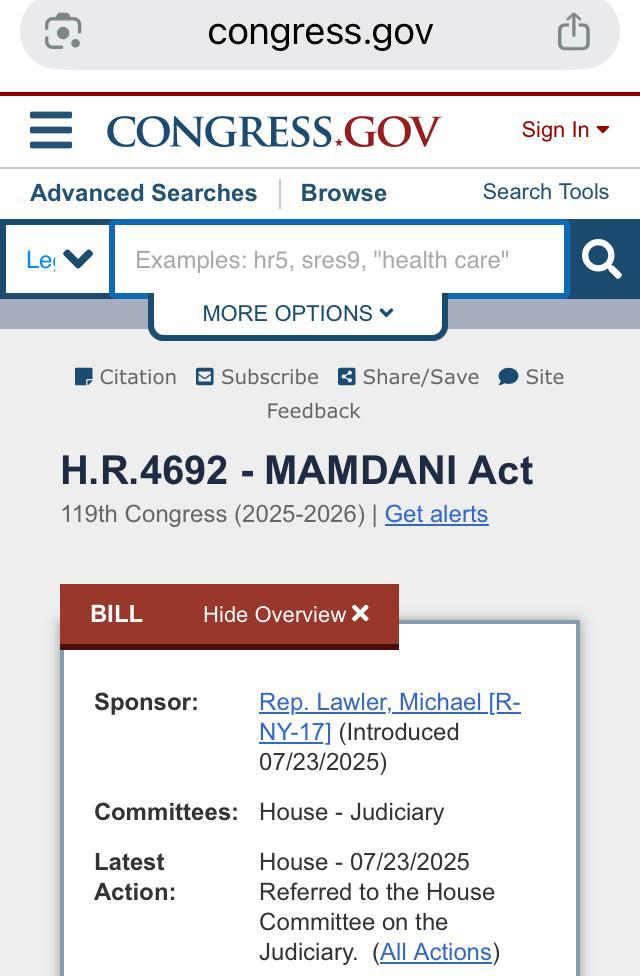
According to a press release issued by Roy’s office, the bill seeks to expand the grounds for denying entry, citizenship, or residency in the United States to individuals associated with or advocating for certain political or religious ideologies. These include socialism, communism, Marxism, and what the bill defines as “Islamic fundamentalism.” The legislation would also allow for the denaturalization and deportation of individuals already in the country under such classifications.
The proposed law outlines new definitions for the targeted ideologies and aims to close what it describes as loopholes in the current immigration system. Among these are provisions addressing chain migration and alleged fraudulent immigration claims, which the bill’s proponents argue have enabled the entry of individuals with views deemed hostile to American values.
In a statement, Rep. Roy criticized long-standing immigration practices, arguing that they have undermined American workers and contributed to the spread of ideologies he described as incompatible with the U.S. Constitution. “Admission to the United States is a privilege, not a right,” Roy said, adding that the country should not admit individuals who seek to “undermine the Constitution” or “dismantle our republic.”
The bill has received backing from advocacy groups such as the Immigration Accountability Project. Grant Newman, the organization’s Director of Government Relations, expressed support for the proposal, stating that national security and the preservation of American institutions should be prioritized in immigration policy.
However, the legislation is expected to face significant opposition from civil rights organizations and immigration advocates, who argue that such measures could infringe on constitutional protections, including freedom of speech and belief, and lead to discrimination based on political or religious affiliation.
The MAMDANI Act’s prospects in Congress remain uncertain, as it is likely to spark intense debate over the balance between national security, civil liberties, and immigration reform.

