
DND News Agency
Madrid: A series of international discussions in Madrid, alongside strong statements from France and Germany, have intensified pressure on the Afghan Taliban over their treatment of women and girls, questions surrounding the legitimacy of their rule, and the international community’s engagement with the group despite its continued human rights violations.
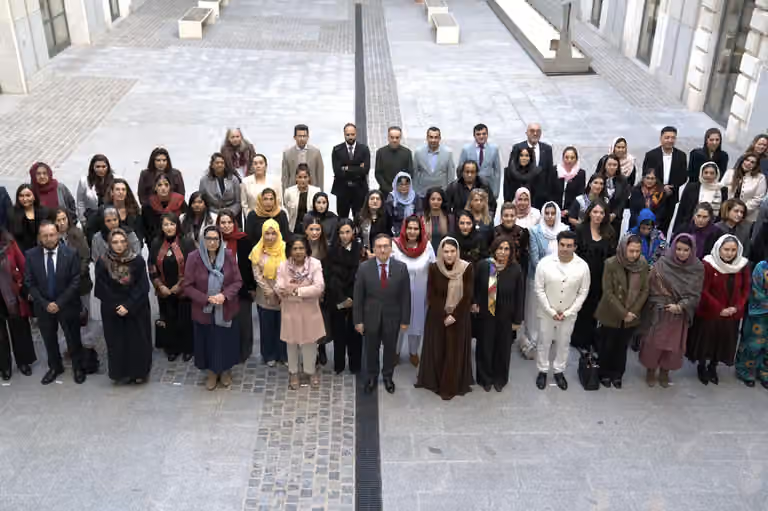
The fourth HearUs Summit, also known as “Hear Our Voices,” and the 12th round of the Herat Security Dialogue concluded in Madrid with participants raising serious questions about the roles of the United Nations, the Organisation of Islamic Cooperation (OIC), the European Union and the United States in addressing the Taliban’s policies and continued restrictions on Afghan women.
“Madrid talks intensify international pressure on Taliban over gender apartheid, human rights violations”
The conference on Afghan women’s rights was held in Madrid, Spain, on November 22–23, 2026, with discussions and related political engagements continuing through November 27. Organised by Spain’s Ministry of Foreign Affairs in partnership with Women for Afghanistan (WFA), the gathering brought together Afghan women leaders, human rights advocates, former lawmakers, UN officials and international diplomats.
Held under the theme “Afghan Women’s Leadership in Achieving Justice and Peace through Accountability,” the summit focused on the systematic exclusion of women and girls under Taliban rule and the international community’s response to violations of fundamental rights.
Participants urged the international community to recognise gender apartheid as an international crime, particularly through its inclusion in the proposed UN Convention on the Prevention and Punishment of Crimes Against Humanity. They also called for stronger accountability mechanisms against those responsible for systematic persecution, forced marriages and the institutionalised exclusion of women from education, employment and public life.
Several participants raised concerns that the international community’s engagement with the Taliban was indirectly strengthening the group’s position despite its conduct towards Afghan citizens.
Particular criticism was directed at the United Nations Assistance Mission in Afghanistan (UNAMA) over what participants described as its silence regarding the Taliban’s treatment of Afghan women, the alleged use of civilians as human shields by Tehreek-e-Taliban Pakistan (TTP), and the promotion of narratives associated with the Afghan Taliban.
Participants also questioned the special treatment allegedly extended by the United Nations to Taliban leaders subject to international sanctions. They referred to travel exemptions granted to Taliban leadership, including a latest exemption reportedly secured by Sirajuddin Haqqani to perform Umrah despite the international travel restrictions imposed on him under UN sanctions.
The role of the OIC also came under scrutiny, with participants urging Muslim countries to challenge the Taliban’s restrictions on girls’ education, arguing that denying women and girls the right to education contradicts Islamic teachings.
They further questioned the diplomatic engagement maintained by some OIC member states with the Taliban without formally recognising its government, arguing that such engagement could encourage the group to continue its existing governance practices.
The United States was also urged to review its policy towards the Taliban, particularly the reported weekly cash assistance of approximately $40 million. Participants called for a reassessment of the Doha Agreement, arguing that its commitments included the formation of an inclusive government and guarantees concerning women’s education and human rights.
Spanish Foreign Minister José Manuel Albares rejected any path towards recognising the Taliban, while UN Special Representative Pramila Patten condemned the institutionalisation of women’s exclusion from Afghan society.
Former Icelandic Prime Minister Katrín Jakobsdóttir also introduced the “One Million Signatures” global solidarity campaign to mobilise international support for Afghan women.
Madrid political dialogue seeks common ground among Afghan opposition groups
Alongside the HearUs Summit and Herat Security Dialogue, Madrid also hosted the third round of political talks involving Afghan political figures, former government officials, civil society representatives and activists to discuss the country’s political future.
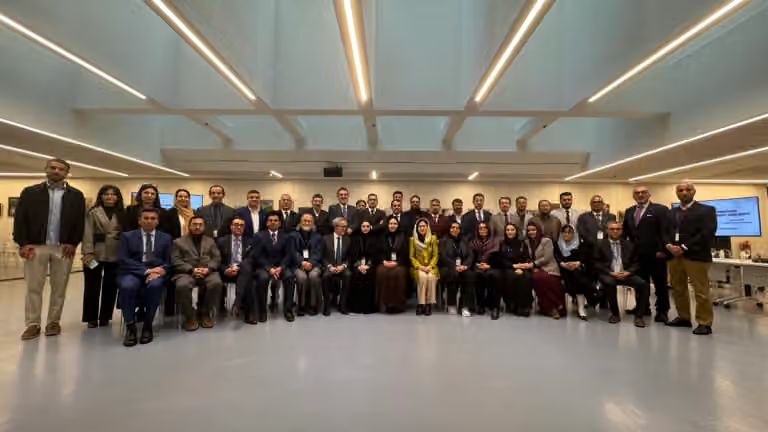
The one-day meeting began at Spain’s Ministry of Foreign Affairs on November 25, focusing on building trust and solidarity among different Afghan political and civil society groups.
Organised by Women for Afghanistan, led by former deputy speaker of Afghanistan’s House of Representatives Fawzia Koofi, the discussions examined possible scenarios for Afghanistan’s future and the opportunities and challenges associated with each.
The organisers said the dialogue aimed to strengthen trust among political and civil society groups and identify common ground for cooperation towards peace and an inclusive political system.
Discussions covered human dignity, women’s rights and meaningful participation in decision-making, inclusive governance, the rule of law, justice and respect for Afghanistan’s ethnic and social diversity.
Participants included former ministers, parliamentarians, diplomats, academics, researchers, religious scholars and independent civil society activists.
Among those attending were former Higher Education Minister Abbas Basir, former Economy Minister Mustafa Mastoor, political activist Hussain Yasa, International Union of Muslim Scholars member Fazl Hadi Wazin, High Council of National Resistance for the Salvation of Afghanistan spokesperson Abdullah Qarluq, former deputy Senate speaker Mohammad Asif Sediqi and university professor Nazif Shahrani.
Other participants included Afghanistan’s Ambassador and Permanent Representative in Geneva Nasir Ahmad Andisha, former Afghan ambassador to Canada Barna Karimi, former Deputy Minister of Women’s Affairs Nabila Mosleh, Citizens’ Party of Afghanistan leader Zakir Hussain Ershad, former senator Rahela Dostum, former spokesperson for Abdullah Abdullah Mujib Rahman Rahimi, former Labour and Social Affairs Minister Anwar Sadat and former Communications and Information Technology Minister Masouma Khawari.
The Madrid political engagement was aimed at encouraging cooperation among diverse Afghan groups to establish an inclusive and democratic political system.
France declares Taliban policies gender apartheid
The international criticism of the Taliban was further reinforced by France, where Foreign Minister Jean-Noël Barrot described the group’s policies towards Afghan women and girls as gender apartheid, calling them the worst form of segregation against women and girls in the current century.
Speaking at the French National Assembly on November 24, Barrot condemned the systematic exclusion of Afghan women and girls from education, employment, healthcare and public life.
He described their treatment under Taliban rule as an inhumane ordeal and reaffirmed France’s solidarity with Afghan women and girls, assuring them that they had not been forgotten.
France joined Spain and several other European countries in describing the Taliban’s treatment of women as gender apartheid.
Barrot said France would work towards recognising gender apartheid as a distinct international crime during negotiations on the future Convention on the Prevention and Punishment of Crimes Against Humanity.
The term gender apartheid refers to an institutionalised system of discrimination, oppression and domination in which authorities systematically deprive people of fundamental rights on the basis of gender. In the Afghan context, it describes the Taliban’s discriminatory laws, decrees and policies that exclude women and girls from education, employment and public life.
Human rights advocates and UN experts have called for the recognition of gender apartheid as a distinct crime against humanity, arguing that such a step would acknowledge the institutionalised nature of gender-based oppression and strengthen legal mechanisms to hold perpetrators accountable.
Barrot also announced additional French assistance for Afghan women and girls. He said France had provided €187 million in humanitarian assistance over the previous five years, guided by the principle of delivering aid by and for Afghan women, and would increase its support in response to deteriorating conditions.
France will welcome another 50 Afghan female students from January 2027 and award 35 merit-based scholarships in September 2027. According to French parliamentary broadcaster LCP, Barrot also announced plans to welcome a further 200 Afghan women in 2027.
He said France would strengthen its diplomatic presence in the region to facilitate their admission.
France and Germany rule out recognition of Taliban
Barrot’s remarks also addressed concerns over possible contacts between France and Taliban representatives.
Responding to a question from Green Party MP Léa Balage El Mariky, who challenged the government over an anticipated visit by two Taliban representatives to France, Barrot maintained that French engagement with the group was strictly technical and did not amount to approval or diplomatic recognition.
The proposed visit was reportedly intended to discuss the deportation of Afghan nationals. The lawmaker questioned whether the government was compromising the rights of Afghan women in pursuit of its deportation policy and demanded disclosure of the identities of the Taliban representatives and details of their proposed visit.
Although Barrot did not disclose those details, he confirmed that France intended to expedite the deportation of Afghan nationals without legal residency who were considered to pose the most serious threats to public order.
Germany also reiterated its position against recognising the Taliban as Afghanistan’s legitimate government.
German Foreign Minister Johann Wadephul said on November 24 at the Berlin Foreign Policy Forum that Germany did not maintain formal diplomatic relations with the Taliban and did not recognise the group as the country’s legitimate political authority.
He argued that the Taliban had not come to power through legitimate means and said Germany maintained only limited engagement with the group on consular matters.
Wadephul stressed that Berlin continued to work to ensure the Afghan population’s access to humanitarian assistance but considered conventional diplomatic relations with Afghanistan impossible under the prevailing circumstances.
The statements from France and Germany, together with the discussions in Madrid, reflect growing European criticism of the Taliban’s treatment of women and the distinction several governments are drawing between limited technical or humanitarian engagement and formal political recognition.
The Madrid gatherings also brought renewed attention to questions about the effectiveness of international policies towards Afghanistan, particularly the role of the United Nations, the OIC and the United States in ensuring that engagement with the Taliban does not undermine human rights, accountability and the rights of Afghan women and girls.

