
DND Special Report
Security forces and the Pakistan Army are gaining ground in troubled areas of Khyber Pakhtunkhwa (KP), particularly along the Pakistan-Afghanistan border, as intensified counterterrorism operations have put terrorist networks under mounting pressure following the imposition of emergency and Governor’s Rule in the province.
Over the past 30 days, from October 20 to November 19, 2026, security forces have conducted a series of successful intelligence-based operations (IBOs) across KP, killing scores of terrorists belonging to Indian-sponsored Fitna al-Khwarij, the designation used by Pakistan for the Tehreek-e-Taliban Pakistan (TTP) and associated terrorist networks.
The operations have targeted terrorist hideouts, weapons depots, explosives manufacturing facilities and clandestine installations in South Waziristan, North Waziristan, Mir Ali, Bannu, Tank, Orakzai, Kurram, Peshawar and Dera Ismail Khan.
Security circles believe that the imposition of Governor’s Rule has facilitated improved coordination between federal authorities, the civil administration and security institutions, allowing security forces greater operational space to pursue terrorists and dismantle their infrastructure. They argue that the security apparatus can now conduct operations more effectively, unlike during the previous PTI provincial government, when, according to these circles, terrorists enjoyed sufficient operational freedom and deep-rooted connections within KP provincial government had been facilitated information to terrorists before operations of security forces.
The federal government imposed emergency measures and Governor’s Rule in KP on October 11, 2026, invoking Articles 232 and 234 of the Constitution. It maintained that the measures were necessary to address deteriorating security conditions, strengthen federal-military coordination and restore peace.
Despite the political disagreement, the succession of military operations during the past month reflects an intensified campaign against terrorist networks, with security forces increasingly targeting not only terrorists but also the infrastructure sustaining their activities. Terrorists had access to illegal goldmining also in Kohat where 90kg plus gold was excavated monthly and sent to Afghanistan. One can say that Pakistan’s goldmines were also at the disposal of terrorists under the direct protection of PTI previous provincial government.
The latest major success was reported by the Inter-Services Public Relations (ISPR) on November 19, following multiple engagements conducted on November 16 and 17.
According to the military’s media wing, security forces killed 22 terrorists belonging to Indian-sponsored Fitna al-Khwarij in South Waziristan, Bannu and Tank districts.
On the reported presence of Khwarij, security forces conducted an intelligence-based operation in South Waziristan District. During the operation, troops effectively engaged terrorist positions and, following an intense exchange of fire, killed 15 terrorists.
In two separate encounters in Bannu District, security forces engaged terrorist hideouts, neutralising six of them through precise and skilful engagements. Another terrorist was killed in an encounter in Tank District.
Weapons and ammunition were recovered from the slain terrorists, who had been actively involved in numerous terrorist activities in their respective areas.
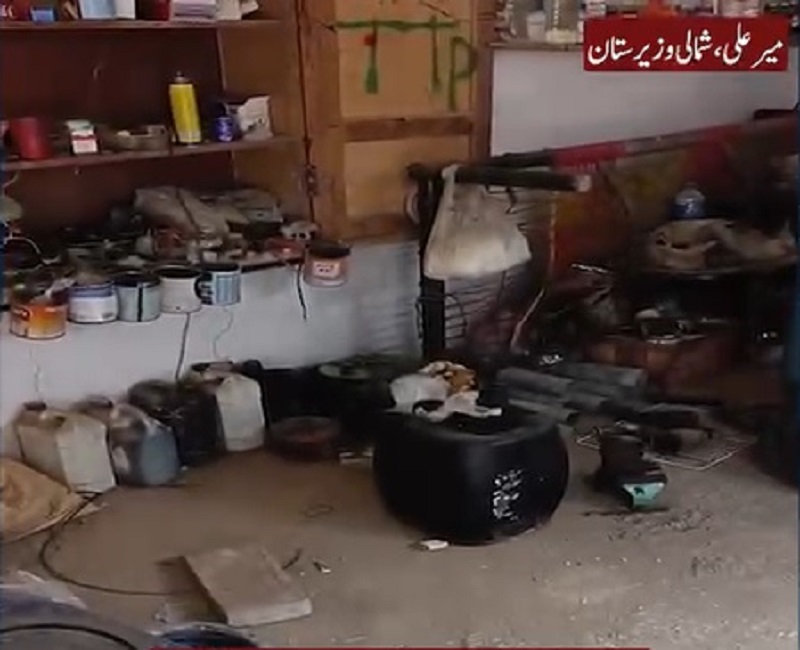
Explosives manufacturing facility uncovered in Mir Ali
In another significant development, security forces uncovered a large, organised facility used by Fitna al-Khwarij for manufacturing explosives, dealing a major blow to the terrorist network. A US manual of weapons was also recovered from the laboratory.
The clandestine laboratory had been established inside civilian residential houses to conceal its activities and avoid detection. Security forces discovered the facility before it could be used for further terrorist activities, averting a potential large-scale catastrophe in the area.
Establishing explosives factories and storing bomb-making materials in densely populated civilian areas is part of the terrorist organisations’ strategy of using ordinary people as human shields. Such practices expose innocent residents, including women and children, to potentially devastating consequences.
Stockpiling explosives in residential areas of Mir Ali is not a new tactic for Fitna al-Khwarij. Similar clandestine caches have previously resulted in devastating explosions and mass casualties, claiming the lives of innocent children, women and other civilians.
The terrorists have repeatedly demonstrated disregard for local customs, social values and human life by establishing operational facilities in residential neighbourhoods and places where ordinary citizens live and even inside mosques.
Mir Ali residents reject terrorists and refuse to claim their bodies
The ongoing operations have also highlighted growing public resentment against terrorist organisations in areas that have suffered prolonged violence and intimidation.
Residents of Mir Ali have reportedly reached the limit of their patience with Fitna al-Khwarij and are standing alongside security forces in their efforts to restore peace.
The public rejection of terrorists has reportedly reached such an extent that local residents have categorically refused to participate in the funeral rites of slain Khwarij. Even the parents of some terrorist facilitators have reportedly disassociated themselves from the criminal activities of their offspring and refused to claim or bury their bodies.
Following the refusal of families and local residents to claim the bodies, the district administration was compelled to bury the slain terrorists in unmarked graves.
The development reflects the growing social isolation of terrorist elements in the region and the resentment of communities that have endured years of militancy, intimidation and violence.
16 terrorists killed in North Waziristan; two soldiers martyred
On November 14, security forces killed 16 terrorists during a series of intelligence-based operations in North Waziristan District, while two Pakistan Army soldiers embraced martyrdom.
Security forces targeted multiple locations in Mir Ali, Datta Khel and surrounding areas. During an intense exchange of fire in Ali Khel, troops killed 12 terrorists, including two Afghan nationals. Another two terrorists each were neutralised in separate engagements in Mir Ali and Datta Khel.
The operations dealt a significant blow to terrorist networks operating in the region, although the martyrdom of two soldiers highlighted the sacrifices being made by security personnel in confronting entrenched terrorist groups.
43 terrorists eliminated in North Waziristan and Orakzai
On November 13, security forces reported another major achievement, killing 43 terrorists in KP over a 48-hour period.
Of the 43 terrorists eliminated in KP, 35 were killed during engagements targeting Fitna al-Khwarij hideouts in Mir Ali, North Waziristan. In a separate operation in Orakzai District, security forces killed another eight terrorists.
During subsequent clearance operations, troops recovered large caches of weapons, ammunition and explosives, exposing the scale of terrorist infrastructure established in these areas.
Terrorist hideouts and torture cells exposed in Mir Ali
On November 8 and 9, security forces conducted an intelligence-based operation in Muzak village, on the southern outskirts of Mir Ali in North Waziristan, targeting two terrorist hideouts established inside mosques.
According to ISPR, terrorists had been using the places of worship to store prepared improvised explosive devices (IEDs), bomb-making materials, weapons and ammunition. The premises were also being used as torture cells.
Security forces sanitised the locations and initiated follow-up clearance operations.
The discovery exposed the exploitation of religious places by terrorist organisations for criminal and operational activities, putting worshippers and surrounding communities at risk.
Operations intensified in Kurram and Bannu
Between November 3 and 7, security forces continued intelligence-based operations in Kurram District, targeting terrorist sanctuaries close to the Pakistan-Afghanistan border. The operations, initiated on November 3, were aimed at clearing areas being used by terrorist networks for movement, concealment and other activities.
Separately, on November 7, security forces conducted a targeted raid in Bannu District, killing four terrorists and recovering weapons.
These operations formed part of the broader effort to dismantle terrorist infrastructure and prevent terrorists from using border-adjacent districts as safe havens.
CTD operation in Peshawar
On October 29, security forces and the Counter Terrorism Department (CTD) conducted a joint intelligence-based operation in the Akhun Baba Graveyard area of Peshawar.
Supported by aerial surveillance, ground troops engaged terrorist elements, killing five terrorists. Several suspects were also arrested, while weapons and ammunition were recovered.
On the same day, Director General ISPR Lieutenant General Ahmed Sharif Chaudhry, during a media session in Peshawar, reaffirmed that intelligence-based operations in KP would continue until terrorism was completely eliminated.
Six terrorists killed in Dera Ismail Khan; two soldiers martyred
Earlier, on October 26, security forces conducted an intelligence-based operation in Dera Ismail Khan District, killing six terrorists.
Two Pakistan Army soldiers embraced martyrdom during an intense exchange of fire. Following the engagement, sanitisation operations were launched to clear the area of remaining terrorist threats and prevent terrorists from regrouping.
Counterterrorism campaign continues under Azm-e-Istehkam
The operations conducted between October 20 and November 19 represent an intensified phase of Pakistan’s counterterrorism campaign under the broader vision of Azm-e-Istehkam.
The successive engagements have targeted terrorist leadership, hideouts, weapons storage locations, explosives manufacturing facilities, torture cells and logistical networks. Recoveries of weapons, ammunition and explosives, alongside the discovery of clandestine manufacturing installations in civilian residential areas, have exposed the infrastructure supporting terrorist activities.
The involvement of Afghan nationals in terrorist networks was also evident from the November 14 operation in Ali Khel, where two Afghan nationals were among the 12 terrorists killed.
Meanwhile, the reported refusal of Mir Ali residents and families to claim the bodies of slain terrorists reflects the growing resentment against terrorist organisations among communities that have suffered from their activities.
Security forces are increasingly focusing on dismantling the infrastructure, supply chains, explosives manufacturing facilities and logistical arrangements that enable militancy to survive.
The stated objective of the ongoing campaign remains the complete elimination of terrorism and restoration of lasting peace in Khyber Pakhtunkhwa.

