
DND Report
Once again, Jamiat Ulema-e-Islam (F) (JUI-F) chief Maulana Fazlur Rehman has made derogatory remarks about the Pakistan Army and the country, and once again he appears to have escaped scrutiny. In the past, while standing outside Pakistan’s Parliament on August 14, 2019, he declared that he would not celebrate Independence Day. In that speech, he challenged not only the country’s independence but also the very idea behind it. Later, he became part of the Pakistan Democratic Movement (PDM) government after the PTI government was removed through a vote of no confidence.
In his latest statement, Maulana Fazlur Rehman once again criticized the Pakistan Army and questioned the sacrifices made by its personnel in the fight against terrorism. Pakistan continues to face the threat of terrorism, with members of the armed forces, other security institutions, and civilians continuing to lose their lives in the line of duty. However, Maulana Fazlur Rehman described these sacrifices as merely a consequence of employment or salary. This statement drew criticism because many viewed it as insensitive, particularly given his history of making similar remarks.
Rehman’s criticism came only days after Pakistan urged civilians to stand alongside the military in combating terrorism, emphasizing that the armed forces alone could not eliminate the threat without broader public support. Rejecting that appeal, Rehman argued that asking citizens to raise militias would only fuel long-term cycles of violence and personal vendettas, insisting that counterterrorism is solely the responsibility of the state.
He has also opposed conducting operations against terrorists inside Afghanistan, although proponents of cross-border counterterrorism argue that terrorist sanctuaries should be eliminated before militants can launch attacks across the border. Critics further allege that Rehman and members of his party have longstanding business interests in Afghanistan and argue that this explains their opposition to the repatriation of undocumented Afghan nationals and restrictions on Pakistan-Afghanistan transit trade. They also claim that this trade has been a major source of smuggling worth an estimated Rs. 3.4 trillion annually and politicians of KP have their share in it and that is considered as political-terrorism—crime nexus that is playing havoc in Balochistan and KP.
Pakistan’s political history has often been framed as a contest between liberal-democratic forces and politico-religious actors, particularly since the Afghan jihad. Yet within this divide, one party has consistently demonstrated the ability to maneuver across ideological lines and power centers: Jamiat Ulema-e-Islam (Fazl). For more than four decades, JUI-F has either remained part of ruling coalitions or positioned itself as a decisive political force, a feat largely attributed to the leadership style and political acumen of its chief, who has led the party since 1980 following the death of his father, Maulana Mufti Mahmood.
Maulana Fazlur Rehman remains one of the most influential yet controversial figures in Pakistan’s political landscape. Supporters describe him as a skilled negotiator who understands the realities of power and survives by making timely political bargains. Critics, however, argue that he represents the darker side of power politics, where influence, strategic alliances, and alleged personal benefits blur the line between political relevance and ethical compromise. His political career has been marked by ideological reversals, pragmatic alliances, and recurring allegations regarding land allotments and state patronage.
Perhaps the most striking aspect of his political career is his ideological flexibility. Once a vocal participant in the Islami Jamhoori Ittehad (IJI) campaign against the late Benazir Bhutto, he declared that rule by a woman was un-Islamic. Yet he later became one of Benazir Bhutto’s closest political allies, forging a working relationship with the Pakistan People’s Party (PPP). His ability to recalibrate his political position without losing his support base has remained one of the defining characteristics of his leadership.
Equally notable is his relationship with Pakistan’s establishment. He is often described as one of the few mainstream political leaders who can openly criticize the establishment without facing imprisonment, disqualification, or political isolation. Unlike several civilian leaders who have paid a heavy political price for confronting entrenched power structures, Maulana Fazlur Rehman has continued to voice criticism while maintaining channels of communication. His critics argue that this relative immunity stems from his longstanding connections and the influence he exercises through thousands of supporters, particularly from religious seminaries affiliated with JUI-F.
The year 2002 marked an important turning point. During General Pervez Musharraf’s military-led government, Maulana Fazlur Rehman extended unconditional support to the Legal Framework Order (LFO), a move that surprised many observers. Analysts interpreted this as a calculated political decision that ensured his continued relevance within the prevailing political system. He was subsequently elevated to the position of Leader of the Opposition, further strengthening his parliamentary influence.
During this period, media reports alleged that government-owned land worth billions of rupees had been allotted to Maulana Fazlur Rehman. While no definitive judicial findings established wrongdoing, the reports generated considerable public debate over political favoritism and the use of state resources.
Ahead of the 2008 general elections, Maulana Fazlur Rehman once again demonstrated his political bargaining skills by aligning with the PPP. JUI-F’s support proved valuable in the formation of the government, and the party subsequently secured three federal ministries. This reinforced the perception among critics that political arithmetic often outweighed ideological differences.
More detailed allegations surfaced regarding agricultural land allotments in Dera Ismail Khan, including 4,000 kanals in Rakh Zindani and 1,200 kanals in Rakh Captain Karnal Sher Khan. According to media reports, the former allotment was cancelled in 2007, while the latter was revoked following an inquiry by the National Accountability Bureau (NAB). These developments intensified public scrutiny but did not culminate in a final judicial conviction.
Further controversy arose in 2011 when media reports alleged that Maulana Fazlur Rehman received 600 kanals of forest land under a Model Farms scheme at a concessional rate. Reports stated that the Forest Department later repossessed the land amid NAB investigations, citing procedural irregularities. However, no final court ruling established criminal liability.
Critics argue that the perceived disparity in accountability remains a major concern. While leaders such as Nawaz Sharif and Asif Ali Zardari have faced arrests, prolonged investigations, and imprisonment, Maulana Fazlur Rehman has never been jailed over similar allegations. His detractors argue that his political leverage and ability to mobilize supporters have contributed to this perception of selective accountability.
The debate over Maulana Fazlur Rehman’s political strategy therefore remains deeply polarized. Admirers view his longevity as evidence of exceptional negotiating skills and political resilience. Critics see a pattern in which political influence allegedly translates into preferential treatment, reinforcing concerns about unequal accountability.
Despite periodic investigations, land cancellations, and NAB inquiries, many questions remain unresolved. The Maulana Fazlur Rehman case highlights broader structural challenges within Pakistan’s political system, where transparency is often questioned, accountability is perceived as uneven, and ethical boundaries continue to be debated. While no final judicial determination has conclusively established criminal liability in several of the matters discussed, the controversy continues to shape public perceptions of Pakistan’s political accountability.
Public reporting indicates that NAB investigated allegations relating to assets beyond known sources of income, sought explanations regarding his assets, and summoned him and members of his family during 2020 and 2021. However, according to publicly available information, these inquiries did not result in a final court conviction establishing corruption against him.
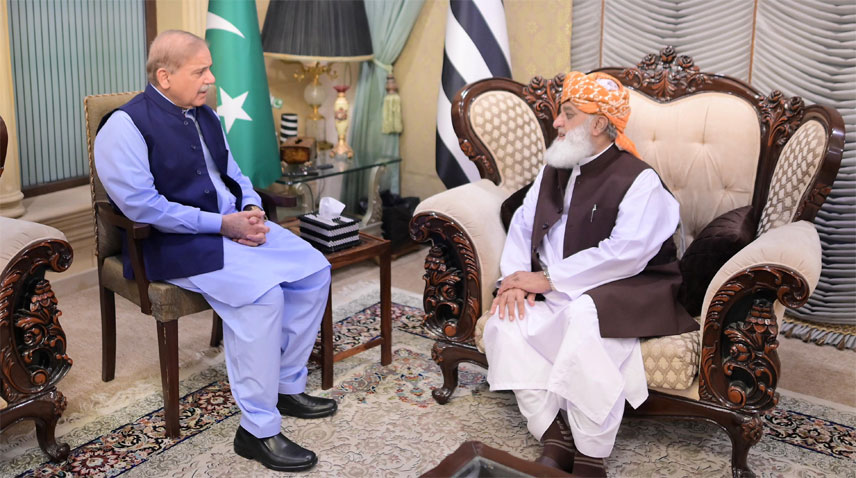
Although Fazlur Rehman has frequently criticized state institutions, including the Pakistan Army, and his speeches have been described by critics as encouraging public hostility toward the military, he has never been booked or jailed for such remarks. Some political commentators argue that successive governments have been reluctant to confront him because of his ability to mobilize large numbers of supporters, many of whom are associated with religious seminaries, and because several members of the Afghan Taliban leadership reportedly studied in seminaries linked to his political network. Whether the current PML-N-led coalition government, which has previously shared power with JUI-F, will hold Fazlur Rehman accountable for his recent remarks against the Pakistan Army remains an open political question.

