
DND Report
There is an ongoing debate challenging the rhetoric that all Pashtuns are Afghans and all Afghans are Pashtuns, because both premises contradict available historical evidence indicating that not all Pashtuns are Afghans and not all Afghans are Pashtuns.
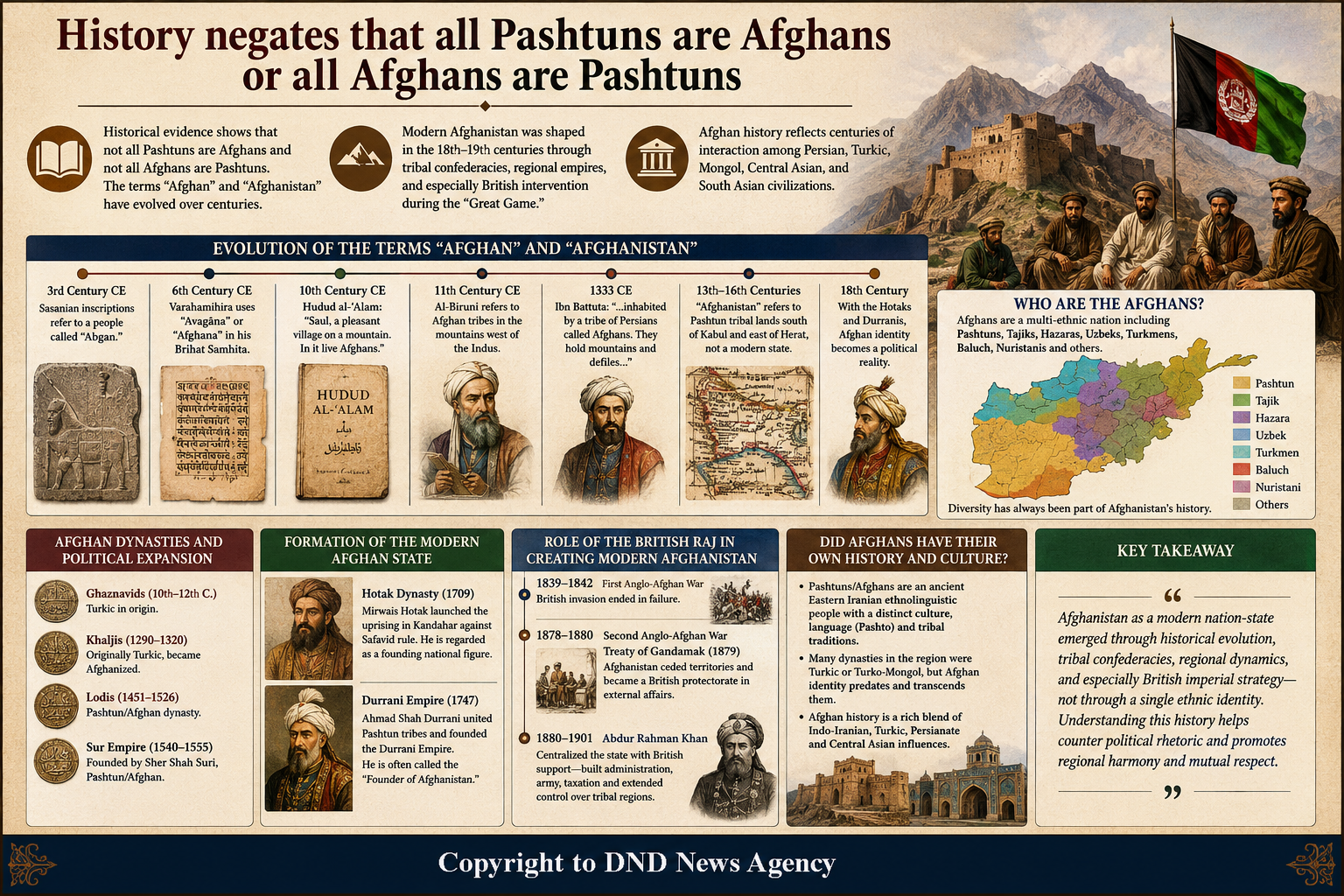
Another important point often highlighted in political discourse is the role of the British Raj in shaping the territorial and political framework of the modern Afghan state. Some polemical narratives also argue that Afghan tribal groups frequently cooperated with imperial powers against indigenous rulers of the Indo-Subcontinent, including the rulers of the Takht-e-Lahore. Moreover, certain debates claim that Afghan culture was heavily influenced by Turkic, Persianate, and Central Asian traditions. However, such assertions require careful academic examination rather than sweeping generalization.
Politically motivated rhetoric such as latest statement of Mahmood Khan Achakzai is disturbing not only for educated Pashtuns rather for Afghans who know their history and those who live in modern Afghanistan but they are Pashtuns. Achakzai recently said that every Pashtun should hold an Afghan identification card, comparing the idea to dual citizenship arrangements commonly seen in Western countries. His comments, however, sparked criticism from Afghan political figures and commentators. The controversy has reignited debate over the role of ethnic identity in regional politics, with critics arguing that attempts to frame Afghanistan through a narrowly ethnic lens risk undermining national sovereignty and deepening ethnic sensitivities across the region.
The words “Afghan” and “Afghanistan” originally referred to Pashtun tribal populations and their territories rather than to a unified nation-state. Historical references from Sasanian inscriptions, Islamic geographers, Babur, and Ferishta demonstrate the gradual evolution of these terms over more than a millennium.
Modern Afghanistan emerged politically during the eighteenth century under the Hotaks and Durranis but became territorially consolidated only in the nineteenth century through British imperial intervention during the Anglo-Afghan Wars. British strategic interests transformed Afghanistan into a buffer state and helped establish its modern boundaries and centralized political structure.
Although several dynasties associated with Afghanistan had Turkic or Persianized origins. At the same time, historians caution against both romantic nationalist narratives and polemical denials of Afghan identity. Afghan history reflects centuries of interaction among Persian, Turkic, Mongol, Central Asian, and South Asian civilizations. Consequently, the history of Afghans and Pashtuns is best understood within the broader interconnected history of Central and South Asia.
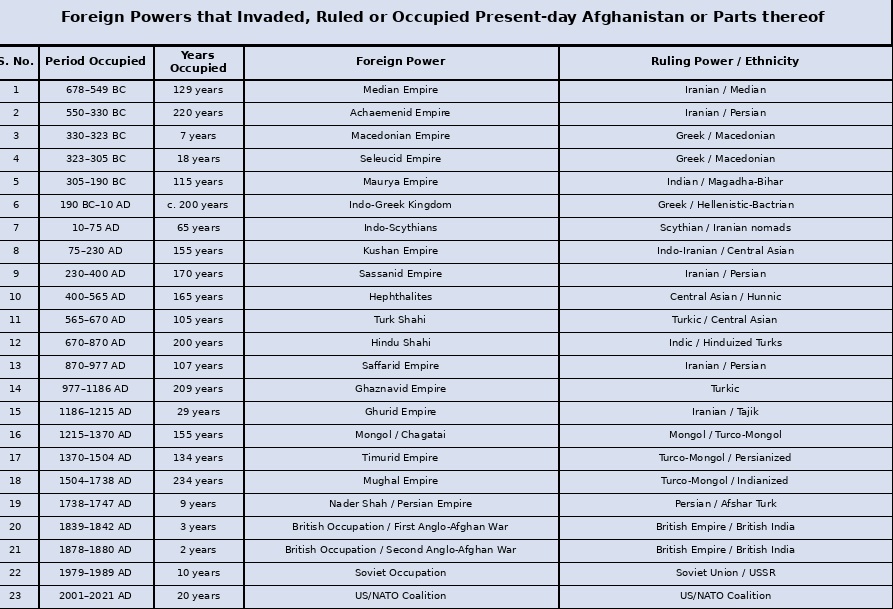
The following study uses historical sources and academic references to examine the evolution of Afghan and Pashtun identity, the formation of modern Afghanistan, and the broader historiographical debate surrounding Afghan history and political identity. It also evaluates nationalist claims that Afghans “were never ruled by outsiders,” noting that territories inhabited by Afghans were historically incorporated into various imperial systems, including Persian, Turkic, Mongol, Mughal, Safavid, and British spheres of influence.
The terms “Afghan” and “Afghanistan” have undergone significant historical evolution. Originally, “Afghan” referred primarily to Pashtun tribes inhabiting regions south and east of the Hindu Kush, while “Afghanistan” denoted only a limited geographical area associated with these tribes rather than a unified state.[1] The modern political entity known as Afghanistan emerged gradually during the eighteenth and nineteenth centuries through the interaction of tribal confederacies, regional empires, and British imperial strategy in South Asia.[2]
The academic consensus among modern historians, linguists, and Iranologists is that the term “Pashtun” (also rendered Pakhtun or Pushtun) is an ancient ethnolinguistic designation connected to Eastern Iranian-speaking peoples of the Afghanistan–Pakistan frontier region. Pashtuns are generally classified as an Eastern Iranian ethnic group, and their language, Pashto, belongs to the Eastern Iranian branch of the Indo-Iranian language family (Morgenstierne, 1965; Encyclopaedia Iranica, “Pashto”). Most scholars cautiously associate the ethnonym with ancient tribal names recorded in classical and Vedic sources, particularly the Paktha tribe mentioned in the Rigveda (7.18) and the Pactyans described by Herodotus in the fifth century BCE, although direct historical continuity cannot be conclusively proven (Caroe, 1958; Vogelsang, 2002). Linguists regard these similarities as plausible but not definitive evidence of the antiquity of the ethnonym. The word “Pashtun” itself appears relatively late in securely verifiable written sources compared to the term “Afghan.” The designation “Afghan” is attested earlier in Sasanian and early Islamic texts for tribes inhabiting the mountainous regions between present-day Afghanistan and Pakistan (Bosworth, Encyclopaedia of Islam; Minorsky, Hudud al-‘Alam).
By the medieval period, Persian, Arabic, and Central Asian chronicles clearly recognized Pashtun/Afghan tribal populations such as the Ghilzai, Yusufzai, Khattak, and others (Baburnama). Modern scholarship rejects older colonial-era theories that attempted to derive Pashtuns from Israelites, Greeks, or Arabs. Instead, the prevailing academic view is that Pashtuns emerged through the gradual ethnogenesis of Eastern Iranian tribal populations mixed with regional groups over many centuries in the Hindu Kush–Sulaiman mountain zone (Morgenstierne, 1973; Dupree, 1980; Vogelsang, 2002).
Scholars also distinguish between the terms “Afghan” and “Pashtun.” Historically, “Afghan” was initially an external ethnogeographic term used in Persian and Arabic literature, while “Pashtun/Pakhtun” functioned more specifically as the endonym of Pashto-speaking tribal communities. In modern times, especially after the rise of the Durrani Empire in the eighteenth century, “Afghan” gradually evolved into a broader national identity encompassing all citizens of Afghanistan (Gregorian, 1969).
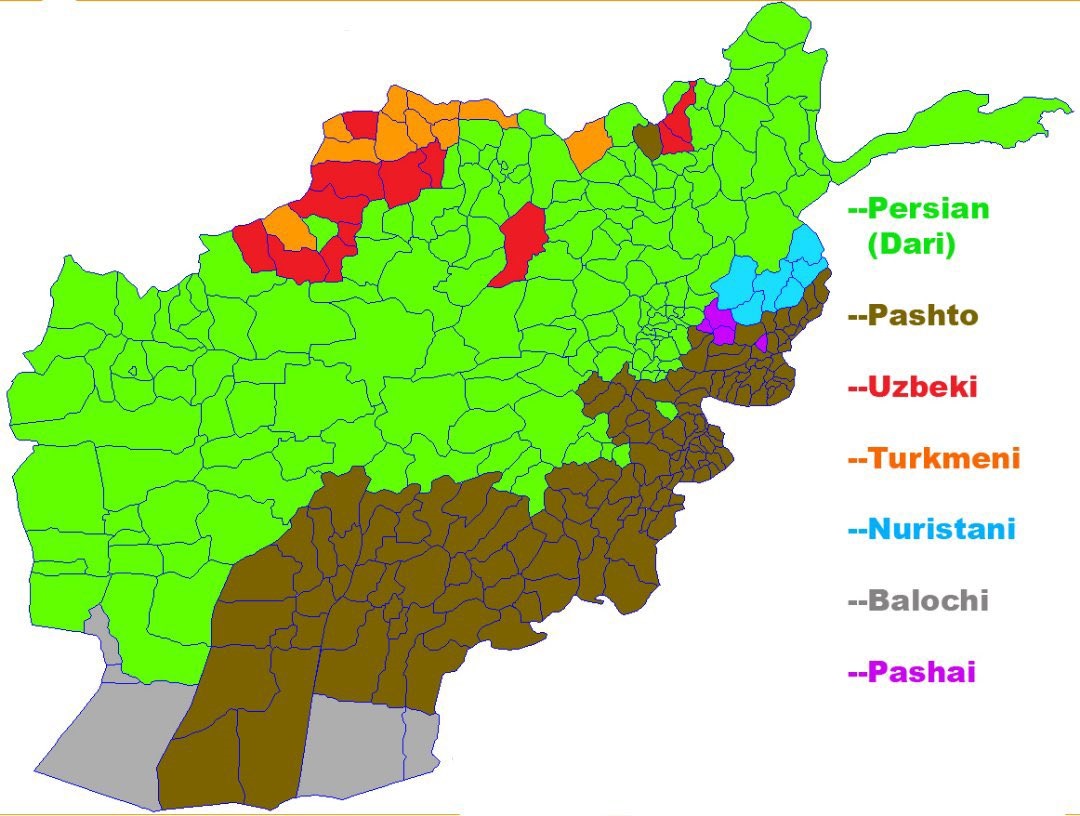
Modern Afghanistan was not historically a unified nation-state in the contemporary sense. Rather, it was assembled from diverse ethnic, linguistic, and regional communities, including Pashtuns, Tajiks, Hazaras, Uzbeks, Turkmens, Baluch, Nuristanis, and others.[3] The role of the British Raj during the nineteenth century was decisive in defining Afghanistan’s external borders, centralizing authority under selected rulers, and transforming the country into a buffer state between British India and Tsarist Russia during the “Great Game.”[4]
The question of Afghan identity is historically complex. Although several ruling dynasties associated with Afghanistan had Turkic, Turko-Mongol, or Persianized military origins, the Pashtun/Afghan ethnos possesses a distinct historical and cultural identity that predates many of these dynasties.[5]
Early Historical Usage of the Word “Afghan”
The earliest references to the ethnonym “Afghan” appear in Late Antiquity. Sasanian inscriptions from the third century CE refer to a people called “Abgan.”[6] The Indian astronomer Varahamihira in the sixth century CE used the term “Avagāṇa” or “Afghana” in his Brihat Samhita.[7] These early references indicate that the term existed centuries before the emergence of the modern Afghan state.
The tenth-century Persian geographical work Hudud al-‘Alam provides one of the clearest early references:
“Saul, a pleasant village on a mountain. In it live Afghans.”[8]
This indicates that “Afghans” were recognized as a distinct tribal people inhabiting mountainous regions near the Indus frontier.
The scholar Al-Biruni (973–1048 CE) also referred to Afghan tribes living in the frontier mountains west of the Indus River.[9] Similarly, the Moroccan traveler Ibn Battuta described Afghans during his travels in 1333:
“We travelled on to Kabul… inhabited by a tribe of Persians called Afghans. They hold mountains and defiles and possess considerable strength.”[10]
These references demonstrate that the ethnonym “Afghan” historically referred to tribal Pashtun populations rather than all inhabitants of present-day Afghanistan.
Historical Meaning of “Afghanistan”
The term “Afghanistan” literally means “Land of the Afghans.” The suffix “-stan” is Persian and means “place” or “country.”[11] Historically, however, “Afghanistan” referred only to limited Pashtun tribal territories south of Kabul and east of Herat rather than the modern state.[12]
The earliest known mention of the territorial term “Afghanistan” appears in the thirteenth-century Tarikh Nama-i-Herat by Sayf ibn Muhammad ibn Yaqub al-Harawi.[13]
Babur, the founder of the Mughal Empire, also used the term in the sixteenth century while distinguishing “Afghanistan” from Kabulistan and neighboring regions:
“To the south is Afghanistan.”[14]
The sixteenth-century historian Ferishta similarly wrote:
“Don’t call it Kohistan, but Afghanistan; for there is nothing there but Afghans and disturbances.”[15]
Thus, until the eighteenth century, “Afghanistan” primarily denoted Pashtun tribal lands rather than a centralized political state.
Afghan Dynasties and Political Expansion
Ghaznavids and Ghurids
Afghan tribes appeared in military and political structures during the Ghaznavid and Ghurid periods.[16] However, the Ghaznavids themselves were Turkic in origin, while the Ghurids were eastern Iranian highland rulers with Persianized political culture.[17]
Khaljis, Lodis, and Surs
The Khalji Dynasty (1290–1320) of Delhi is often described as “Turko-Afghan,” although historians generally agree that the Khaljis were originally Turkic peoples who became culturally Afghanized after long residence in Afghanistan.[18]
The Lodi Dynasty (1451–1526) and Sur Empire (1540–1555) were more directly Pashtun/Afghan in ethnic composition.[19] Sher Shah Suri, founder of the Sur Empire, became renowned for administrative reforms, road construction, and revenue systems later adopted by the Mughals.[20]
These dynasties helped establish “Afghan” as a political identity extending beyond tribal society.
Formation of the Modern Afghan State
The Hotak Dynasty
Modern Afghan political history is commonly traced to the Hotak uprising of 1709 led by Mirwais Hotak in Kandahar against Safavid Persian authority.[21] Mirwais Hotak established an independent Pashtun kingdom and is regarded in Afghan historiography as a foundational national figure.[22]
The Hotaks briefly conquered Isfahan and ruled much of Persia before being overthrown by Nader Shah Afshar.[23]
Ahmad Shah Durrani and the Durrani Empire
The modern Afghan kingdom emerged more decisively under Ahmad Shah Durrani in 1747.[24] After Nader Shah’s assassination, Ahmad Shah united various Pashtun tribes and founded the Durrani Empire centered in Kandahar.[25]
The Durrani Empire included territories in present-day Afghanistan, Pakistan, eastern Iran, and parts of Central Asia and northern India.[26] Because of this achievement, Ahmad Shah Durrani is often called the “Founder of Afghanistan.”[27]
However, the Durrani Empire functioned more as a tribal imperial confederation than a centralized nation-state.[28]
Role of the British Raj in Creating Modern Afghanistan
Afghanistan as a Buffer State
The nineteenth century transformed Afghanistan into a geopolitical buffer between British India and Tsarist Russia during the “Great Game.”[29] British policy aimed to prevent Russian expansion toward India. Consequently, the British intervened repeatedly in Afghan politics through the Anglo-Afghan Wars.[30]
First Anglo-Afghan War (1839–1842)
The British invaded Afghanistan in 1839 to depose Emir Dost Mohammad Khan and install Shah Shuja Durrani as a pro-British ruler.[31] The occupation failed disastrously, culminating in the retreat from Kabul in 1842.[32]
Second Anglo-Afghan War and Treaty of Gandamak
The Second Anglo-Afghan War (1878–1880) proved more consequential for state formation.[33] Following British victory, Emir Yaqub Khan signed the Treaty of Gandamak in 1879.[34]
Under this treaty:
- Afghanistan ceded frontier territories;
- British India assumed control of Afghan foreign affairs;
- Afghanistan effectively became a British protectorate in external relations.[35]
Historians frequently regard the treaty as one of the most humiliating agreements imposed upon Afghan rulers.[36]
Abdur Rahman Khan and State Centralization
The British subsequently supported Abdur Rahman Khan as Emir of Afghanistan.[38] Abdur Rahman (r. 1880–1901) played a major role in creating the centralized Afghan state through:
- suppression of tribal revolts;
- forced integration of peripheral regions;
- establishment of centralized taxation;
- creation of a standing army.[39]
British financial subsidies and diplomatic backing enabled this centralization.[40] For this reason, many historians argue that modern Afghanistan was consolidated under strong British imperial influence rather than created entirely independently.[41]
Did Afghans Have Their Own History and Culture?
Distinguishing Ethnicity from Dynastic Rule
A common misunderstanding is that because several Afghan dynasties had Turkic or Turko-Mongol origins, Afghans themselves lacked an independent historical identity. Mainstream scholarship does not support this conclusion.[45]
The Pashtuns/Afghans possess a distinct ethnolinguistic and tribal culture dating back many centuries before the emergence of Turkic dynasties.[46]
Turkic Influence Versus Afghan Identity
Many ruling dynasties in the region—including the Ghaznavids, Timurids, Mughals, and some Delhi Sultanate dynasties—were Turkic or Turko-Mongol in military and political origin.[50]
The Durrani and Hotak dynasties, however, were clearly Pashtun/Afghan dynasties.[52]
References
- Encyclopaedia Britannica, “Afghanistan.”
- Gregorian, Vartan. The Emergence of Modern Afghanistan. Stanford University Press, 1969.
- Barfield, Thomas. Afghanistan: A Cultural and Political History. Princeton University Press, 2010.
- Hopkirk, Peter. The Great Game. Kodansha International, 1992.
- Dupree, Louis. Afghanistan. Princeton University Press, 1980.
- Bosworth, C.E. “Afghān.” Encyclopaedia of Islam.
- Varahamihira. Brihat Samhita.
- Minorsky, Vladimir (trans.). Hudud al-‘Alam. Oxford University Press, 1937.
- Al-Biruni. Kitab al-Hind.
- Ibn Battuta. Rihla.
- Dames, M. Longworth. “Afghanistan.” Encyclopaedia of Islam.
- Sayf ibn Muhammad al-Harawi. Tarikh Nama-i-Herat.
- Babur. Baburnama.
- Ferishta. Tarikh-i Ferishta.
- Bosworth, C.E. The Ghaznavids.
- Jackson, Peter. The Delhi Sultanate.
- Chandra, Satish. Medieval India.
- Qanungo, K.R. Sher Shah and His Times.
- Encyclopaedia Iranica. “Hotak Dynasty.”
- Axworthy, Michael. The Sword of Persia.
- Ganda Singh. Ahmad Shah Durrani.
- Dalrymple, William. Return of a King.
- Robson, Bryan. Crisis on the Frontier.
- Schofield, Victoria. Afghan Frontier.
- Ahmed, Akbar. Pukhtun Economy and Society.
- Morgenstierne, Georg. The Pathan Language. Oslo: Universitetsforlaget, 1965.
- Vogelsang, Willem. The Afghans. Oxford: Blackwell Publishing, 2002.

