
By Agha Iqrar Haroon
There are unconfirmed news reports that Afghan Taliban are trying to activate backchannel diplomacy with Pakistan through the Doha Peace Accord partners after Pakistan responded to drone attacks on Pakistan and destroyed several terrorist training camps inside Afghanistan from where Afghan Taliban were sending suicide bombers and drones to Pakistan.
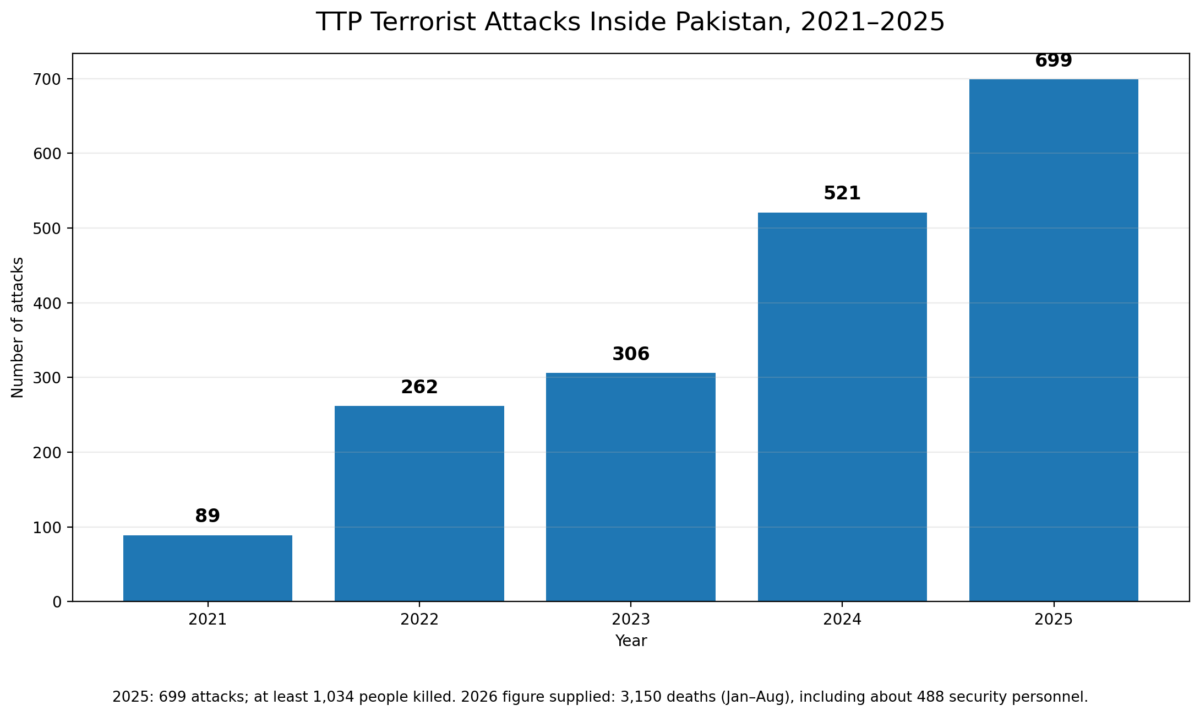
Till September 25, 2026, this year has been the deadliest for Pakistani security forces, with reported 3,844 total fatalities, with 1,027 security forces martyred. Security forces circles have reason to say that the Doha Peace Accord has proven to be the deadliest diplomatic development for Pakistan, and global powers should play their role to mitigate the worst impacts Pakistan is facing due to the Doha Peace Accord, although it had been operative in it, thinking that the Accord might bring relief, but realities have proven otherwise.
““Accept what we say and provide what we need; otherwise, we have a terror group of your countrymen and ethnicity for sending you as a gift.” This is the strategy that Afghan Taliban follow”
Islamabad played a pivotal, behind-the-scenes role in facilitating the 2020 Doha Peace Accord between the United States and the Afghan Taliban, hosted and mediated by Qatar. According to global foreign affairs experts, the United States and Afghan Taliban had been in direct contact from 2018, and Washington decided to withdraw from Kabul, but it needed a face-saving after spending over $8 billion without getting results. For arranging a respectful exit from Afghanistan, the Doha talk format was established, and Pakistan, utilizing its long-standing historical connections with Afghan Taliban, actively coaxed the group into participating in the talks with the United States and released high-ranking Taliban figures from its custody, including Mullah Abdul Ghani Baradar, the deputy leader of the Taliban. Baradar went on to lead the Taliban’s diplomatic council in Qatar and ultimately signed the Doha Agreement alongside US Special Representative Zalmay Khalilzad. Here the mess started that Pakistan is facing extensively. Knowing that TTP is the foot soldier of Afghan Taliban that had been harming Pakistan since its inception in 2006 with the active financial support of India, Pakistan might have thought that Afghan Taliban would not need TTP soldiers much once Taliban would have undisputed rule all over Afghanistan, and cutting the wire of the TTP-Afghan Taliban circuit would be easier. It may be remembered that this is almost the same time that Pakistan, through Operation Zarb-e-Azb, had already defeated TTP and things started returning to normalcy.
“Strangely, Doha Peace Accord engineers are still waiting for something big to happen before asking Kabul why it is building the largest global network of terrorists”
However, things started changing with a change in Pakistan’s policy towards TTP, and the then-sitting government of former Prime Minister Imran Khan, after his several meetings with Zalmay Khalilzad, decided to invite TTP terrorists to come back from Afghanistan to Pakistan along with their families and sophisticated NATO military-grade weapons, and negotiations continued for almost two years. In October 2021, the Amnesty Offer and Peace Talks started. In an interview with Turkish television station TRT World, then-Prime Minister Imran Khan publicly acknowledged for the first time that his government was in reconciliation talks with factions of the TTP.
On November 8, 2021, the government announced a formal, month-long ceasefire with the TTP, mediated by the interim Afghan Taliban government. During this period, security officials and civil leadership explored a repatriation framework for thousands of Pakistani terrorists of TTP and their families back to Pakistan from Afghanistan. Circumstantial evidence today confirms that the global miscalculation is the core reason for what Pakistan is facing today because Afghan Taliban did not fulfill a single promise they had made globally, including an all-inclusive government, equal rights to genders, no space for global terrorists, and no support for TTP. Now Afghanistan has become the world’s fastest-growing manufacturer of methamphetamine. Over 20 foreign terrorist groups, including Islamic State–Khorasan Province (IS-K / ISIS-K), Al-Qaeda, Al-Qaeda in the Indian Subcontinent (AQIS), Pakistan Tehreek-i-Taliban Pakistan (TTP), Balochistan Liberation Army (BLA), Turkestan Islamic Party (TIP) / East Turkestan Islamic Movement (ETIM), Islamic Movement of Uzbekistan (IMU), Jamaat Ansarullah (JA), Islamic Jihad Union (IJU), and Katibat al-Tawhid wal-Jihad (KTJ), are having training camps and operating with mutual support for each other.
Strangely, Doha Peace Accord engineers are still waiting for something big to happen before asking Kabul why it is building the largest global network of terrorists. Some diplomats believe that Afghan Taliban use terrorism as their diplomatic leverage, so they host and weaponize global terror groups to keep building pressure on neighboring Central Asia, Iran, Pakistan, China, Russia, and even on Western countries. “Accept what we say and provide what we need; otherwise, we have a terror group of your countrymen and ethnicity for sending you as a gift.” This is the strategy that Afghan Taliban follow.
Sensing the grave situation, Pakistan behaved logically and tried to keep Afghan Taliban as ‘friends and good neighbors’. When TTP, with the direct support of Afghan Taliban and funds from India, launched massive terror campaigns inside Pakistan, Pakistan kept engaging with Afghan Taliban instead of responding aggressively. According to a social media influencer having links with the security institutions, Pakistan hoped for peace and stability, but the Taliban regime turned Afghanistan into a safe haven for the TTP. He stated that despite repeated betrayals, Pakistan tried every peaceful route: religious, tribal, and official.
According to him, in July 2022, an 8-member religious scholars’ delegation led by Mufti Taqi Usmani (same religious school of thought that is followed by TTP and Afghan Taliban) went to Kabul to convince the Taliban and TTP to stop attacks. A few days later, a 17-member Tribal Jirga carried the same message. On February 22, 2023, a high-level delegation led by Defence Minister Khawaja Asif and DG ISI Lt Gen Nadeem Anjum visited Kabul to push for peace. In July 2024, Interior Minister Naqvi led another delegation for security cooperation but got no results; even then, Pakistan did not shut the door on talks. In October 2025, Pakistan accepted a Qatar-mediated (reference Doha Peace Accord) ceasefire and follow-up talks in Doha and Istanbul, which failed to produce any agreement. In February 2026, Saudi mediation took place, and Pakistan also joined China-mediated talks in Ürümqi in April 2026 with one demand to Afghan Taliban—to designate the TTP a terrorist organization and dismantle its infrastructure. Nothing came out of this initiative also.
What else Pakistan can do to negotiate peace with a neighbor that uses building global terrorist network as its diplomatic leverage tool?

