
By Agha Iqrar Haroon
There is a saying in the Uzbek language that “good deeds never go to waste.” I felt pleasure when several international journalists appreciated Pakistan in my presence during informal and coffee-table conversations, stating that history has recorded how a middle-power country tried its level best and successfully helped gain a ceasefire in the US-Israel-led war on Iran, which had been wreaking havoc not only on Iranians but also bringing the danger of an extended and widespread war to the doorstep of Central Asia.
While attending the III International Scientific and Practical Conference in Khiva during April 25–29, that was followed by III International Lazgi Dance Festival, I had the opportunity to interact with foreign delegates and journalists from the United Kingdom, France, Tajikistan, Turkmenistan, Kazakhstan, Belarus, Russia, Turkey, Kyrgyzstan, Serbia, Brazil, Japan, Spain, Egypt, Georgia, Iran, China, Italy, India, Ukraine, Bulgaria, Qatar, Azerbaijan, and Uzbekistan. The majority of them approached me to thank Pakistan for its role in the ceasefire initiative, accepting the reality that when major global powers were indecisive and acting like bystanders outside the boxing arena, Pakistan took the initiative and the pains to promote peace in the region by breaking the ice between the United States and Iran.
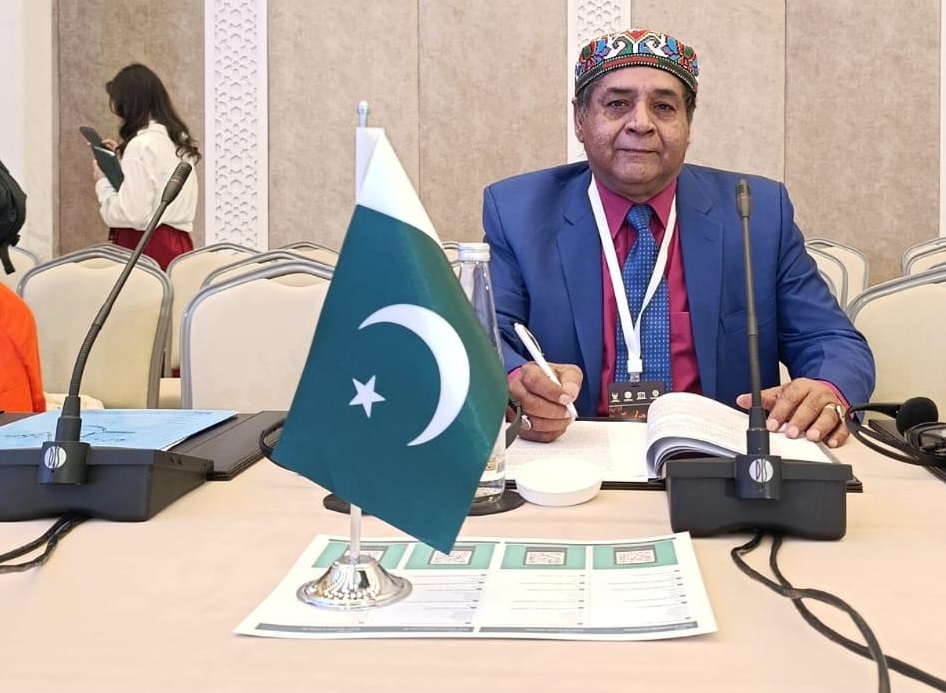
Instead of documenting the individual comments of delegates and journalists from the United Kingdom, France, Tajikistan, Kazakhstan, Belarus, Russia, Turkey, Kyrgyzstan, Serbia, Spain, Egypt, Georgia, Iran, Italy, Ukraine, Bulgaria, Qatar, Azerbaijan, and Uzbekistan, I prefer to document hereunder their collective observations about Pakistan. They were of the view:
At a time when tensions between Iran and the United States threatened to push the wider region toward instability, Pakistan’s constructive diplomacy emerged as an important force for peace. By maintaining communication with all sides, encouraging restraint, and promoting dialogue over confrontation, Pakistan demonstrated how a middle power can play a meaningful role in reducing conflict. Its efforts to help broker a ceasefire highlighted Islamabad’s growing diplomatic relevance and its longstanding belief that regional disputes must be resolved through negotiation rather than war.

Pakistan had channels of communication that many other countries lacked. Instead of taking sides, Islamabad chose the more difficult but more responsible path: acting as a bridge between opposing camps. This approach reflected diplomatic maturity and an understanding that conflict in the Gulf or South Asia quickly affects the entire region through trade disruption, refugee flows, and security threats.
The leadership in Islamabad (Field Marshal Asim Munir’s name was mostly mentioned in the conversations) worked through multiple diplomatic avenues, including direct contacts, backchannel engagement, and coordination with friendly states. Pakistan’s message remained consistent: escalation would benefit no one, while dialogue could preserve dignity and security for all parties. By emphasizing mutual interests—regional stability, secure energy routes, and avoidance of civilian suffering—Pakistan helped create space for de-escalation when emotions were running high.
One of the most significant aspects of Pakistan’s role was its credibility. Tehran understands Pakistan as a neighboring Muslim country with cultural and economic connections. Washington, meanwhile, recognizes Pakistan’s experience in regional security matters and its capacity to engage complex actors. This dual trust allowed Pakistan to encourage compromise without appearing coercive or self-serving. In international diplomacy, trust is often more valuable than military strength, and Pakistan used that asset effectively.
Pakistan’s peace efforts were also consistent with its own national interests. Any prolonged conflict between Iran and the United States would have serious consequences for Pakistan’s economy and security. Rising oil prices, disrupted shipping routes, pressure on border regions, and broader geopolitical polarization would all create difficulties. By helping reduce tensions, Pakistan was not only contributing to global peace but also safeguarding its own people from the economic and strategic fallout of war.
The ceasefire effort also underscored Pakistan’s evolving foreign policy identity. For decades, Pakistan was often viewed mainly through the lens of security challenges. However, in recent years, it has increasingly sought to project itself as a responsible regional stakeholder focused on connectivity, trade, and diplomacy. Mediation between Iran and the United States reinforced that image. It showed that Pakistan can contribute solutions, not merely react to crises.
Equally important was the humanitarian dimension. Modern wars rarely remain limited to military targets. Civilians suffer first and longest—through displacement, inflation, shortages, and fear. By pushing for restraint and a ceasefire, Pakistan’s diplomacy helped avert further human cost. This is a reminder that successful diplomacy saves lives, even when it happens quietly behind closed doors.
Pakistan’s role should also be understood within a broader tradition. From facilitating talks on Afghanistan to participating in UN peacekeeping missions, Pakistan has repeatedly contributed to conflict management in difficult environments. Its military and diplomatic institutions have long experience dealing with fragile regional balances. In the Iran-US context, that experience likely helped Pakistan assess risks realistically and communicate urgency to all sides.
For the international community, Pakistan’s constructive involvement offers a useful lesson: regional powers can be indispensable partners in crisis resolution. Countries with proximity, relationships, and direct stakes in peace often possess leverage that distant actors do not. Supporting such mediation efforts can strengthen collective security and reduce the likelihood of wider wars.
Of course, peace processes are never final. A ceasefire is only the first step; lasting stability requires sustained dialogue, confidence-building measures, and mechanisms to prevent future escalation. Pakistan can continue playing a helpful role by encouraging follow-up talks, economic cooperation, and regional forums where grievances are addressed peacefully.
In a polarized world, diplomacy is frequently overshadowed by headlines of confrontation. Yet moments like this show that patient negotiation still matters. Pakistan’s proactive and positive role in helping broker a ceasefire between Iran and the United States deserves recognition. It reflects strategic wisdom, regional responsibility, and the enduring truth that peace is built not by threats, but by dialogue.

