
DND Report
The statement of Fazlur Rahman of JUI-F mocking martyrs of the country once again triggers a discussion in the country that is usually discouraged in the past: how anti-Pakistan parties that officially opposed the creation of Pakistan got the lion’s share in political power once Pakistan came into being. Allama Iqbal in several of his poetic pieces categorically said that ‘mullahs’ are instigating Muslims of subcontinent against the idea of Pakistan (Two-Nation Theory) and favored Akhand Bharat.
Once Mufti Mahmood, the father of Fazlur Rahman and Ameer of JUI, categorically said that he ‘was not involved in the sin of creation of Pakistan’, his party had been in power for almost 70 years either in the federal government or in Balochistan and KP.
The central issue of this debate is not that religious parties once opposed Pakistan and later entered its politics; rather, the issue is that JUI-F still does not respect the narrative of Pakistan and is now overtly supporting an anti-Pakistan—pro-Afghan Taliban narrative, and this reality is hurting the state extremely. In this debate, the deeper question is why Pakistan’s political system provided space and opportunities for groups such as JUI that had not led the independence movement to become influential in defining the state’s identity. The answer lies in a combination of factors: the uncalled for debate over Pakistan’s ideological purpose, constitutional developments, religious groups’ and military relationships, social networks of religious institutions, and the cunning move of religious parties to participate in electoral politics. In simple words, Pakistan’s history contains an irony: some of the groups that opposed the creation of Pakistan became among the most influential voices in determining what Pakistan should become.
People such as one of the most respected politico-religious thinkers and social scientists, such as Hakeem Saeed, Dr Israr, Dr Hasan Askari, Dr Mubarak, Dr Mubashar Hassan, Javed Ahmad Ghamidi, and many others, in their writings and lectures, expressed their concerns about how religious parties that opposed the division of the Indian subcontinent and supported the idea of Akhand Bharat swiftly changed their position, and by the 1970s they became major power brokers by using religion as their power and through their collaboration with the state on Afghan Jihad.
This historical irony is often reduced to political slogans, especially around statements attributed to religious leaders such as Mufti Mahmood. However, the deeper issue is not merely one controversial quotation. It is the broader question of how political forces that rejected the demand for a separate Muslim homeland eventually gained a central role in shaping that homeland.
Before independence, All-India Muslim League, led by Quaid-i-Azam Muhammad Ali Jinnah, argued that Muslims constituted a separate political nation (Two-Nation theory) and required a separate state to protect their political interests. This argument became the foundation of the Pakistan Movement. However, Deobandi scholars associated with the Jamiat Ulema-e-Hind and Maulana Maududi of Jamaat-i-Islami opposed partition. Their position was represented by figures such as Maulana Hussain Ahmad Madani, who argued that Muslims and Hindus could coexist (Akhand Bharat) within a united India and that Islam did not require a separate territorial nation-state.
They believed that defining Muslims through a religious identity into separate territorial states was inconsistent with their understanding of Islamic political thought, so they preferred a united India where Muslims would continue to pursue their religious and political interests. Therefore, they openly stood with anti-Pakistan elements and stopped their followers from voting for the Muslim League. Maulana Hifzur Rahman (Paisa Akhbar), in his letters (1940-45), raised the issue strongly and claimed that ‘illiterate mullahs are using their full power to stop the creation of Pakistan’. Hifzur Rahman said that ‘they are targeting Muhammad Ali Jinnah Sahib for his attire, language, and lifestyle, as Jinnah belongs to an educated modern view of the world while mullahs are psychologically living in caves’.
Essential for Muslim political security. However, the post-Pakistan era spoke a different story. After independence, JUI (now Pakistan wing) started a debate about whether Pakistan should exist, and then this debate converted into ‘what kind of Pakistan should exist?’
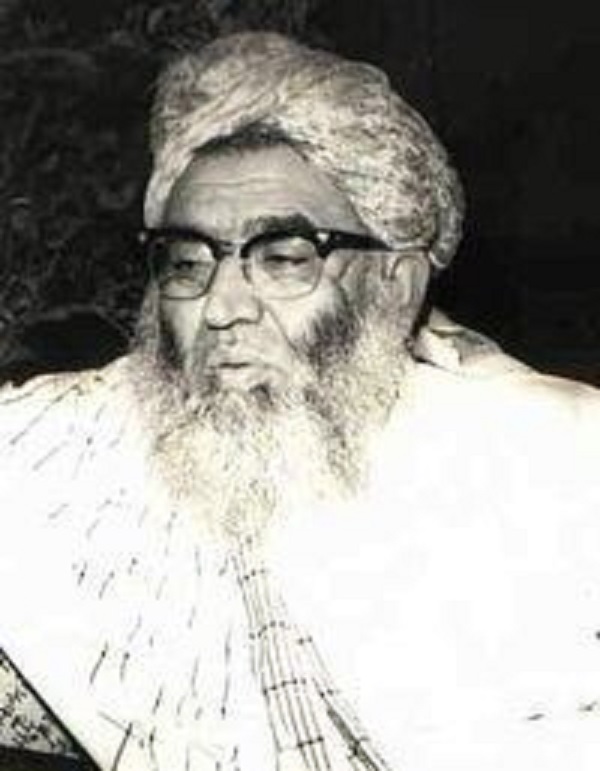
Having roots in Jamiat Ulema-e-Hind, JUI kept in contact with Jamiat Ulema-e-Hind, and Mufti Mahmood became one of the most prominent among such religious personalities. A leader from the Deobandi tradition and a former opponent of partition politics, he later became a major Pakistani political figure. He served as the Chief Minister of the North-West Frontier Province (now Khyber Pakhtunkhwa) and participated actively in parliamentary politics, although he was against the “electoral system” that made Pakistan possible. He changed his stance and told his followers that ‘opposing the creation of Pakistan before 1947 did not necessarily mean rejecting Pakistan’, but pro-Pakistan writers and academic kept writing that he had not accepted Pakistan by heart and after years he once said, “We (JUI) were not involved in the sin of creating Pakistan.” However, historians and commentators have disputed this wording. Another version, associated with the aftermath of the 1971 breakup of Pakistan, states:
“Thank God, we are not involved in the sin of breaking Pakistan.”
The more important question is not whether religious parties changed their position after 1947, but how they moved from the margins of the Pakistan Movement to the centre of Pakistan’s ideological debate.
The untimely demise of Quaid-i-Azam Muhammad Ali Jinnah provided ample place for those who were critical of Pakistan. Justice Muhammad Munir, in his book From Jinnah to Zia, argued that a departure from what he understood as Jinnah’s vision of a modern constitutional state provided space to religious groups that had opposed Pakistan’s creation and later gained influence in determining the meaning of Pakistan itself. Religious parties gradually expanded their influence through constitutional debates, state-supported street mobilization, and political alliances.
During General Zia-ul-Haq’s rule (1977–1988), Islamization became a central state policy. Religious parties gained greater institutional space through policies involving Islamic laws, education, courts, and political alliances and through Afghan Jihad. This period strengthened the role of religious actors in state affairs. While religious parties did not win large numbers of parliamentary seats, their influence often exceeded their electoral strength because they shaped public debates and provided ideological legitimacy to political projects.
Moreover, the farcical parliamentary democracy introduced through 1973 provided an instant opportunity for fundamental religious parties such as JUI to gain momentum in their pockets (JUI, for example, in KP and Balochistan, and JI in Karachi and some other urban areas of Sindh).
Allama Muhammad Iqbal in the early 1930s expressed his views on the dangers of parliamentary democracy, stating:
جمہوریت ایک طرزِ حکومت ہے کہ جس میں
بندوں کو گِنا کرتے ہیں، تولا نہیں کرتے
Loose English translation is:
“Democracy is a form of government in which
people are counted, not weighed.”
Allama Iqbal strongly criticized JUI (Hind) and other religious groups of undivided India that were against the creation of Pakistan and stated that Muslims who thought they could live peacefully in undivided India is living in fool’s paradise. Iqbal says:
ملا کو جو ہے ہند میں سجدے کی اجازت
ناداں یہ سمجھتا ہے کہ اسلام ہے آزاد
(“The naive mullah thinks that because he is allowed to perform prostration in India, Islam itself is free.”)
Religious groups in Pakistan had been so powerful that certain parts of Iqbal’s poetry were not allowed to be aired on state-run radio and television, in which he strongly criticized illiterate religious figures that he used to call them “Mullah”. Even now, one cannot call an illiterate religious so-called personality “mullah” in mainstream media, although this is the only word Allama Iqbal used for them. Even a big part of Iqbal’s poetry was not allowed to be taught in schools during the 1977-1998 era. Interestingly, JUI leadership had never paid homage to Allama Iqbal and never visited his grave in Lahore for Fatiha.
Whatever the politics of JUI has been for the last 79 years is not different from what it believed before the creation of Pakistan, but structural advantages have always been in favour of such elements who had opposed Pakistan and still do not believe in the modern state of Pakistan that was dreamt of by Allama Muhammad Iqbal and Quaid-i-Azam Muhammad Ali Jinnah.

