
DND News Opinion
The second meeting of the Strategic Political and Defence Committee (S-PDC) of the Makkah Alliance for Defence in Islamabad marks another significant milestone in the evolution of strategic cooperation among Pakistan, Saudi Arabia and Türkiye.
The November 27, 2026 meeting is particularly important because it reflects a transition from political understanding and diplomatic commitments towards institutional arrangements and practical mechanisms for collective defence.
“For Pakistan, this development represents a historic and far-sighted strategic achievement”
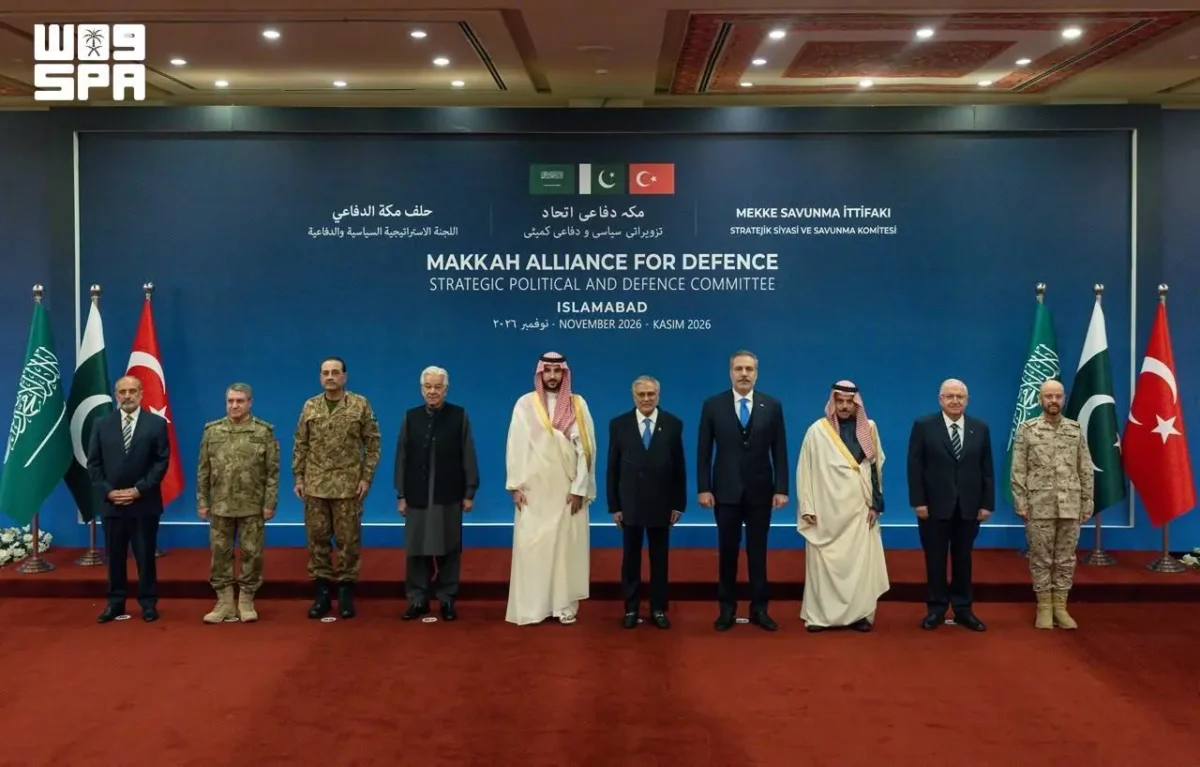
The joint declaration issued after the meeting demonstrates that the three countries are determined to transform their shared commitment to regional security, mutual solidarity and respect for sovereignty into a structured and sustainable framework. At a time when geopolitical competition is intensifying and regional security arrangements are undergoing considerable changes, the Makkah Alliance offers an important model of cooperation among three influential Muslim nations.
For Pakistan, this development represents a historic and far-sighted strategic achievement. For the first time, Pakistan, Saudi Arabia and Türkiye have formalised and institutionalised their commitment to collective defence, mutual solidarity and respect for one another’s sovereignty and territorial integrity through a joint defence agreement. The alliance is not merely a political declaration; it is evolving into a practical framework that can strengthen the collective security capabilities of its members.
The Islamabad meeting reviewed progress made since the inaugural meeting in Istanbul on August 31, 2026, and the emergency meeting in Riyadh on October 5, 2026. More importantly, the committee assessed the implementation of decisions taken during these engagements, particularly those concerning the institutionalisation of the alliance and the practical implementation of collective defence commitments in accordance with the respective national legislation of the three countries.
One of the most encouraging developments is the progress towards establishing and operationalising the Alliance’s Secretariat in Saudi Arabia. The Secretariat will provide an institutional foundation for coordination, follow-up and implementation of decisions. Its establishment will help ensure that the alliance does not remain dependent on occasional high-level meetings or political declarations but develops permanent mechanisms for consultation and cooperation.
The strategic importance of this arrangement should not be underestimated. A permanent institutional structure can facilitate regular political and military consultations, improve coordination among the three countries and provide continuity to collective decisions. It will also help translate the alliance’s objectives into practical defence cooperation and coordinated responses to emerging security challenges.
Another significant aspect of the joint declaration is its emphasis on de-escalation and the peaceful resolution of regional disputes through dialogue and diplomacy. The three countries have agreed to continue consultations aimed at enhancing cooperation on matters of mutual interest while supporting efforts to reduce regional tensions. This reflects a responsible approach to international relations in which collective security and diplomatic engagement complement each other.
Pakistan has consistently advocated dialogue, diplomacy and peaceful conflict resolution while maintaining that sustainable peace requires credible security arrangements and a balance of power. The Makkah Alliance provides an opportunity to advance this approach through coordinated engagement among its members. It also demonstrates that collective defence and diplomatic efforts are not contradictory; rather, credible security cooperation can strengthen the prospects for peace by discouraging aggression and instability.
The declaration’s strong condemnation of persistent attacks by the Houthi militia against civilians and civilian infrastructure in Saudi Arabia is another important dimension of the meeting. The three countries have reaffirmed their collective resolve to continue and accelerate efforts to support Saudi Arabia in safeguarding its security under the collective defence provisions of the agreement.
For Pakistan, Saudi Arabia’s security has particular significance because of the longstanding brotherly relationship between the two countries, their strategic partnership and the special importance of the Kingdom as the custodian of the Two Holy Mosques. Attacks against civilians and civilian infrastructure are unacceptable under any circumstances, and supporting Saudi Arabia’s security is an important expression of Pakistan’s commitment to regional stability and mutual solidarity.
The agreement also carries considerable significance for the future of defence cooperation among the three countries. The parties have reaffirmed their commitment to strengthening cooperation in defence industries, joint technological development, training and capacity-building. These areas offer substantial opportunities for Pakistan to enhance its defence capabilities, promote technological self-reliance and expand its defence industrial base.
Türkiye has developed considerable expertise in defence production, military technology and indigenous defence systems, while Saudi Arabia possesses substantial financial resources and an ambitious vision for developing its defence sector. Pakistan, with its established defence production capabilities, military expertise and strategic experience, can contribute significantly to this partnership.
Bringing together the respective strengths of the three countries could generate opportunities for joint research, technology transfer, defence manufacturing, training and industrial collaboration. Such cooperation would not only strengthen their armed forces but could also create economic opportunities, reduce dependence on external suppliers and enhance the collective capacity of the alliance to address emerging security challenges.
The focus on improving the collective capabilities and cohesion of the three armed forces is particularly noteworthy. Modern security challenges increasingly require technological advancement, intelligence coordination, professional training and interoperability. Regular consultations and joint technological initiatives can help the three countries develop a more coordinated approach to addressing their shared security concerns.
More broadly, the Makkah Alliance reflects an emerging understanding among influential Muslim countries that regional security requires greater cooperation, strategic confidence and institutional coordination. Rather than relying exclusively on external powers for their security, participating countries are seeking to strengthen their own collective capabilities and develop mechanisms to protect their sovereignty and territorial integrity.
However, the alliance should not be interpreted as a confrontation with any country or as an arrangement directed against a particular state. Its declared objectives are collective defence, mutual solidarity, regional peace and stability. Its credibility will ultimately depend on the implementation of commitments, the effectiveness of its institutional mechanisms and the ability of its members to maintain strategic coordination.
For Pakistan, the alliance also reinforces its position as a responsible and reliable regional partner. Its participation alongside Saudi Arabia and Türkiye reflects the country’s diplomatic relevance and its capacity to contribute to arrangements aimed at maintaining regional security. It also provides Islamabad with an additional platform to pursue its foreign policy objectives through constructive partnerships with important regional powers.
The November 27 Islamabad meeting has therefore taken the Makkah Alliance a step beyond its initial political commitments. Progress towards establishing the Secretariat, continued political and military consultations, practical implementation of collective defence provisions and expanded defence-industrial cooperation indicate that the three countries are working towards a more structured strategic partnership.
At a time when global power politics is intensifying and regional conflicts continue to threaten international stability, the Makkah Alliance represents an important expression of confidence, solidarity and shared responsibility among Pakistan, Saudi Arabia and Türkiye.
The real test now lies in translating the decisions and commitments into tangible results. If the three countries maintain the momentum demonstrated in Istanbul, Riyadh and Islamabad, the Makkah Alliance could emerge as a significant regional security framework, strengthening not only the defence capabilities of its members but also their collective contribution to peace and stability.

