
DND Monitoring Report: Indian media outlets have closely tracked Pakistan Prime Minister Shehbaz Sharif’s upcoming official visit to Moscow emerging Pakistan-Russia relations, considering the development a result of vision of Field Marshal Chief of Defence Forces (CDF) and Chief of the Army Staff (COAS) Syed Asim Munir.
Framing the accelerated diplomatic and economic outreach as a notable shift in South Asian geopolitics, Indians call this development also a result of reckless foreign policy of Indian PM Modi.
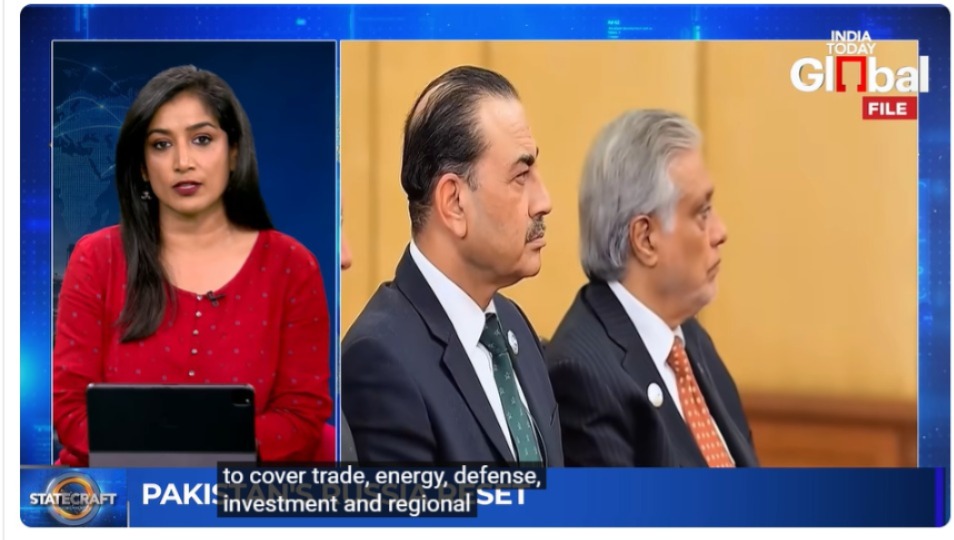
“Russian media is giving special pre-visit coverage to PM Sharif’s visit as Pakistani Ambassador Faisal Niaz Tirmizi is exceptionally proactive in promoting this event”
Reports highlight that while both nations are working to finalize extensive bilateral agreements across energy, trade, and defence, banking and payment restrictions continue to pose major obstacles to direct trade. Meanwhile, impartial Indian journalists call this development a ‘results of Modi’s hubris’ and the ‘constant isolation of India by Pakistan’s Field Marshal (Syed Asim Munir) since the May 2025 Indo-Pak conflict’.
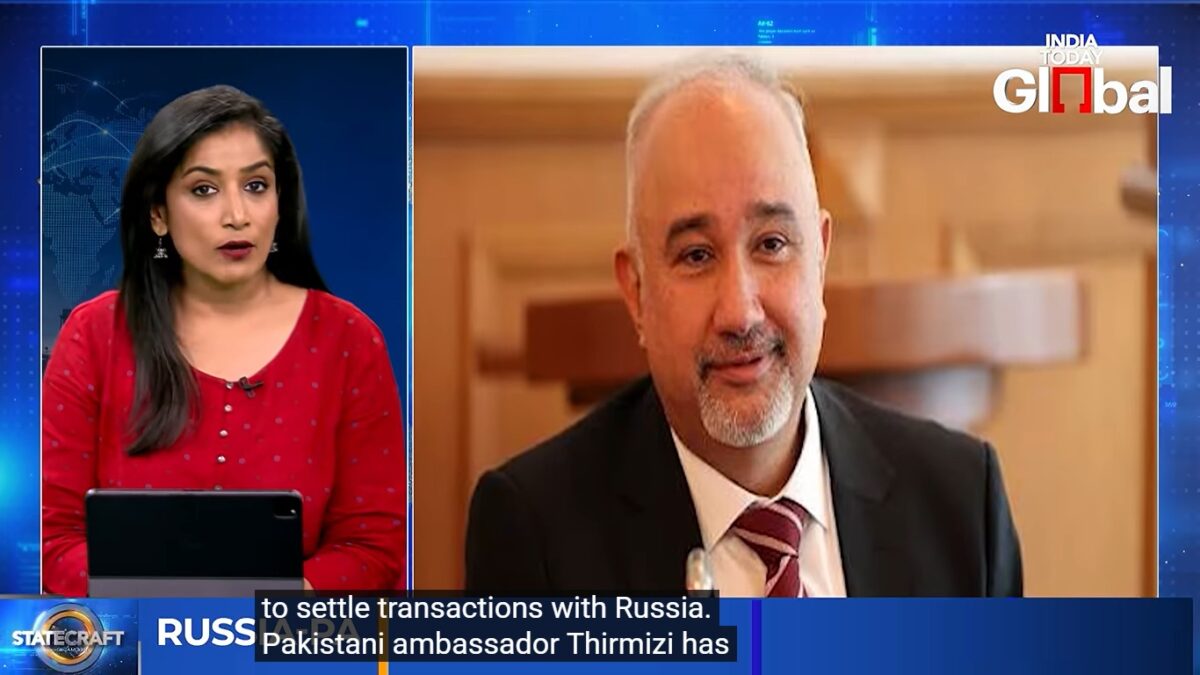
Citing Pakistan’s Ambassador to the Russian Federation, Faisal Niaz Tirmizi, Indian media reported that both countries (Pakistan and Russia) are working to manage odds such as money transfers through third countries.
“PM Shehbaz’s visit to Moscow: Indian media accepts Pakistan under Field Marshal Asim Munir is no more isolated”
Since the news of the forthcoming visit of Pakistan’s Prime Minister Mohammad Shehbaz Sharif appeared in international media, pro-Modi Indian media has been calling this development ‘strange’ and ‘difficult’ because New Delhi has always taken advantage of business and trade with Russia, while Pakistan’s relations with Russia have been more of a political nature than an economic one.
Russian media is giving special pre-visit coverage to PM Sharif’s visit as Pakistani Ambassador Faisal Niaz Tirmizi is exceptionally proactive in promoting this event, and he can be seen everywhere in the Russian media, from television screens to newspaper headlines.
Pakistan’s foreign policy catering changing global diplomatic and economic realities pains India because Pakistan is navigating as a flagship captain for the United States (Islamabad Talks between the US and Iran), China and now Russia, as the Kremlin says that Pakistan is a reliable partner in South Asia—a region that, according to New Delhi, is the only partner of Russia. Pakistan is preparing to take its relationship with Russia into a new phase of economic and diplomatic engagement. The two countries are reportedly preparing to sign approximately 15 to 16 agreements during the visit of PM Sharif to Moscow, reflecting Islamabad’s ambition to establish long-term economic linkages with Moscow. The proposed agreements cover a wide range of sectors, including oil and gas, railways, aviation, financial arrangements, information technology, artificial intelligence, tourism and education.
The anticipated visit also reflects a significant evolution in Pakistan-Russia relations, which have historically remained limited by geopolitical considerations and the strategic relationship between Moscow and New Delhi.
There was a time when Russia’s position on military cooperation with Pakistan appeared considerably different, but the geopolitical and economic environment has changed, and Moscow is now actively engaging Islamabad in several areas of mutual interest, while Pakistan is seeking to diversify its international economic partnerships and attract Russian investment in key sectors of its economy.
Indian media reports that Islamabad’s ambitions extend considerably beyond conventional cooperation, as Pakistan wants to develop a comprehensive economic relationship with Russia by connecting the two economies through transportation infrastructure, banking arrangements, aviation, information technology and other emerging sectors.
Indian media claims that despite the ambitious agenda, financial transactions remain one of the most significant obstacles to expanding Pakistan-Russia trade, as Western sanctions imposed on Russia following its invasion of Ukraine have restricted the access of Russian financial institutions to international banking networks, creating difficulties for businesses seeking to conduct and settle transactions with Russian counterparts.
Ambassador Faisal Niaz Tirmizi has acknowledged that a substantial share of bilateral payments is currently routed through third countries. This arrangement increases transaction costs and complicates commercial dealings between Pakistani and Russian businesses. Indian media is worried that Pakistan and Russia have been working towards establishing an alternative payment mechanism that could facilitate more direct, predictable and efficient financial transactions.
Indian media could not avoid accepting that Pakistan’s increasing engagement with Russia is also part of a broader effort to diversify its foreign policy and economic partnerships, as Pakistan, under the vision of Field Marshal Syed Asim Munir, wants to expand its international options rather than remain excessively dependent on any single group of traditional economic partners, whether China, Gulf countries or Western economies, while Russia is seeking new commercial and economic opportunities as Western sanctions have restricted several of its traditional financial and commercial channels.
Indian media suggests that the India-Russia relationship extends well beyond conventional diplomatic ties and includes decades of defence cooperation, joint production, military technology transfers, energy partnerships and established institutional arrangements, so Moscow’s expanding engagement with Islamabad must be closely monitored by Indian policymakers.
India Today, in its show anchored by Geeta Mohan, indicated that Pakistan’s geographical position is strategically important because it connects South Asia with Central Asia and the Middle East. Its location offers potential opportunities for regional transportation, trade and economic connectivity, and Pakistan’s proximity to Afghanistan remains relevant to Russia’s regional security calculations because Moscow recognises that Islamabad is an important regional stakeholder in matters concerning Afghanistan, where security developments have implications for Central Asia and Russia’s wider regional interests.
Independent Indian media claimed that India has diversified its defence procurement and expanded strategic partnerships with the United States, France and other Western countries, and this diversification sent the wrong messages to Russia, which is revisiting its longstanding partnership with India through closer relations with Pakistan.

