
DND Report
At a time when diplomacy, restraint, and regional engagement are urgently needed in the Middle East, a new campaign appears to be underway to undermine Pakistan’s growing role as a credible intermediary between Washington and Tehran. Recent criticism emerging from sections of the U.S. political establishment and amplified through selective media reporting suggests that Pakistan is being deliberately portrayed as “partial” toward Iran in an attempt to disqualify Islamabad from future mediation efforts.
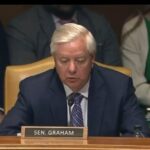
The controversy surrounding an Iranian C-130 aircraft parked at Nur Khan Air Base has become the centerpiece of this narrative. The aircraft reportedly arrived shortly before talks involving Iranian negotiators in Islamabad. Yet what could have remained a routine logistical matter was transformed into a sensational geopolitical accusation. During a recent U.S. Senate hearing, Senator Lindsey Graham, long recognized for his uncompromising pro-Israel positions and support for hardline sanctions against Iran, publicly questioned Pakistan’s neutrality. His remarks have since been echoed by media outlets and lobbying circles seeking to create doubts about Islamabad’s intentions.
Pakistan’s diplomatic engagement with both Iran and the United States is not new, nor is it unusual. States that maintain communication channels with rival powers often become essential mediators during moments of crisis. In recent years, Pakistan, alongside countries such as Saudi Arabia and Turkey, has attempted to encourage de-escalation in an increasingly polarized region. Such efforts naturally challenge those who benefit politically or strategically from perpetual confrontation.
The recent CBS News report alleging that Pakistan provided an “aerial shield” to Iranian military aircraft has therefore triggered serious debate in Islamabad’s academic, media, and policy circles. Critics argue that the report relied more on insinuation than verifiable evidence and was carefully timed to influence public perception in Washington. Questions are also being raised about whether powerful lobbying interests are attempting to shape the broader narrative surrounding Pakistan’s regional role.
The logic behind the allegations itself appears weak. The United States possesses one of the most sophisticated intelligence and surveillance systems in the world.
More importantly, the broader pattern resembles a familiar form of information warfare where selective leaks, sensational headlines, and coordinated online amplification are used to create political pressure. Pakistan has repeatedly faced disinformation campaigns in recent years, many linked to regional rivalries and geopolitical competition. The fear in Islamabad is that this latest controversy is less about one aircraft and more about limiting Pakistan’s emergence as an independent diplomatic actor capable of engaging all sides.
Pakistan’s strategic relevance stems from its ability to maintain working relationships across competing blocs. It has ties with Washington, Beijing, Tehran, Riyadh, Ankara, and Gulf capitals simultaneously. In an era defined by fractured alliances and proxy conflicts, such balanced diplomacy is increasingly valuable. Efforts to sabotage that role through media narratives and political pressure do not serve peace or stability.
There is also a larger question at stake: should diplomacy itself become a target? If every country attempting mediation is accused of “taking sides,” then avenues for dialogue will continue to shrink, leaving escalation as the only option. The Middle East has already suffered enough from wars fueled by mistrust, ideological rigidity, and external interference.
Pakistan must respond to these allegations with transparency, confidence, and diplomatic maturity. Emotional rhetoric alone will not counter coordinated narratives. Islamabad should continue engaging international partners openly while firmly rejecting attempts to politicize its mediation efforts. It should also invest more seriously in strategic communications to counter misinformation before it shapes global perceptions.
When contacted to comment, an official with the condition of anonymity said that there was no need to respond baseless, illogical and unfounded allegations appearing in US media through Israeli lobby. However he said that speculative insinuations were projected as strategic facts without credible evidence, clearly aimed at generating mistrust regarding Pakistan’s regional role and diplomatic engagements and this methodology is now predictable: selectively framed reporting by international platforms, rapid amplification by hostile information ecosystems in India and Afghanistan, followed by coordinated digital pressure. The objective is to create an echo chamber where repetition substitutes evidence.
He said that the timing of these narratives coincides with Pakistan’s growing exposure of Indian-backed proxy networks and Afghan sanctuary-based terrorist groups operating against Pakistan. This explains why kinetic terrorism and narrative warfare are now unfolding simultaneously.
Another source in Ministry of Information responded to propaganda campaign against Pakistan stating that increasingly, a visible convergence is emerging between Indian amplification networks, Afghan Taliban-linked propaganda channels, and lobbying circles aligned with Israeli strategic interests. The synchronization in timing, framing, and narrative objectives is becoming too consistent to ignore with a broader objective to weakening of Pakistan’s credibility as a stabilizing Muslim power capable of simultaneously engaging Washington, Tehran, Riyadh, Beijing, and the wider Global South. He stated such attempts by Pakistan of brokering peace in the region averting full fledge war would not end because Islamabad remains composed and clear-eyed in dealing with this challenge. He said the world is increasingly recognizing that modern geopolitical competition is no longer confined to battlefields alone. Media ecosystems, digital influence networks, proxy violence, and perception management have become integrated instruments of hybrid warfare.
There is no doubt that Pakistan’s growing diplomatic space and strategic relevance after Marka-e-Haq and subsequent regional engagements explain why hostile actors such as Israel, India and Afghanistan are attempting to undermine confidence in Pakistan through coordinated information operations rather than direct confrontation.
In the end, peace processes are rarely welcomed by those who profit from instability. As Pakistan is maintaining credibility, neutrality, and strategic patience, it may continue to play a constructive role in reducing tensions in one of the world’s most volatile regions.

