
By Agha Iqrar Haroon
My first meeting with Anton Chekhov took place in the Old Library of Government College, Lahore, in 1983, when I started reading his classic work Ward No. 6. At Government College, Lahore, we were taught that one cannot understand or enjoy the work of any content producer (philosopher, writer, poet) without knowing the producer’s biography, because the circumstances in which the producer was born, raised, and died are based on his or her thought and work.
Therefore, I asked the assistant librarian to find me a biography of Anton Chekhov, but unfortunately, he did not bring anything. I requested my English language teacher, Karimur Din Sheikh to help me, who told me that since Chekhov was a Russian/Soviet Union writer, very little could be found in Pakistan’s libraries. However, he gave me a brief sketch of Chekhov’s life that was enough to start reading Ward No. 6. That was the work of a man who died at the age of 44 from tuberculosis, who started carrying the burden of his family at the young age of around 16 when his father ran away from the city due to legal disputes, leaving everything to young Chekhov. He, while facing unusual circumstances, started writing sketches for different magazines and newspapers for buying his family’s bread because he was a born storyteller and writer. He also completed his education as a medical doctor, though he preferred to be known through his writings and used his medical degree only to provide free medical support to the poor and powerless around him.
Although I do not remember the names of the characters now, because almost 43 years have passed since I finished the story, this story left strong imprints on my cognitive mapping. Being a student of philosophy, I immediately understood that the story was rooted in Stoic philosophy. Stoic philosophy says that human suffering is ultimately meaningless, and pain is a subjective experience, and one can achieve peace through intellectual detachment. In reality, this is not easy—to detach from sufferings that are mostly verifiable and bring physical pain. The story is written around a prison-like hospital where mentally challenged patients are brutalized by a doctor who believes in Stoic philosophy.
This story was written in 1892, and through this writing, Chekhov told readers like me, even after 90 years (as I read in 1983), about social injustice and how the powerful and cruel can justify acts of ruthlessness and injustice. The story also tells the reader that there is a thin line between sanity and madness. It is the most overtly political and terrifying story written by Chekhov.
After reading Ward No. 6, I discussed the philosophical aspects of the story with my teacher of philosophy, Shujaul Haq. He told me that Chekhov actually expresses the failure of passive intellectualism, while telling us that indifference is not wisdom; it is moral cowardice and complicity. Pain cannot be reasoned away by philosophy; it must be confronted, or it will destroy you from within. I considered Ward No. 6 one of the most powerful pieces I have ever read in Russian literature. It is a political allegory for Tsarist Russia (the hospital = the state, Doctor = the power of the state, and the patient = the public) and a universal philosophical tragedy about the arrogance of detachment. As a student of philosophy, this writing tells me that passive intellectualism, such as Stoic philosophy, compromises with the aggressor rather than providing the aggressor justification to subjugate victims through thought-based justifications such as philosophical theories and religions.
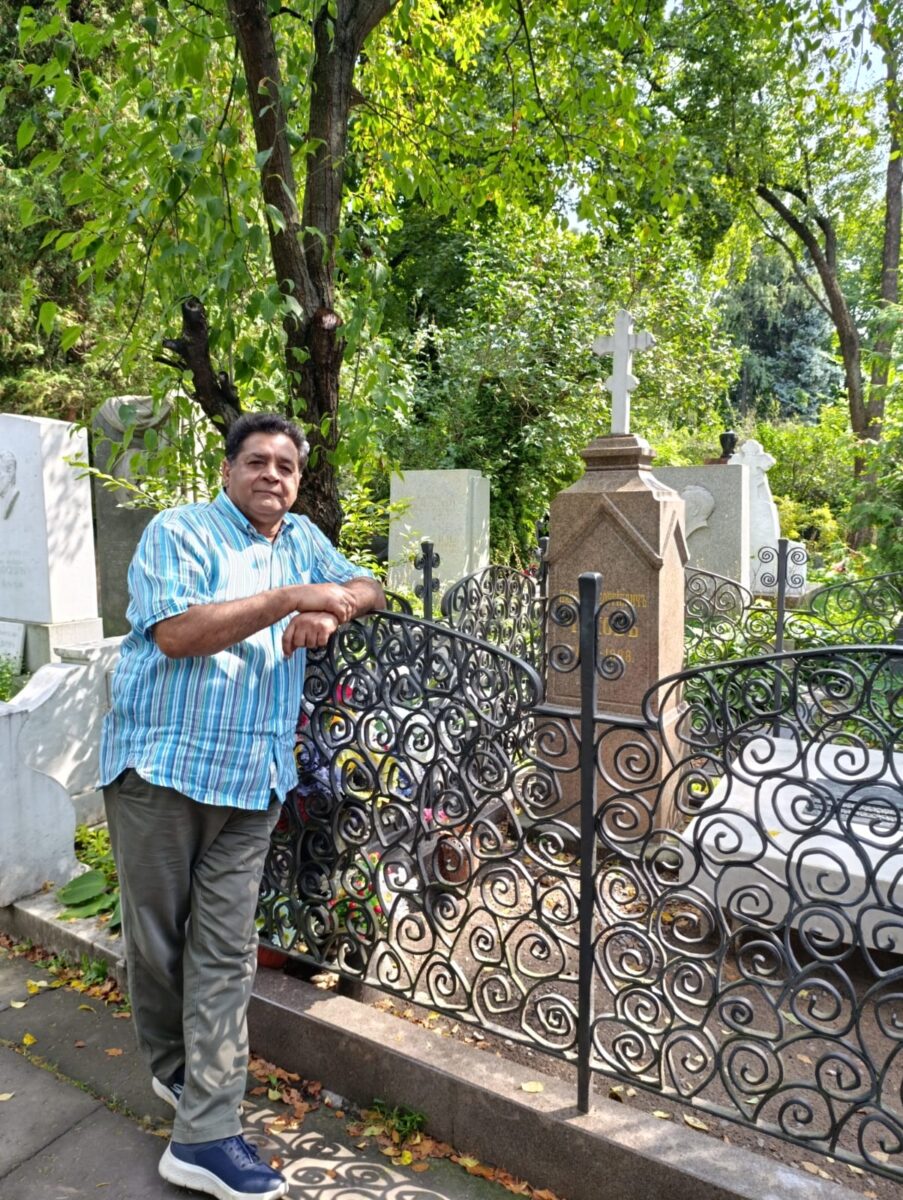
On August 7, 2026, standing at the grave of Chekhov in Novodevichy Cemetery, Moscow, I told him that nothing has changed in human history since you (Anton Chekhov) left this world, because human society is still divided into two main categories: the oppressor and the oppressed. The judge of history gave a decree thousands of years ago that the authoritative (the doctor as a symbol of power in Ward No. 6) overpowers the weaker (the patient in the story).

