
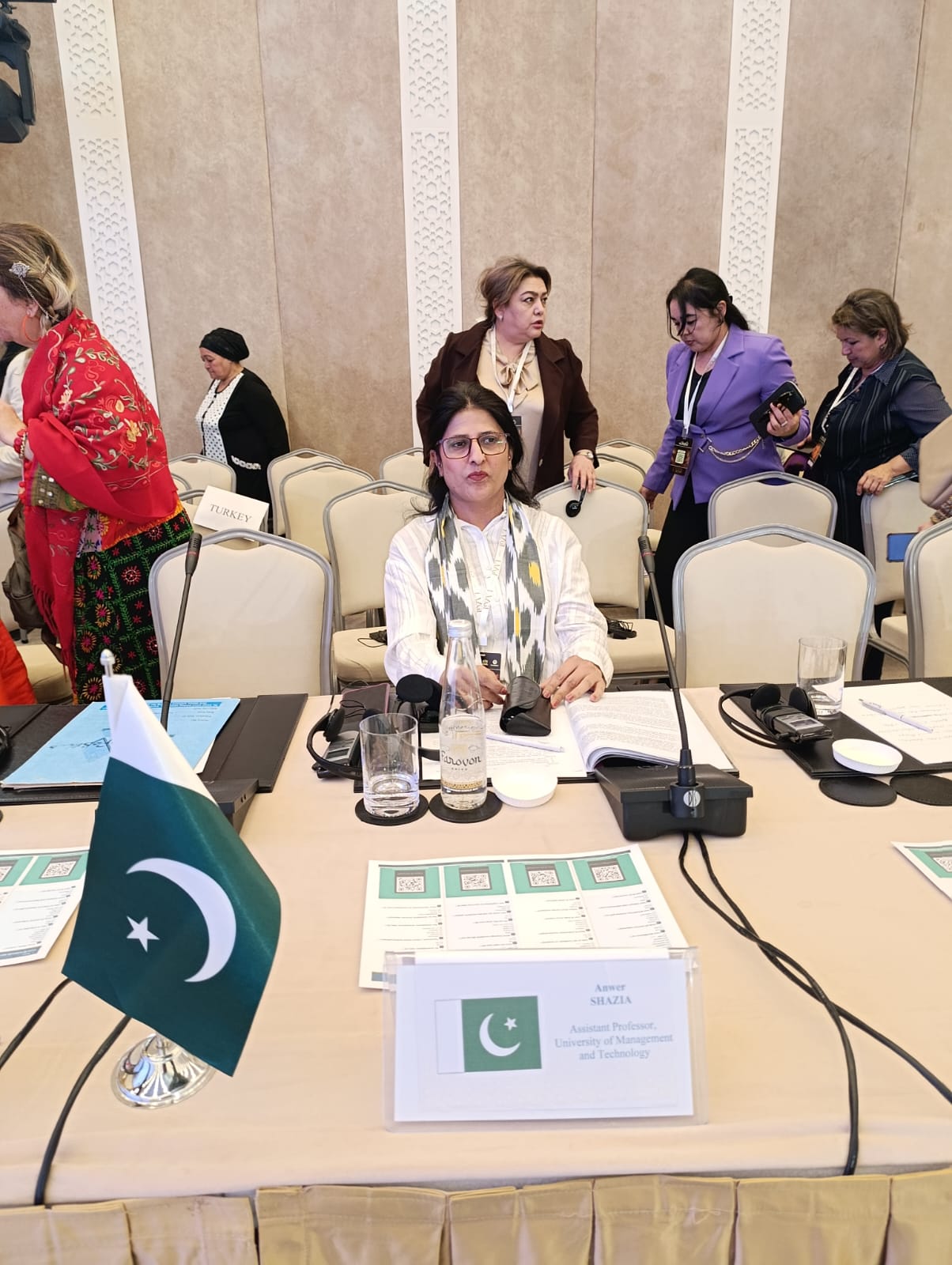
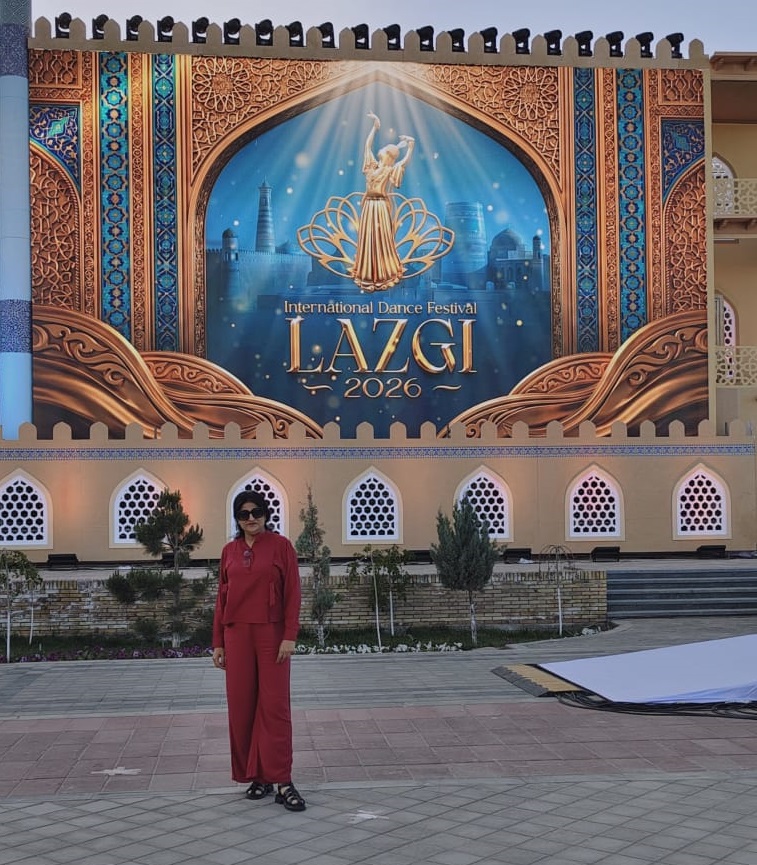
Khiva, Uzbekistan: Renowned writer, author, journalist, and academic from Pakistan, Dr. Shazia Anwer Cheema, who presented her paper titled “From Spectacle to Gesture: Re-situating Lazgi within Punjabi Performing Arts and Embodied Performance Theory” at the III International Lazgi Dance Festival in Khiva, Uzbekistan, has said the event showcased Uzbekistan’s Cultural Pride through a holistic masterclass presentation.
Her paper was developed on a unified theoretical framework to analyze the relationship between Punjabi performing arts and the Uzbek dance tradition of Lazgi through the lenses of spectacle, Aristotelian mimesis, and the Natyashastra. Challenging the dominance of text-centered dramaturgy, it argues that both traditions operate as embodied semiotic systems in which meaning emerges through gesture, rhythm, and visuality rather than linguistic narration. Drawing on Cheema’s (2024) work on Punjabi theatre and Gusal’s understanding of Lazgi, the study demonstrates that these traditions share a performative ontology grounded in spectacle, improvisation, and corporeal expression. By examining the typologies of Lazgi, the role of the jester, and parallels with Bhand, Nat, Nautanki, and Bhand Pather traditions, the paper proposes a shift from representational to performative epistemology. It concludes that Lazgi, like Punjabi theatre, must be understood as a form that is fundamentally seen rather than read, thereby contributing to a broader reconfiguration of performance theory.

Formal Interview with Dr. Shazia Anwer Cheema
Q: Was this your first visit to Uzbekistan? What were your impressions before arriving?
Dr. Shazia Anwer Cheema:
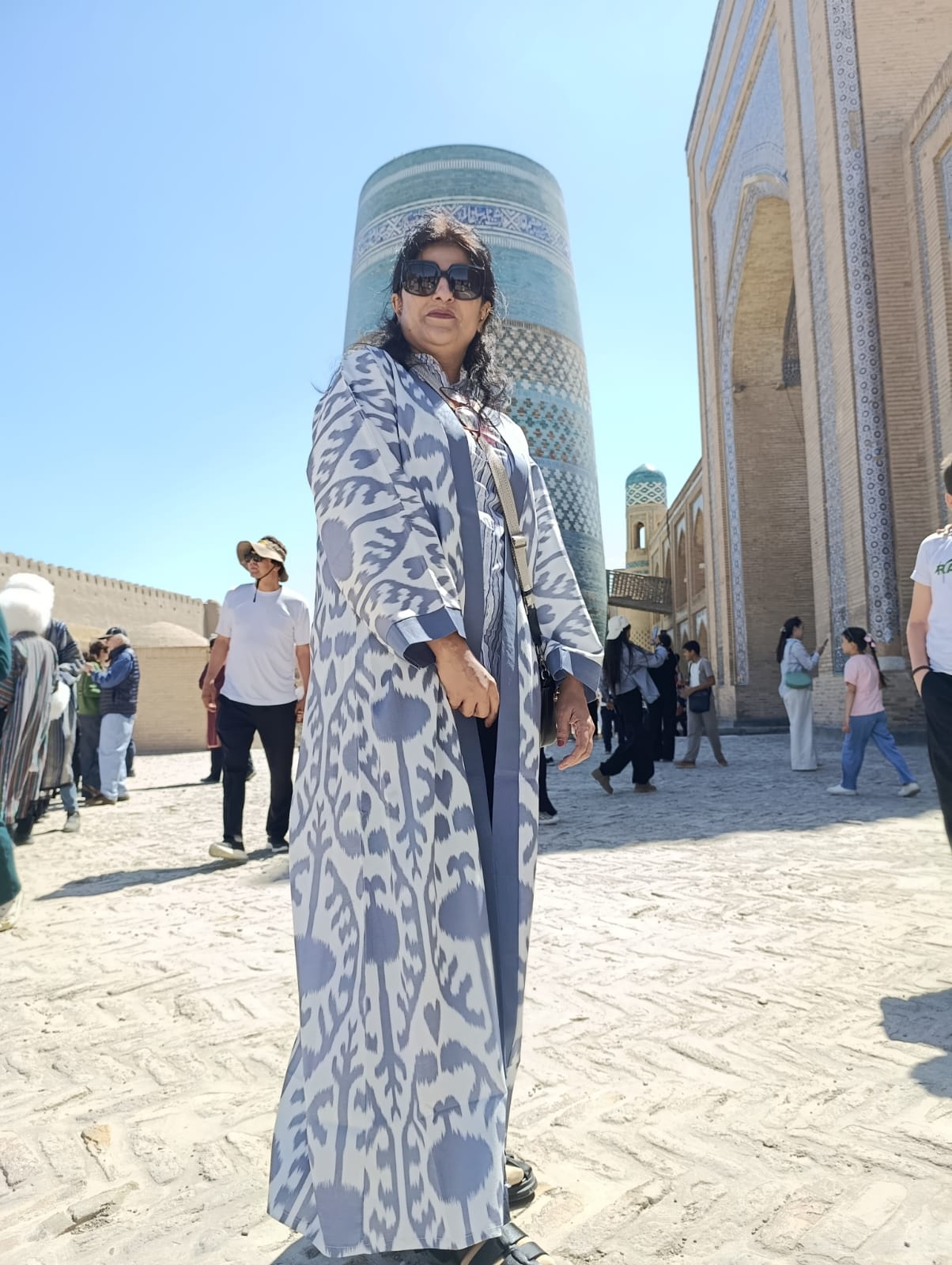
I had never been to Uzbekistan before, and my understanding of the land was that it has had a profound impact on my culture, art, and language. Literary art, performing art, fine art, and culinary traditions are deeply connected to the land of Punjab. I already knew that to understand my own culture and civilization, I must begin my exploration from the majestic land of Khwarazm, whose legends echo in Punjabi folklore. How deeply connected these two distinctly separated habitats are is a journey in itself.
Q: How would you describe the organization of the III International Lazgi Dance Festival?
Dr. Shazia Anwer Cheema:
The way the event was organized made it very clear that it was well thought out, well-conceived, and above all, brilliantly executed. It was not just about dance and entertainment; it was like traveling through centuries without straining the mind. It demonstrated how dance, culture, and even history are cyclical. There is no binary linearity in them. Performing arts, visuals, and acoustics can relate to multiple cultures at the same time.
Q: What cultural lessons did you draw from your experience in Uzbekistan?
Dr. Shazia Anwer Cheema:
As a proud Pakistani and Punjabi, I do not believe that one culture is uniquely privileged in its richness while others are not. Rather, the true privilege lies in the pride of those who inherit and preserve that culture. That makes all the difference. I found the Uzbek people to be an embodiment of their cultural pride, which naturally translates into pride of being—a sense of fulfillment in one’s existence and purpose in life. The absence of such pride can alienate people from their culture and deprive them of the anchor required for a dignified life.
Q: How do you see the role of Uzbekistan’s Ministry of Culture in promoting national identity?
Dr. Shazia Anwer Cheema:
The Ministry of Culture of Uzbekistan has manifested, in a layered yet subtle way, what it means to be Uzbek and how important that identity is not only for nation-building but also for social cohesion.
Q: What personal takeaways did you gain from attending the festival?
Dr. Shazia Anwer Cheema:
The experience was exciting and deeply moving at the same time. What I took from it was how proud the Uzbek nation is and how this comprehensive idea of cultural confidence can be interpreted in my own part of the world. Moreover, these kinds of initiatives are a beacon for people-to-people connections and bilateral cultural dialogue. I look forward to continuing this dialogue, which for me has been initiated by the Ministry of Culture of Uzbekistan.
Q: You mentioned the event encouraged dialogue rather than monologue. Could you elaborate?
Dr. Shazia Anwer Cheema:
The Uzbek government could have turned this event into a cultural monologue, but instead, they chose to make it a dialogue. I cannot forget the kind gesture of displaying my flag on the stage, the name of my country being represented through me and repeated by the host country multiple times, and the moment when my ears were touched by the sound of “Dum Dum Diga Diga, Mausam Bheega Bheega,” a famous Pakistani dance song. Uzbekistan also presented a remarkable spectacle with dancers in Pakistani attire. The generosity and self-fulfillment of Uzbekistan are difficult to describe in better words. The Ministry of Culture arranged a dialogue instead of a monologue, and I am sure each one of us felt deeply connected through that personal gesture. As far as I am concerned, my romance with Uzbekistan has just begun, and this dialogue may produce a tale of a thousand nights.

Q: What message would you give to those considering visiting Uzbekistan?
Dr. Shazia Anwer Cheema:
Political will and state vision are key to creating such deep connections. All are welcome to experience Uzbekistan, and their own stories are equally welcomed. I salute the vision behind this, and the proud nation of Uzbekistan rightly deserves such leadership.

