
By Nadeem Anjum
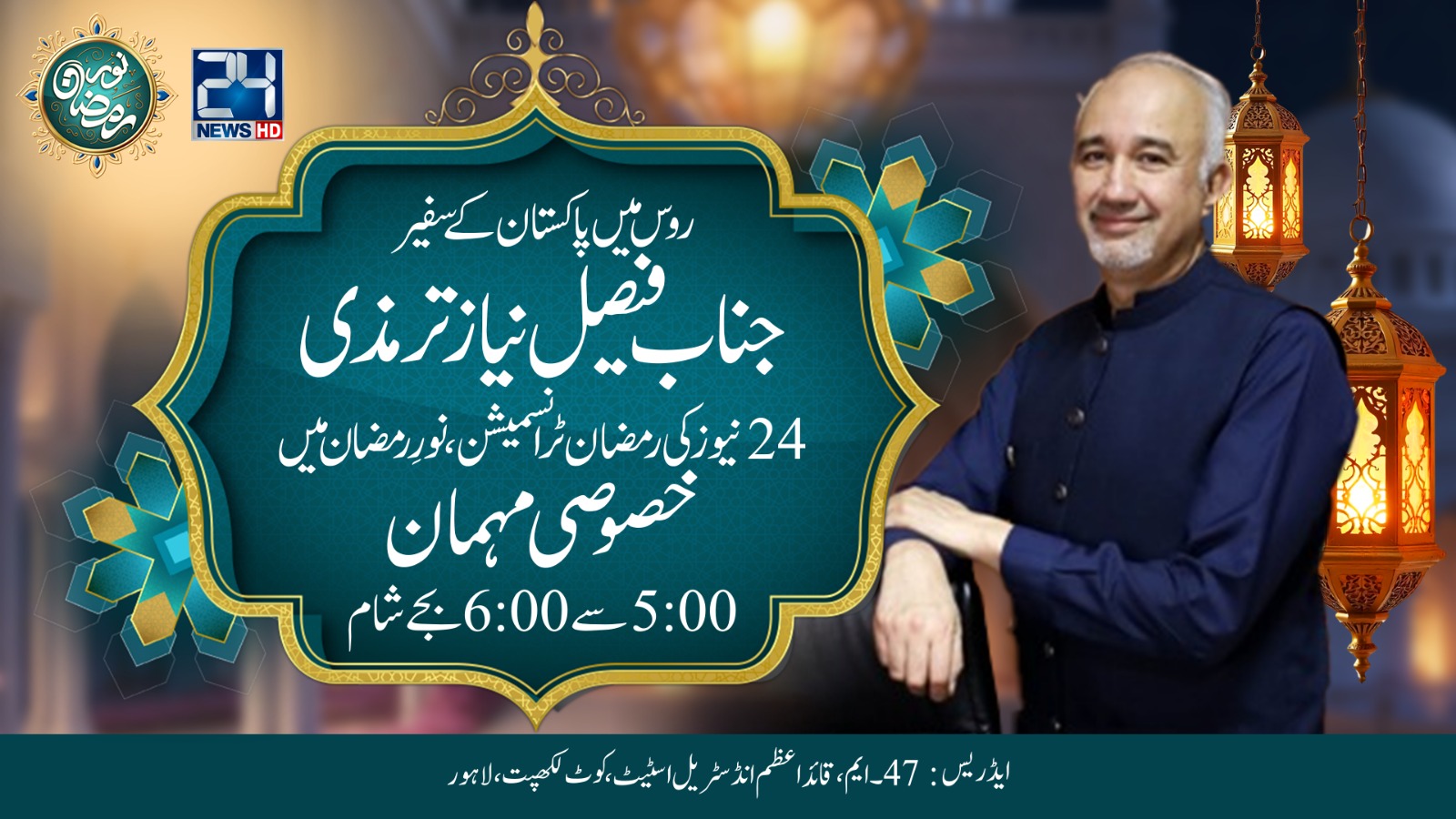
Lahore: Pakistan’s Ambassador to the Russian Federation, Faisal Niaz Tirmizi, participated in a special Ramadan transmission of 24News titled “Noor Ramadan” via video link from Moscow on Saturday, offering Pakistani viewers a rare glimpse into the traditions, culture and religious life of Muslims in Russia during the holy month.
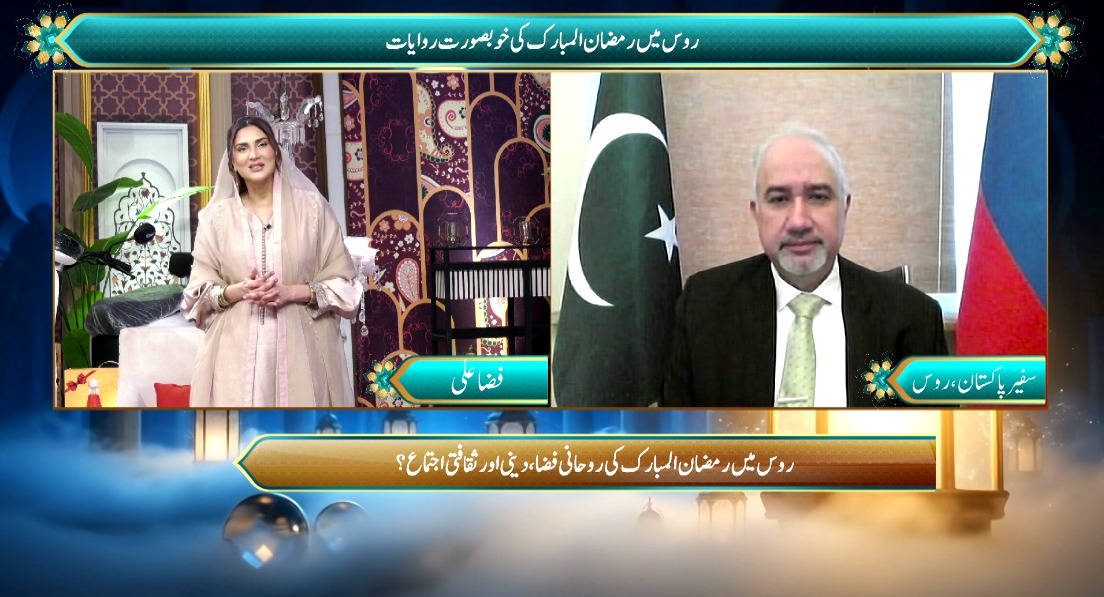
The broadcast was described as a first-of-its-kind initiative in Pakistani media, showcasing how Muslims in Russia celebrate Iftar and Ramadan festivities, while highlighting the cultural diversity and religious heritage of the Muslim community across the Russian Federation.

Speaking during the program, Ambassador Tirmizi emphasized that Islam has a history of more than a thousand years in Russia. He noted that the religion began spreading in the region after the ruler of Volga Bulgaria embraced Islam in 922 AD, which laid the foundation for the growth of Muslim communities across several regions of present-day Russia.
“Today, more than 20 million Muslims live in Russia, representing different nationalities and cultures,” the ambassador said. He added that during Ramadan, mosques across the country become vibrant centers of worship and social activity, hosting Taraweeh prayers, Quran study circles and communal iftars.
Ambassador Tirmizi highlighted several historic mosques where large Ramadan gatherings take place, including the Moscow Jama Masjid, the Kul Sharif Mosque in Kazan, and the Great Mosque of Grozny in Chechnya.
One of the most distinctive Ramadan traditions in Russia, he explained, is the concept of the “Ramadan Tent.” These large tents are set up in various cities where hundreds of people gather daily to break their fast together.
“About 300 to 400 people gather inside these tents, while many more join outside. What makes this tradition special is that not only Muslims but people from different religions and nationalities participate, promoting harmony, dialogue and mutual respect,” Ambassador Tirmizi said.
He noted that such gatherings often attract the entire local community, including non-Muslims, government officials and diplomats. In some regions, the events are organized with the participation of regional authorities such as the governors of Dagestan and Tatarstan, along with ministries and diplomatic representatives.
Ambassador Tirmizi also informed viewers that large Muslim populations live in Moscow, Chechnya, Tatarstan, Bashkortostan, Tuva and Dagestan, where special arrangements are made during Ramadan. He described the mosques in Moscow as architectural masterpieces, where thousands gather for prayers.
According to the ambassador, after the communal iftar in Ramadan tents, Isha and Taraweeh prayers are held, and the gatherings often transform into cultural and social events that reflect Russia’s diverse traditions.
He further noted that Russian President Vladimir Putin encourages the enthusiastic observance of Ramadan, reflecting recognition of the country’s Muslim population and its cultural traditions.
Ambassador Tirmizi also spoke about the educational and cultural links between Pakistan and Russia. He said a large number of foreign students study in Russia, where they also have opportunities to learn about Islamic scholarship.
Highlighting the deep cultural heritage of Russia, he mentioned that the country has produced world-renowned literary figures such as Anton Chekhov, Fyodor Dostoevsky and Maxim Gorky. He added that Pakistani literature has also found an audience in Russia, noting that the poetry of Faiz Ahmed Faiz has been translated into Russian, while the works of Saadat Hasan Manto were translated about two years ago.
The ambassador said that around 1,300 Pakistani students are currently studying in Russia, and efforts are underway to further increase educational exchanges between the two countries.
“There is significant interest in Pakistani culture in Russia. Our artists visit here, and special iftar gatherings are organized during Ramadan where ambassadors, Russian guests and Pakistani community members participate,” he said.
Ambassador Tirmizi also pointed out the unique climatic challenges of fasting in Russia, explaining that the fast can last up to 20 hours during summer, while in winter it may be reduced to seven to eight hours.
He added that the Pakistani community in Russia celebrates Moon Night and Eid with great enthusiasm, despite the harsh winter conditions in which snow often covers the streets.
The special Ramadan transmission also featured visual scenes of the Ramadan tents and communal iftars, allowing viewers in Pakistan to experience the festive atmosphere and better understand the religious and cultural life of Muslims in Russia.

