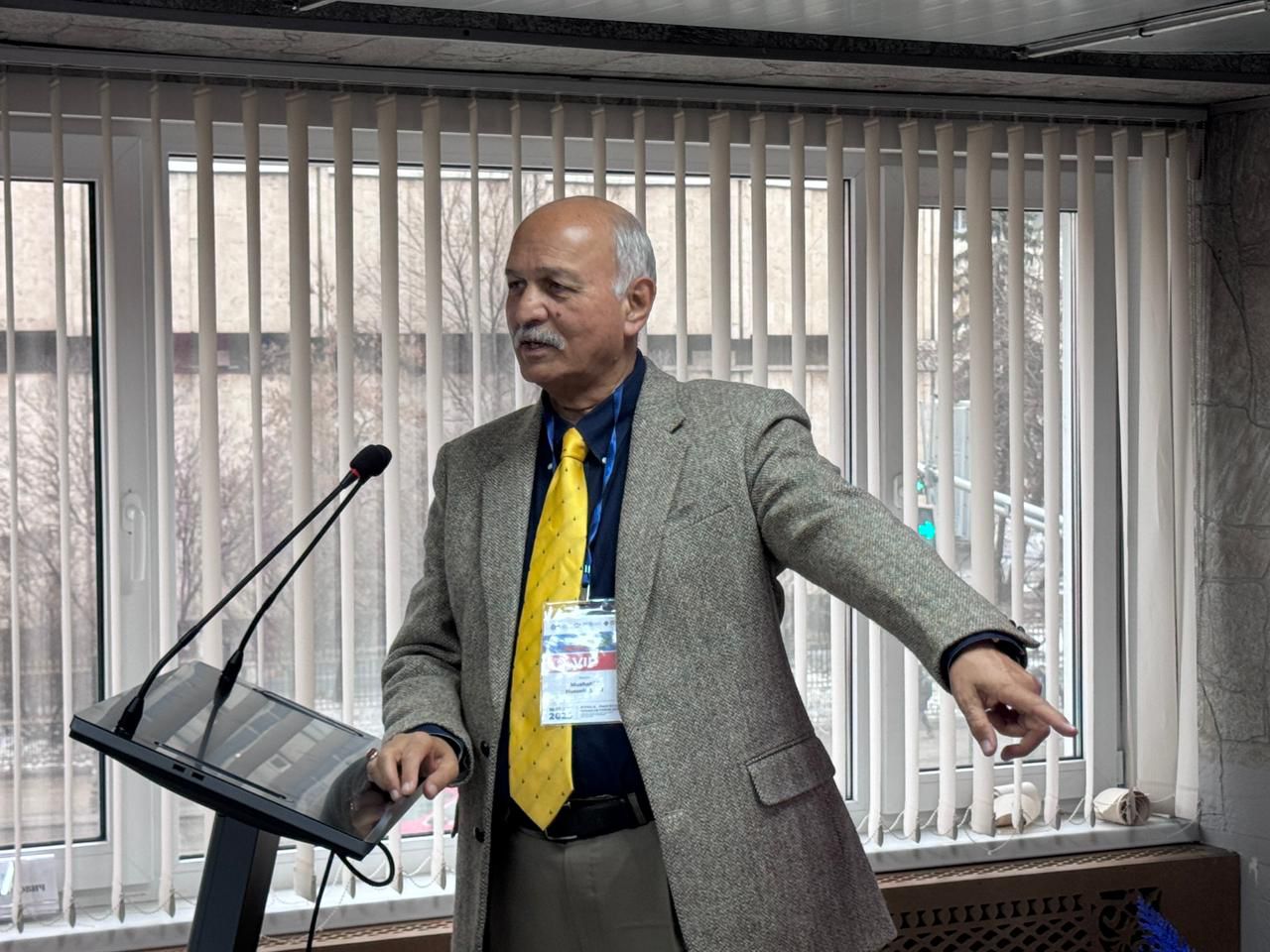
Monitoring Desk: The two-day Russia-Pakistan Eurasian Forum 2025 was held in Moscow on 16 and 17 December 2025 at the University of World Civilizations (UWC).
The international forum was organized under the patronage of the Embassy of Pakistan, Moscow, while it was co-hosted by the Consortium of Asia-Pacific Eurasian Studies (CAPES), the University of World Civilizations, Russia, and the Federal Urdu University of Arts, Sciences and Technology (FUUAST), Pakistan.
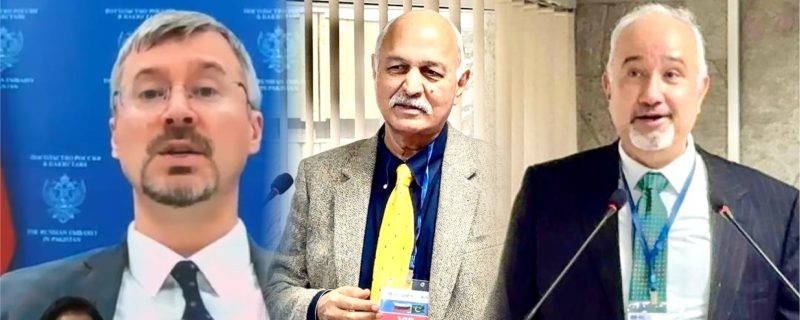
The forum was attended by a large number of prominent diplomats, policy experts, academicians, and lawmakers from Pakistan and Russia. Prominent speakers included Senator Mushahid Hussain Syed, Dr. Maria Sultan, Dr. Shabana Fayyaz, Alexey Pavlovsky, Director of Second Asia, Russian Ministry of Foreign Affairs, Ambassador Andrei Baklanov, former Russian Ambassador to Saudi Arabia, Ambassador Albert Khorov, Russian Ambassador to Pakistan, Ambassador Igor Khalyonsky, Dr. Prokhor Tebin (HSE University Moscow), Professor Oleg Solbuchikov (Rector, UWC), Deputy of the Russian State Duma Nikita Berezin, and Professor Dr. Zabda Khan (Vice Chancellor, FUUAST Islamabad).
Addressing the inaugural session, Pakistan’s Ambassador Faisal Niaz Tirmizi highlighted the growing convergence between Pakistan and Russia in the areas of regional connectivity, trade, and people-to-people contacts. He said that the closeness of views between the two countries reflects practical cooperation in Eurasia, common interests, and the exploration of new opportunities. The Pakistani Ambassador emphasized that Pakistan and Russia seek a peaceful, practical, and mutually beneficial partnership in the changing regional and global context.
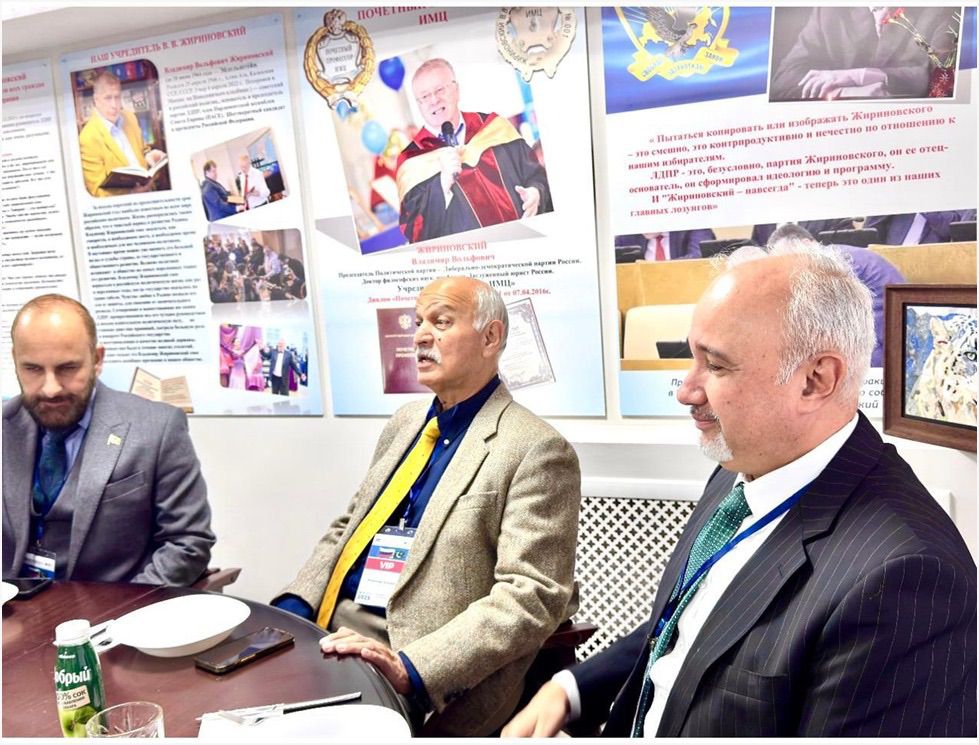
In his address, Ambassador Faisal Tirmizi recalled the December 16, 2014, terrorist attack on the Army Public School in Peshawar, saying that 132 innocent children were martyred in that tragedy, which left the entire Pakistani nation in mourning. He said that Russia has also gone through a similar tragic incident of terrorism against children, when 186 Russian children lost their lives in a heartbreaking incident in 2004. He said that this shared grief brings Pakistan and Russia closer in the fight against terrorism.
During the forum, detailed sessions were held on regional security, Eurasian integration, energy, trade, education, public diplomacy, and the future of Pakistan-Russia relations. Experts said that the Russia-Pakistan Eurasian Forum will play an important role in building trust, promoting academic dialogue, and policy cooperation between the two countries.
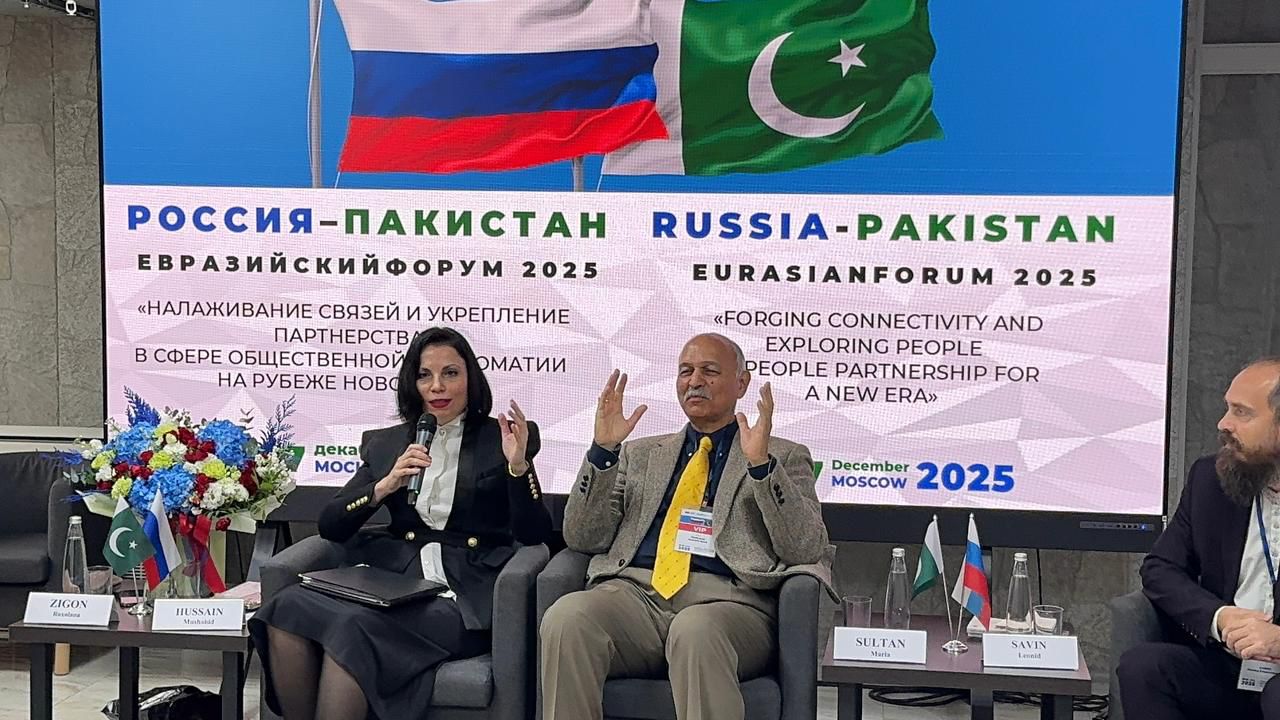
Senator Mushahid discussed how cooperation in non-traditional security areas can contribute to economic stability, mutual trust, and people-to-people partnerships, highlighting new avenues for collaboration in a changing global environment. He said the global shift of power from West to East was evident and that even President Trump’s National Security Strategy has recognised this new reality, adding that Eurasia is the center of gravity of the rising Global South. He said Eurasian multilateralism would drive this multipolar world, with Pakistan, Russia, Iran, Turkey, and the Central Asian Republics driving Eurasian multilateralism. In this regard, he announced the establishment of the Eurasian Connectivity Forum as the institutional foundation of Eurasian multilateralism, since connectivity includes commerce, culture, and people-to-people connectivity, with media, academia, and think tanks as key players. He said counter-terrorism, commerce and culture, education and energy, and people-to-people connectivity would be key pillars of the Eurasian Connectivity Forum. Senator Mushahid Hussain also called for an annual Pakistan-Russia Strategic Dialogue led by opinion and business leaders, as in the new scenario, there is no fundamental conflict of interests between Pakistan and Russia, mentioning how Pakistan had a positive and balanced perspective on Ukraine, while Russia too remained neutral during Indian aggression against Pakistan, with both opposing any New Cold War. He urged both governments to ‘seize the moment’ to build a broader partnership between Islamabad and Moscow in a rapidly transforming regional and global scenario.