
By Chaudhry Hamid Mahmood
(Brand Ambassador of Uzbekistan Tourism in Pakistan)
President of the Republic of Uzbekistan Shavkat Mirziyoyev is visiting Pakistan in early February 2026. This moment carries significance far beyond protocol and will be a milestone in bilateral relations.
President Mirziyoyev’s forthcoming visit to Pakistan comes at a moment when Uzbekistan stands confident on the world stage economically resilient, diplomatically respected, and culturally influential.
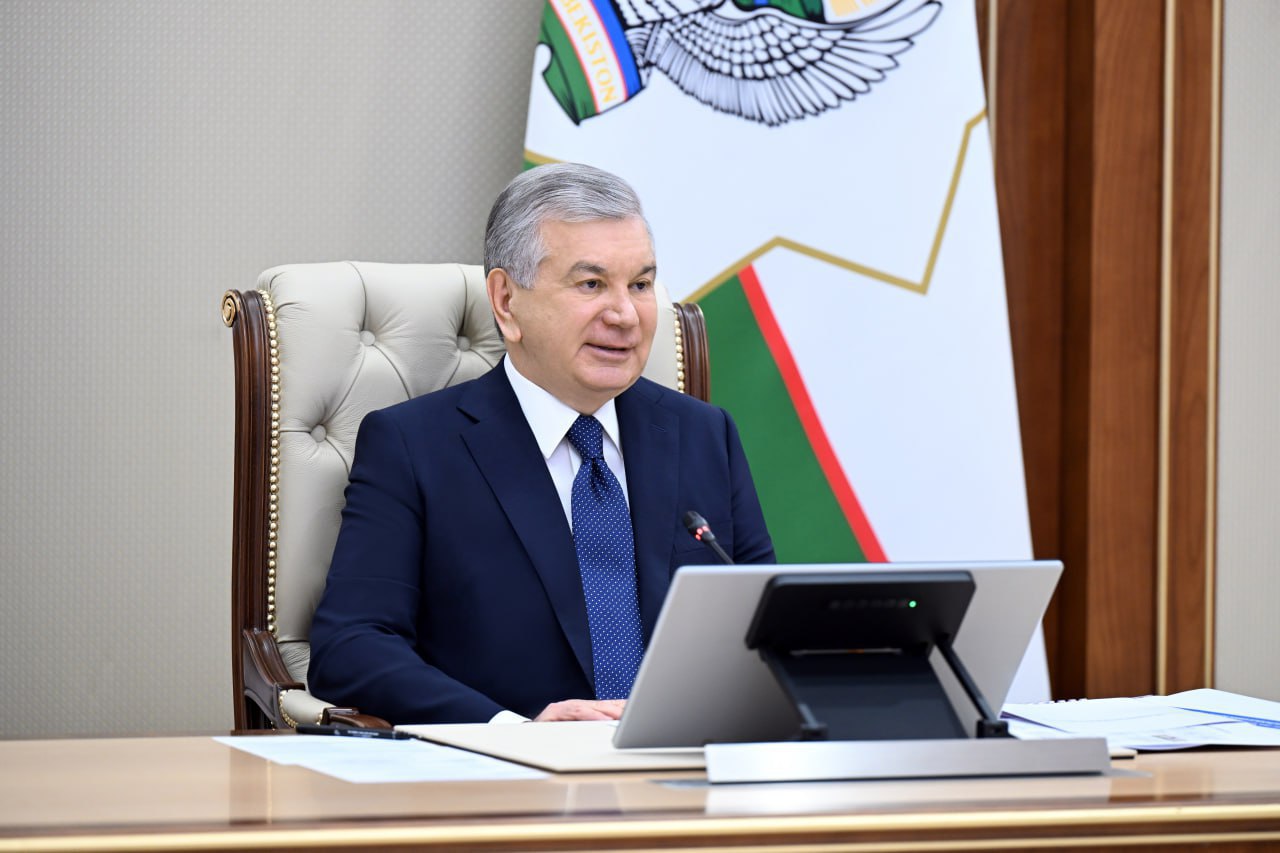
The agreements and understandings expected during this visit will further institutionalize cooperation and set new benchmarks for bilateral engagement. Rooted in shared history yet driven by modern aspirations, the Uzbekistan–Pakistan partnership has the potential to become a cornerstone of cooperation between Central and South Asia. The visit is more than a diplomatic event; it is recognition of Uzbekistan’s achievements and a shared resolve to build a future of connectivity, prosperity, and mutual respect.
“Over the past several years, Uzbekistan has emerged as one of the most reform-driven and dynamic countries in the region”
Uzbekistan has gone through remarkable economic and cultural transformation under visionary leadership President Shavkat Mirziyoyev and is steadily rising stature on the global stage. For Pakistan and Uzbekistan, it signals a shared resolve to deepen cooperation across diplomacy, trade, connectivity, tourism, culture, and people-to-people relations at a time when regional integration is gaining renewed importance.
The relationship between Pakistan and Uzbekistan is anchored in deep civilizational roots that stretch back centuries. The lands of present-day Uzbekistan have been among the greatest centers of Islamic scholarship, spirituality, and intellectual development, leaving an enduring imprint on the religious and cultural life of Pakistan. Imam Muhammad al-Bukhari, the compiler of Sahih al-Bukhari (the most authentic collection of Hadith in Sunni Islam) completed his work in Samarkand and this work continues to shape Islamic learning in Pakistan’s madrasas, universities, and mosques. His scholarly legacy remains a cornerstone of religious education across the country.
“Uzbekistan has played a pivotal role in promoting Central Asian cooperation and has emerged as a strong advocate for stability and economic integration across Eurasia”
Equally profound is the influence of Imam Abu Isa al-Tirmidhi from Termez, whose Jami‘ at-Tirmidhi occupies a distinguished place among the six canonical Hadith collections. His work has deeply influenced Islamic jurisprudence and ethics, strengthening the spiritual and scholarly bonds between Central Asia and South Asia. The historical connection is further enriched by Zahir-ud-Din Muhammad Babur, born in Andijan, whose arrival in the subcontinent laid the foundations of the Taimuri linage, an era that shaped South Asia’s art, architecture, governance, and culture. Complementing this legacy is the spiritual influence of Bahauddin Naqshband, whose Naqshbandi Sufi order continues to inspire millions of followers in Pakistan. These shared pillars of Islamic scholarship, Sufi spirituality, and historical leadership form a living foundation for contemporary Uzbekistan–Pakistan relations.
Over the past several years, Uzbekistan has emerged as one of the most reform-driven and dynamic countries in the region. Under President Mirziyoyev’s leadership, the country has undergone wide-ranging political, economic, and social reforms that have fundamentally reshaped its global image. Economic liberalization, improvements in the business and investment climate, strengthening of the rule of law, and enhanced transparency and governance have been widely acknowledged by international institutions and investors. The government’s focus on good governance, human development, women’s empowerment, and youth participation has further reinforced Uzbekistan’s international credibility as a stable, open, and reliable partner.
This transformation has elevated Uzbekistan’s standing in regional and global affairs. Today, it is recognized as a constructive and proactive actor whose foreign policy emphasizes dialogue, peaceful coexistence, and regional connectivity. Uzbekistan has played a pivotal role in promoting Central Asian cooperation and has emerged as a strong advocate for stability and economic integration across Eurasia. On global platforms, its voice is increasingly heard on issues such as sustainable development, climate action, cultural heritage preservation, and intercivilizational dialogue. By hosting major international forums, cultural events, and investment conferences, Uzbekistan has positioned itself as a bridge between East and West, and between Central and South Asia.
Pakistan, under the leadership of Prime Minister Shehbaz Sharif, views Uzbekistan as a natural strategic partner. Both countries share converging perspectives on regional peace, economic development, and the imperative of transforming geography into opportunity. Uzbekistan’s outreach toward South Asia aligns closely with Pakistan’s vision of regional connectivity and trade expansion. Growing political trust between Islamabad and Tashkent has already translated into enhanced cooperation in trade, energy, transport, defense dialogue, and institutional linkages, a momentum that the upcoming presidential visit is expected to further consolidate.
“Cities like Samarkand, Bukhara, Khiva, and Tashkent symbolize not only a rich past but also renewal and modern hospitality”
Uzbekistan’s economic progress stands out as one of the region’s most notable success stories. Sustained economic growth, expanded industrial capacity, modernization of agriculture, and the development of strong sectors such as textiles, pharmaceuticals, construction, mining, and information technology have strengthened its economic resilience. Of particular importance are connectivity initiatives linking Central Asia to Pakistani seaports. These projects promise to integrate Uzbekistan more deeply into global supply chains while positioning Pakistan as a vital transit and trade hub, reflecting Uzbekistan’s broader vision of becoming a key node in regional and global commerce.
Cultural diplomacy and tourism have also played a significant role in enhancing Uzbekistan’s global image. Massive investment in heritage preservation, infrastructure, and visitor facilitation has transformed the country into one of the world’s most attractive cultural tourism destinations. Cities like Samarkand, Bukhara, Khiva, and Tashkent symbolize not only a rich past but also renewal and modern hospitality. The expansion of air connectivity, particularly through Uzbekistan Airways, has enabled a sharp rise in tourism exchanges, Ziyarat tourism, academic travel, and business visits from Pakistan.
Education, media, and people-to-people diplomacy further reinforce these ties. Uzbekistan’s emphasis on education, research, and cultural exchange, along with cooperation with foreign universities and media organizations, reflects a confident and outward-looking nation. Pakistani scholars, journalists, and students are increasingly engaging with Uzbekistan, strengthening long-term societal bonds.
 Note: Chaudhry Hamid Mahmood is Brand Ambassador of Uzbekistan Tourism in Pakistan

