
Rawalpindi, 21 February: On 21 February, in a cowardly attack, Security Forces convoy was targeted by Indian proxy Fitna al Khwarij in Bennu District while an intelligence-based operation was being conducted on reported presence of (TTP terrorists) Khwarij including a suicide bomber.
A vehicle borne suicide bomber was intercepted by the leading group, foiling his nefarious design to target innocent civilians/ Law enforcement personnel in Bannu City, averting major catastrophe. During the conduct of operation, khwarij were located and after intense fire exchange, five khwarij were sent to hell by the security forces. However, in desperation, Khwarij rammed the explosive laden vehicle into one of the vehicles of the leading group.
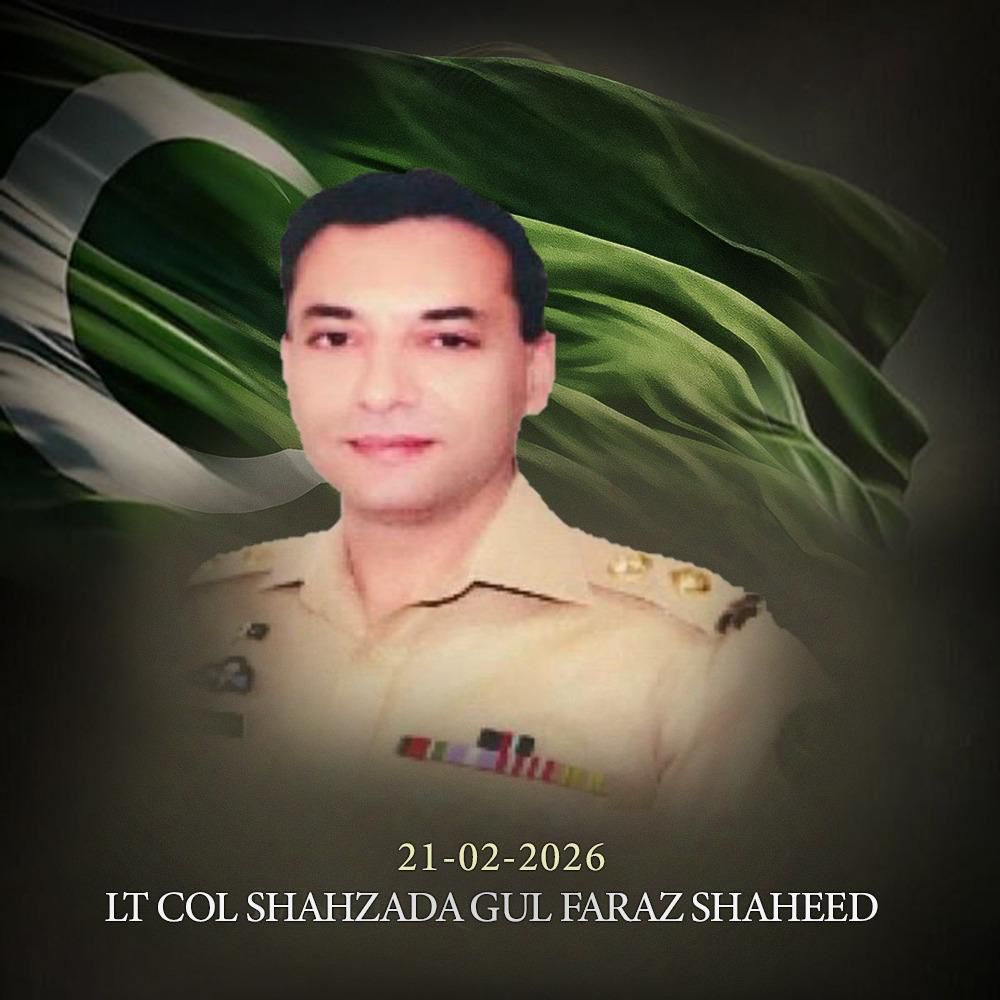
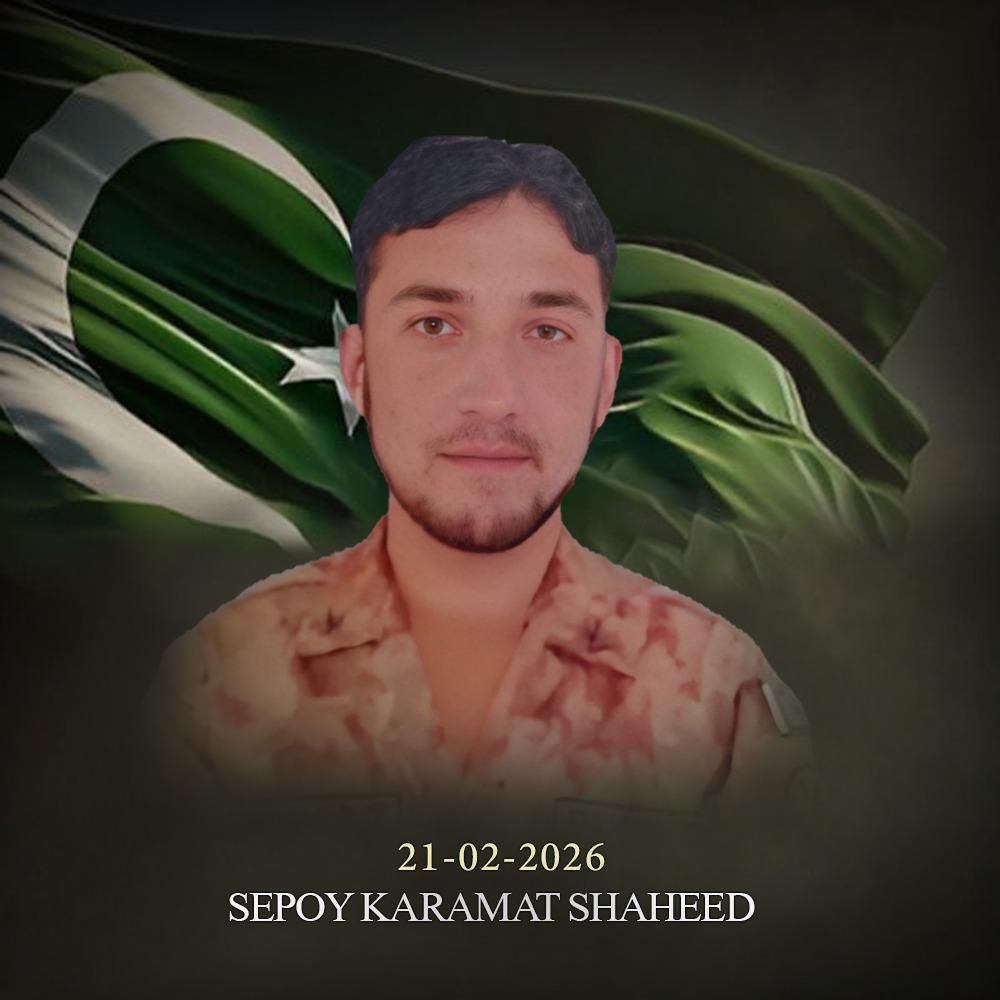
Resultantly, Lt Colonel Shahzada Gul Faraz (age: 43 years, resident of District Manshera), a brave commanding officer renowned for his daring actions, who was leading his troops from the front embraced shahadat alongwith Sepoy Karamat Shah (age: 28 years, resident of District Peshawar).
Khwarij are continuing with their terrorist activities inside Pakistan using Afghan soil, violating the sanctity of the holy month of Ramadan. This clearly indicates that they have no link with Islam.
The Afghan Taliban Regime has yet again failed to stop the Khwarij from use of Afghan soil for terrorist activities inside Pakistan, that too in the holy month of Ramadan. Pakistan will not exercise any restrain and operations would continue against the perpetrators of this henious and cowardly act for justified retribution against Khwarij irrespective of their location.
Counter Terrorism campaign under vision “Azm-e-Istehkam” (as approved by the Federal Apex Committee on National Action Plan) by Security Forces and Law Enforcement Agencies of Pakistan will continue at full pace to wipe out the menace of foreign-sponsored and supported terrorism from the country and such sacrifices of our brave soldiers further reinforce our unwavering commitment of safeguarding our nation at all costs.
It may be mentioned that undeniable evidence has emerged confirming that Afghan soil continues to be used for terrorist activities against Pakistan. Most recently, an Afghan national carried out a suicide attack on the Malangi Post in Bajaur on February 16, 2026.
According to information shared by official circles in Islamabad with DND News Agency, the suicide bomber was identified as Ahmad alias Qari Abdullah Abuzar, a resident of Balkh province, Afghanistan. Official sources further disclosed that Ahmad was previously associated with the Taliban’s special forces, indicating direct involvement of the Afghan Taliban regime in the preparation and execution of the attack on Pakistani soil. As a result of the attack, 11 security personnel and two innocent civilians were martyred.
The repeated involvement of Afghan citizens in terrorist incidents inside Pakistan constitutes compelling evidence of systematic patronage, facilitation, and protection extended to militant groups by the Afghan Taliban regime. For several years, Pakistan’s security investigations have consistently traced the infrastructure, leadership, training, and logistical support of terrorist networks back to sanctuaries across the border in Afghanistan.
On February 6, 2026, the suicide bomber involved in an attack in Islamabad was confirmed to have received terrorist training in Afghanistan. Similarly, the terrorists who attacked the Abad Judicial Complex in Islamabad on November 11, 2025, and the Frontier Constabulary (FC) Headquarters in Peshawar on November 24, 2025, were found to have operational and logistical links with handlers based in Afghanistan.
Afghan nationals were also implicated in the terrorist attacks on the Dera Ismail Khan Police Training Center on October 10, 2025, and the Kwanza Cadet College on November 10, 2025. These incidents further reinforce the pattern of cross-border terrorism emanating from Afghan territory.

In another significant case, Nematullah, son of Musa Jan, who was arrested in South Waziristan on October 19, 2025, was identified as a resident of Kandahar province, Afghanistan. Investigations also confirmed that the Bannu Cantonment attack on March 4, 2025, was planned from Afghanistan, with the direct involvement of Afghan nationals. Likewise, facilitators of the Jafar Express attack on March 11, 2025, remained in constant contact with Noor Wali Mehsud, a foreign militant leader hiding inside Afghanistan.
The confessional statement of Rohullah K., a suicide bomber arrested on September 3, 2024, provided further irrefutable evidence of cross-border terrorism, including training, financing, and operational direction originating from Afghanistan. Security experts assert that such cases clearly demonstrate that terrorist groups enjoy safe havens and freedom of movement under the Afghan Taliban’s watch.
International assessments corroborate Pakistan’s concerns. The United Nations Security Council Monitoring Team has repeatedly stated in its reports (2023–2025) that Afghanistan has become a safe haven for multiple terrorist organizations, including Tehreek-e-Taliban Pakistan (TTP), Al-Qaeda, and ISKP. The reports specifically note that the Afghan Taliban maintain close ties with TTP leadership and have failed to take meaningful action against its operations targeting Pakistan.
Similarly, the Global Terrorism Index 2024 and 2025 identified Afghanistan as a central hub for regional terrorist activity, citing the resurgence of militant networks following the Taliban’s takeover. The U.S. Department of State’s Country Reports on Terrorism and assessments by the U.S. Department of Defense have also highlighted that the Afghan Taliban continue to provide shelter, logistical support, and access to weapons to terrorist groups operating in the region.
According to compiled security data, during the period 2024–25, more than 70 percent of terrorist incidents in Pakistan involved Afghan nationals or militants operating from Afghan territory, many of whom were neutralized by Pakistani security forces after their identities and origins were established. This data further underscores the organized and cross-border nature of the terrorist threat Pakistan continues to face.
Taken together, these incidents and international findings establish a clear pattern: Afghanistan, under the Afghan Taliban regime, has emerged as a hub of terrorism, with its territory being systematically used to plan, fund, train, arm, and launch attacks against Pakistan.

