
DND Editorial
The Khyber Pakhtunkhwa Assembly’s Aman Jirga on November 12 issued a 15-point declaration focused on improving security, tackling terrorism, urging federal consultation with the province on Pakistan–Afghan policy, and demanding the reopening of all trade routes along with a stronger border economy with Afghanistan. The outcome of these points was, in essence, a call for “dialogue and talks” with the Afghan Taliban to secure peace in a province that is unwilling to allow federal security forces to fight terrorism effectively.
These demands have come at a time when the Afghan Taliban are openly using their proxies such as the TTP to target innocent civilians through suicide attacks, including the Islamabad court blast, and by attacking our children in incidents like the Wana Cadet College attack. Those familiar with the behind-the-scenes Pak–Afghan negotiations in Doha and Istanbul claim that during the talks, the Afghan Taliban indirectly conveyed a message: “Keep the Pak–Afghan border open or face suicide bombings.” They initiated the threats they had hinted at during negotiations, attacking Wana Cadet College and Islamabad on the same day.
When enemies are openly threatening and killing Pakistani citizens and our armed forces are sacrificing their lives every single day to secure the country’s future, it is unfortunate—indeed shameful—that politicians are cowardly begging for “peace” through dialogue with those whom Pakistan has already negotiated with for the last 20 years, only to face more aggression. History will remember this act of the politicians as a display of cowardice. It reminds one of Allama Iqbal’s poem Qadir Rohila, in which he writes:
مگر يہ راز آخر کھل گيا سارے زمانے پر
حميت نام ہے جس کا، گئی تيمور کے گھر سے
Magar ye raaz aakhir khul gaya saare zamane par
But at last this secret has dawned on the whole world
Hamiyyat naam hai jis ka, gayi Taimoor ke ghar se
Concern for honour has departed from Taimur’s household.
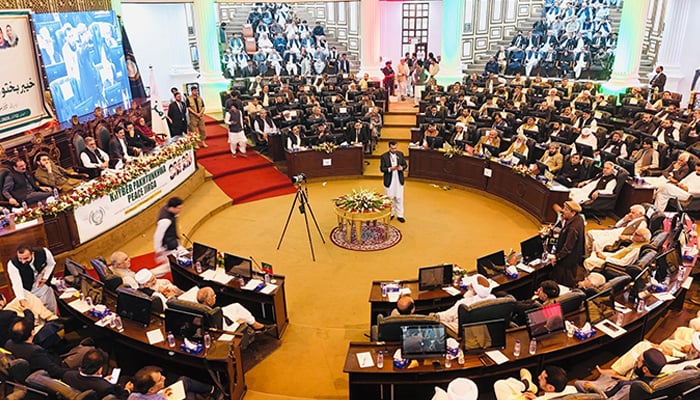
The Jirga, while calling on the federal government to prioritise dialogue with Afghanistan, should have paused and asked: What exactly are we demanding? Have we not already sent a loud and clear message—not just to Afghans but to the entire world—saying: “Please come, kill our sons and daughters, and then talk to us about how to maintain friendly relations”? As a Pakistani, I can only say three words: Shame on you.
Everybody knows that the vast Pak–Afghan transit trade enriches thousands of politicians, bureaucrats, and even journalists. But one could never have imagined that they would stoop this low: instead of standing with the state and fighting against Afghan-backed enemies, the political system in KP is demanding talks, negotiations, and dialogue with criminals and barbaric killers. Alas, history will not forget November 12, 2025, as the weakest and most disgraceful display by KP’s political leadership—who could have risen in history by declaring resistance against terrorists but instead chose to beg them for dialogue.
Agha Iqrar Haroon
Editor DND News Agency, Islamabad

