DND Report
The first fifteen days of May 2026 proved extremely costly for Pakistan’s security forces, as the country witnessed five major terrorist attacks within a span of just six days.
Most of these incidents involved suicide bombings targeting security personnel and civilians. Another potentially devastating suicide attack was thwarted in Attock when a civilian, Liaqat Ali, sacrificed his life after overpowering a suicide bomber before the attacker could enter a security checkpoint. His act of bravery prevented what could have been a far deadlier tragedy.
The recent wave of terrorism in Pakistan is being viewed by many security analysts through a broader geopolitical lens, particularly at a time when Islamabad has emerged as an important diplomatic voice advocating restraint and ceasefire efforts during the recent US-Iran-Israel tensions in the Middle East.
Many observers in Pakistan argue that hostile regional actors such as Afghan-India-Israel nexus may benefit from portraying Pakistan as internally unstable and incapable of ensuring its own security. The objective, according to this perspective, is to undermine Islamabad’s growing image as a responsible regional stakeholder and potential peace broker.
The argument gains attention in light of Pakistan’s consistent calls for de-escalation during the recent Middle East crisis. At a time when hawkish voices were advocating further military escalation, destruction of Iranian infrastructure, and a prolonged regional confrontation, Pakistan emphasized diplomacy, restraint, and ceasefire.
There are those who dismiss the current ceasefire as merely a temporary pause before another devastating round of conflict. Others continue pushing narratives that military pressure alone can force Iran into submission. However, such arguments ignore the catastrophic consequences another full-scale regional war would unleash disruption of global energy markets, economic recession, collapse in remittances for developing countries, rising arms expenditure at the expense of development, and the dangerous possibility of Muslim-majority states being dragged into prolonged instability and division.
Against this backdrop, Pakistan’s position has been markedly different. Islamabad has advocated strategic pause, dialogue, and regional stability instead of escalation. Supporters of Pakistan’s diplomatic outreach argue that this role naturally disturbs those actors who benefit politically or strategically from chaos in the Middle East and South Asia.
It is in this context that some Pakistani analysts connect the recent surge in terrorism inside Pakistan with wider geopolitical developments. The argument suggests that attacks carried out by terrorist groups operating from Afghan territory are receiving external backing and facilitation from Afghan-India-Israel nexus that intended not only to destabilize Pakistan internally but also to damage its international credibility.
The timing of these attacks is therefore seen as significant. Just as Pakistan attempts to project itself as a country contributing to regional peace and diplomatic engagement, renewed terrorism seeks to reinforce an opposite narrative: that Pakistan itself is too insecure and troubled to play any meaningful international peacemaking role. Supporters of this view argue that information warfare accompanies terrorism. Through propaganda, selective narratives, unnamed sources, and politically charged commentary, efforts are allegedly made to malign Pakistan’s diplomatic initiatives and diminish the importance of its role in preventing wider regional conflict.
Of the five attacks in six days, four occurred in Khyber Pakhtunkhwa (KP) and one in Balochistan, reflecting a worsening security situation in the country’s northwestern and southwestern regions. The banned Tehreek-e-Taliban Pakistan (TTP), referred to by the Government of Pakistan as “Khawarij,” released photographs and videos of the attackers following the incidents, openly claiming responsibility and glorifying the assaults. TTP’s released videos and photos of attackers helped to identify that majority of terrorists were Afghan citizens and available data with security forces confirmed that all attacks were either planned inside Afghanistan or attackers directly came from Afghanistan.
Pakistan had been raising this issue at all international forums that India and Afghan Taliban are directly involved in funding, hosting, planning, providing weapons and training TTP and BLA terrorists but no tangible results are received, and Afghan Taliban continue their policy of sending terrorists inside Pakistan. In past Pakistan responded effectively and hit terror camps inside Afghanistan but this strategy was halted for reasons best known to government while media reports suggest that attacks inside Afghanistan were stopped on the request of friendly countries.
Related Story: The hidden linkages among BLA, TTP, and PTI
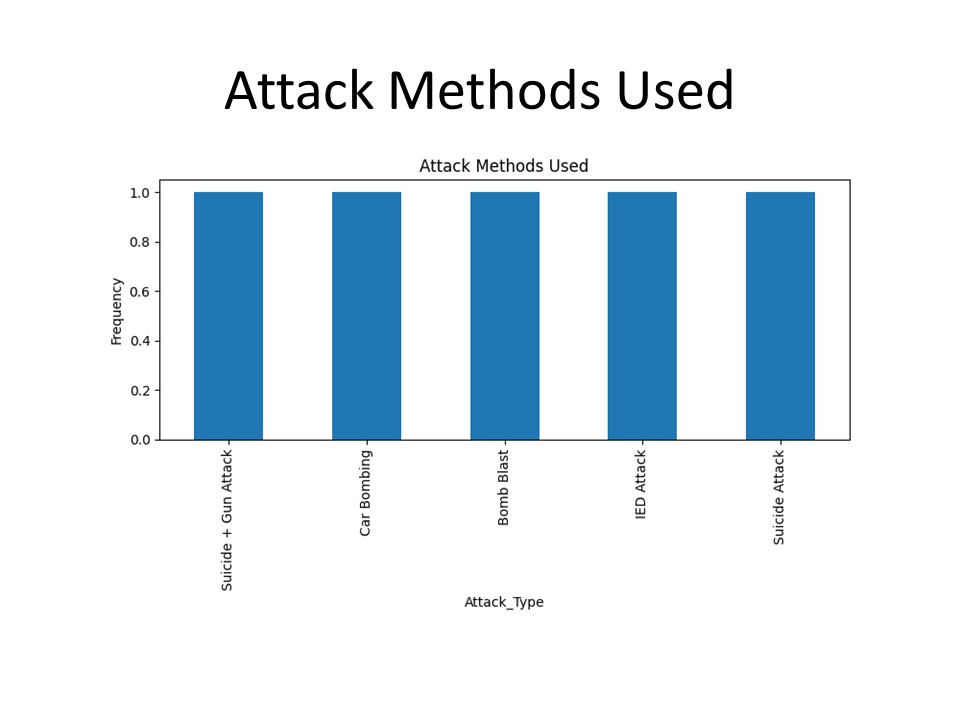
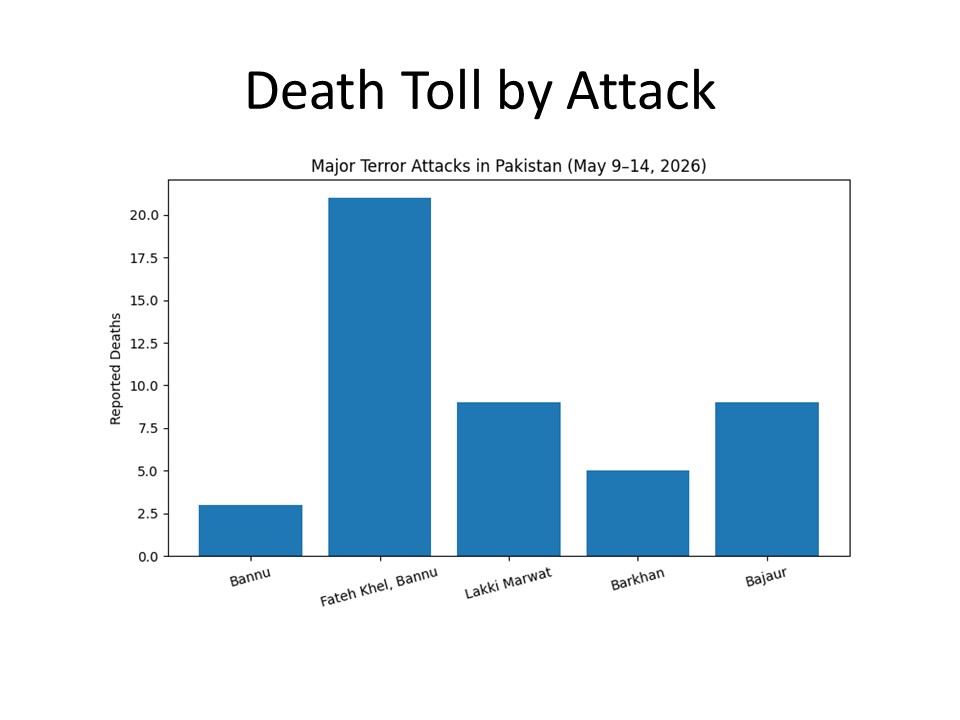
On May 9, at least three police officers were martyred in a suicide bombing and gun attack in Bannu District, Khyber Pakhtunkhwa. The following day, May 10, a devastating car bombing targeted a police post in Fateh Khel, Bannu District, killing at least 21 police personnel. The attack was reportedly carried out by the militant group Ittehad-ul-Mujahideen Pakistan, a brand name under the umbrella of TTP.
On May 12, a bomb blast targeting a rickshaw in a crowded bazaar in Lakki Marwat, Khyber Pakhtunkhwa, killed nine people, including two police officers. Several others were injured in the explosion, which spread panic across the market area.
On May 13, five Pakistan Army soldiers, including a major, were martyred while another soldier sustained critical injuries in a roadside improvised explosive device (IED) attack targeting an artillery unit in the Bala Dhaka area of Barkhan District, Balochistan.
Related Story: Is there any difference between TTP and PTI?
A day later, on May 14, a suicide attack targeted a Scouts camp in Bajaur, Khyber Pakhtunkhwa. According to official reports, one civilian and at least eight Pakistani security personnel were martyred, while 35 others were injured after an explosives-laden vehicle attempted to enter the camp premises.
The series of attacks during the first half of May highlights the persistent threat posed by terrorists and the urgent need for a coordinated national counterterrorism strategy involving both federal and provincial authorities.
Tehrik-i-Taliban Pakistan (TTP) has increasingly relied on cross-border tactics by using Afghan territory as sanctuaries, training hubs, and operational launchpads for attacks inside Pakistan, particularly after the Afghan Taliban returned to power in Kabul in 2021, according to multiple security and research reports.
Analysts say the strategy has contributed to a resurgence of terrorism violence in Pakistan, especially in Khyber Pakhtunkhwa (KP) and Balochistan, where security forces and civilians have faced a growing number of attacks during 2025 and 2026.
Recent suicide bombings and coordinated assaults in areas including Attock, Bannu, Bajaur, and Lakki Marwat involved Afghan nationals, according to Pakistani security sources. Analysts say the use of Afghan fighters provides operational flexibility while exploiting tribal and ethnic linkages across the border.
TTP’s operational methods include suicide bombings, vehicle-borne improvised explosive devices (VBIEDs), ambushes, targeted killings, and coordinated assaults on security checkpoints and camps. Officials say several attacks involved complex operations in which suicide bombers were followed by heavily armed gunmen attempting to breach military installations.
Security researchers also warn that the group has gained access to advanced tactical equipment, including night-vision devices, drones, quadcopters, and weapons left behind during previous regional conflicts.
Experts believe the TTP has shifted from attempting territorial control inside Pakistan, a strategy largely dismantled during military operations toward a decentralized insurgency model based on cross-border mobility and sleeper cells.
Pakistan has responded through border fencing, intelligence-based operations, targeted strikes on suspected militant hideouts, and broader counterterrorism campaigns, including Operation Azm-e-Istehkam. Tensions between Islamabad and Kabul have escalated in recent months, with reports of cross-border clashes and Pakistani strikes targeting terrorist’s sanctuaries inside Afghanistan during 2026.

Despite official denials from Kabul regarding support for the TTP, Pakistani officials maintain that terrorists continue to benefit from safe havens and insufficient action against their infrastructure. Security experts warn that the continued exploitation of difficult terrain, tribal linkages, and cross-border sanctuaries poses a major challenge for Pakistan’s internal security and regional stability.