
DND Report
Pakistan’s growing diplomatic role in promoting peace and stability in the Middle East received renewed international attention as Field Marshal Syed Asim Munir concluded a high-level visit to Tehran aimed at reducing regional tensions and encouraging dialogue between Iran and the United States.
The visit, described by officials as “highly productive,” comes at a critical moment for the region following months of uncertainty and rising tensions after the ceasefire of April 8, 2026. Pakistan’s leadership, under the active diplomatic engagement of Field Marshal Syed Asim Munir, has increasingly positioned itself as a mediator advocating political dialogue over confrontation.
According to the Inter-Services Public Relations (ISPR), the Chief of Army Staff and Chief of Defence Force held extensive discussions with Iran’s top political leadership during his visit to Tehran. He met Iranian President Dr. Masoud Pezeshkian, Speaker of Parliament Mohammad Bagher Ghalibaf, Foreign Minister Abbas Araghchi and Interior Minister Eskandar Momeni.
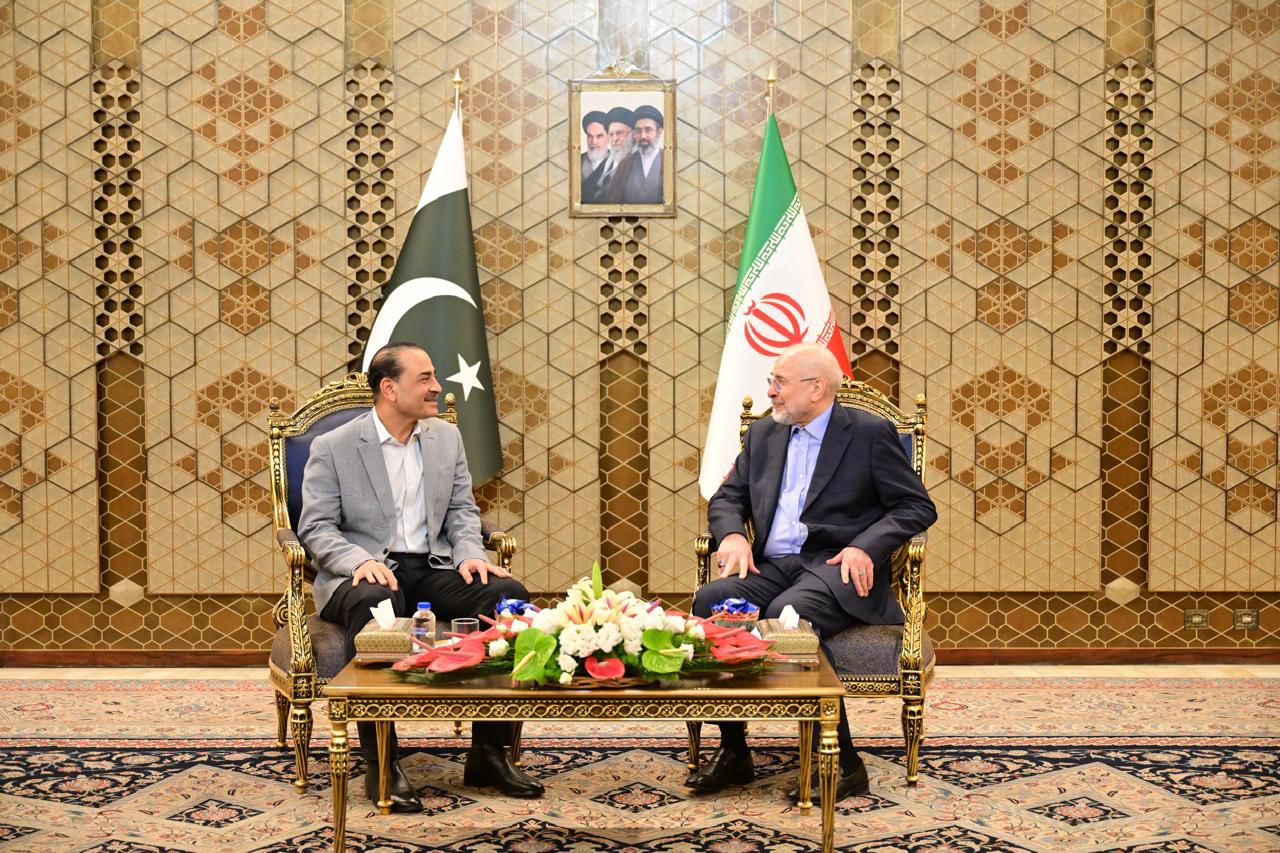
The discussions focused on accelerating ongoing consultations aimed at promoting regional peace, de-escalation and a negotiated understanding between concerned parties. Diplomatic sources said Pakistan has been consistently encouraging both Tehran and Washington to resume engagement through peaceful and constructive channels.
Field Marshal Asim Munir reportedly conveyed Pakistan’s view that stability and dialogue are essential for the future of the wider region, emphasizing that renewed negotiations remain the only viable path to avoid another conflict in the Middle East. He also urged all stakeholders to respond positively to international calls for restraint and diplomacy.
The ISPR statement noted that the meetings were conducted in a “positive and constructive environment” and contributed significantly to the mediation process. Officials familiar with the talks indicated that the negotiations over the past twenty-four hours produced encouraging progress toward a broader understanding.
Iranian leaders appreciated Pakistan’s “sincere and constructive role” in facilitating dialogue and supporting peaceful settlement of disputes. Analysts view this acknowledgment as an important recognition of Pakistan’s emerging diplomatic influence in regional affairs.
In a world increasingly threatened by geopolitical rivalries, diplomatic engagement remains the most responsible path forward. Pakistan’s current efforts to encourage dialogue between Iran and the United States deserve cautious optimism and international support. Preventing war is always more valuable than managing its consequences.
Political analysts say Pakistan’s approach reflects its long-standing policy of advocating regional stability, economic cooperation and avoidance of military escalation. They note that Islamabad’s active diplomacy demonstrates its commitment to preventing another major conflict that could destabilize South and West Asia.
Upon his arrival in Tehran, Field Marshal Asim Munir was received by Iranian Interior Minister Eskandar Momeni alongside senior civil and military officials, reflecting the significance Tehran attached to the visit.
Observers believe the latest diplomatic engagement could help revive stalled negotiations and open space for broader regional cooperation, with Pakistan continuing to play a central role in efforts aimed at sustaining peace and preventing war in the region.
International Affairs and regional security observers believe that at a time when the Middle East stands dangerously close to another cycle of confrontation, Pakistan’s diplomatic engagement under the leadership of Field Marshal Syed Asim Munir reflects an important effort to reduce tensions and encourage dialogue. In an increasingly polarized international environment, initiatives aimed at preventing conflict between Iran and the United States deserve serious attention, particularly when regional stability carries direct consequences for South Asia, the Gulf, and the wider Muslim world.
Pakistan has historically occupied a delicate but potentially constructive position in regional diplomacy. Sharing borders with Iran while maintaining strategic relations with the United States and Gulf countries, Islamabad has often attempted to serve as a bridge during periods of tension. The present crisis once again demonstrates the importance of balanced diplomacy rooted in dialogue rather than confrontation.
The reported appreciation by US President Donald Trump for Pakistan’s peace initiatives also indicates that Islamabad’s efforts are receiving international recognition. Regardless of political differences among global actors, any diplomatic channel capable of reducing the possibility of military escalation should be encouraged. War in the Gulf or broader Middle East would not remain confined to one region; it would affect global energy markets, trade routes, refugee flows, and regional security arrangements extending into South Asia.
Field Marshal Syed Asim Munir’s engagement also highlights an evolving dimension of Pakistan’s strategic posture. Modern security challenges are no longer addressed solely through military preparedness. Diplomatic outreach, conflict prevention, and confidence-building measures are equally critical for maintaining national and regional stability. In this context, Pakistan’s attempt to encourage negotiations reflects a pragmatic understanding that sustainable peace can only emerge through political dialogue.
טראמפ יקיים בשעה שמונה בערב לפי שעון ישראל שיחת ועידה עם מנהיגים ערביים כדי לדון בטיוטת ההסכם עם איראן ולשמוע את דעתם, כך לפי שני מקורות שמעורים בפרטים https://t.co/o7Gl2yEMib
— Barak Ravid (@BarakRavid) May 23, 2026
Iran and the United States have experienced decades of mistrust, interrupted negotiations, and recurring crises. Yet history repeatedly shows that even the most difficult disputes eventually require diplomatic solutions. The collapse of talks should not become a justification for escalation. Instead, failed negotiations should encourage all parties to search for revised frameworks, stronger guarantees, and broader international support for renewed engagement.
Pakistan’s message appears centered on precisely this principle: dialogue must remain open even during periods of severe disagreement. Encouraging Tehran to “listen to global voices” and return to the negotiating table is not merely a diplomatic suggestion; it is a recognition that prolonged instability serves no one’s interests.
For Pakistan, peace in the region is not an abstract foreign policy objective. Instability in neighboring regions directly affects Pakistan’s economy, border security, trade prospects, and internal stability. Therefore, Islamabad’s efforts should be viewed as part of a broader regional responsibility rather than alignment with any single bloc.
The international community must also recognize that middle powers such as Pakistan can play meaningful roles in de-escalation efforts. While major powers often dominate headlines, regional actors frequently possess the trust, cultural understanding, and strategic relationships necessary to facilitate communication during crises.

