
DND Special
As Azerbaijan celebrates Independence Day on May 28, the nation once again reflects on a defining chapter in its history, the founding of the Azerbaijan Democratic Republic (ADR) on May 28, 1918, the first secular democratic republic in the Muslim world. Independence Day (Azerbaijani: Müstəqillik Günü) remains symbolizing the Azerbaijani people’s enduring struggle for sovereignty, dignity, and statehood.

Since 1990, the occasion had long been observed as Republic Day, but in October 2021 it was officially renamed Independence Day, reinforcing the historical significance of the ADR and Azerbaijan’s continuing commitment to preserving its sovereignty. The celebration is not merely ceremonial; it is deeply connected with the sacrifices, resilience, and leadership that shaped modern Azerbaijan.
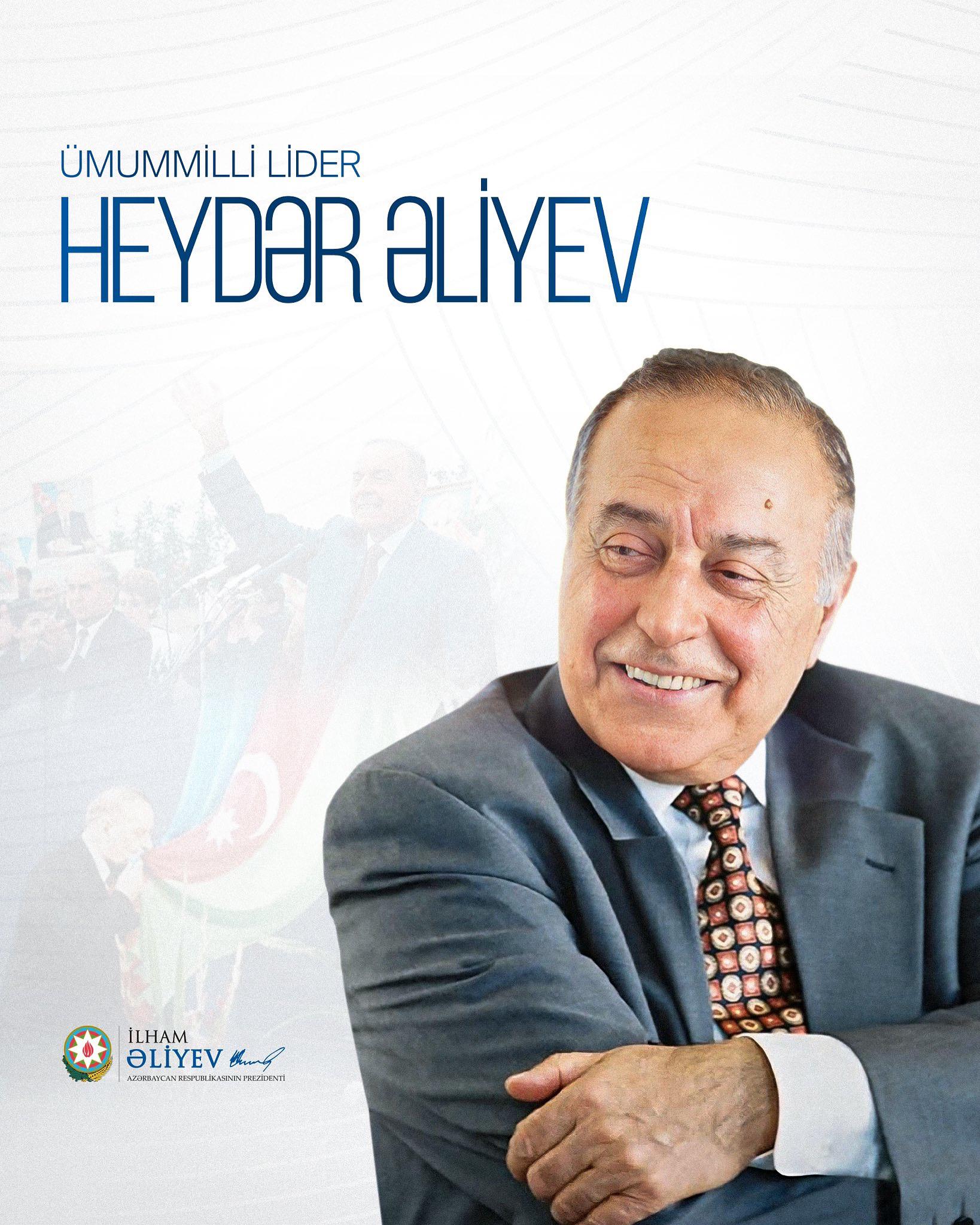
This day is also an occasion to pay homage to the architect of contemporary Azerbaijan, National Leader Heydar Aliyev, whose vision, political wisdom, and statecraft transformed the country from a fragile post-Soviet republic into a stable and influential regional power.
The story of Azerbaijan’s independence is ultimately a story of sacrifice, resilience, and visionary leadership. In historical terms, three decades is a short period for a nation, yet Azerbaijan’s transformation during this time offers an important lesson for political thinkers and historians alike. It demonstrates how a nation devastated by conflict, instability, and economic collapse can rise rapidly when guided by committed, strategic, and nationally focused leadership. At the center of this national journey stands Heydar Aliyev who is remembered by the Azerbaijani people as the founding architect of modern Azerbaijan, a statesman who dedicated his life to the prosperity, stability, and dignity of his nation.
Some leaders leave an imprint on their own nations, while others shape the course of history itself. Heydar Aliyev belongs to the latter category. His name occupies a distinguished place in the golden pages of world history because of his decisive role in safeguarding Azerbaijan’s independence and building the foundations of a modern state.
Heydar Aliyev’s extraordinary political vision played a pivotal role in guiding Azerbaijan through one of the most turbulent periods of the late twentieth century. As the Soviet Union collapsed and geopolitical realities shifted dramatically, Azerbaijan faced severe political instability, economic collapse, social fragmentation, and external threats. At such a crucial moment, Aliyev emerged as the leader capable of preserving the country’s unity and sovereignty.
His first period of leadership between 1969 and 1982 is widely regarded as a transformative era in Azerbaijan’s development. During these years, the republic witnessed remarkable progress in socio-economic, scientific, technical, industrial, and cultural spheres. This rapid development was driven by Aliyev’s exceptional administrative skills, strong political will, patriotism, and long-term strategic thinking.
Under his leadership, Azerbaijan entered an era of extensive construction, modernization, and institutional development. Important reforms were introduced to strengthen governance structures, improve public administration, and develop human resources. Thousands of young Azerbaijanis were sent to prestigious educational institutions and public administration schools across the Soviet Union to gain expertise in advanced industrial and technical fields.
The economic indicators of the republic improved significantly during this period. National income increased substantially, agricultural and industrial production expanded, and capital investment in economic development reached unprecedented levels. Hundreds of industrial plants and factories were established, laying the groundwork for Azerbaijan’s future economic growth.
Aliyev’s leadership qualities gained recognition far beyond Azerbaijan. In 1982, he was appointed First Deputy Chairman of the USSR Council of Ministers, one of the highest-ranking positions in the Soviet system. In this capacity, he supervised critical sectors of the Soviet Union’s economic, social, and cultural affairs. His tenure once again demonstrated his exceptional state management abilities, determination, and political acumen.
Despite operating within the Soviet framework, Heydar Aliyev consistently sought opportunities to protect and advance Azerbaijan’s interests. However, in October 1987, in protest against the policies pursued by the Soviet Communist Party leadership under Mikhail Gorbachev, Aliyev resigned from his position, a decision that reflected both his political courage and principles.
The collapse of the Soviet Union brought enormous challenges for Azerbaijan. The country endured economic strangulation, social disorder, administrative collapse, and worsening law and order conditions. Compounding these difficulties was the ongoing conflict with Armenia, the absence of a regular national army, and the growing influence of armed groups within the country.
The Azerbaijani people also carried the painful memories of the January 19–20, 1990 massacre, known as Black January, when Soviet troops brutally suppressed the independence movement in Baku. Yet, despite immense suffering and sacrifice, Azerbaijan never abandoned its aspiration for freedom from Russian imperial domination. On October 18, 1991, Azerbaijan officially restored its independence. But independence, history teaches us, is never simply granted — it is achieved through struggle, sacrifice, and resilience.
The young republic remained unstable for nearly two years until Heydar Aliyev returned to Azerbaijani politics. Upon returning to Azerbaijan in July 1990, he initially settled in Nakhchivan, where he was elected to the Supreme Soviet of Azerbaijan. Between 1991 and 1993, he served as Chairman of the Supreme Majlis of the Nakhchivan Autonomous Republic and Deputy Chairman of Azerbaijan’s Supreme Majlis.
By mid-1993, Azerbaijan had descended into a severe political crisis. Public dissatisfaction intensified, and the people demanded the return of Heydar Aliyev to national leadership. Facing mounting pressure and national instability, the authorities invited him back to Baku.
Responding to the will of the people, Heydar Aliyev assumed leadership at a moment when Azerbaijan was on the verge of collapse. Through decisive leadership, he restored political stability, prevented the disintegration of state institutions, and laid the foundations for long-term national development.
Even during the Soviet era, Heydar Aliyev was regarded as one of the most competent administrators in the USSR. He was widely respected for his discipline, management skills, intellectual clarity, and uncompromising stance against corruption. His anti-corruption policies earned him both admiration and opposition. He became known as a powerful symbol of integrity and accountability in governance. His distinguished career was recognized through numerous Soviet honours and awards, including the title Hero of Socialist Labour twice, five Orders of Lenin, the Order of the October Revolution, the Order of the Red Star, the Order of the Patriotic War First Class, and medals for impeccable service.
As President of Azerbaijan, Aliyev believed that only a balanced foreign policy, administrative discipline, and national unity could rescue the country from crisis. He pursued pragmatic and constructive relations with major global powers and institutions, including the United States, Russia, the European Union, NATO countries, the United Nations, and the Council of Europe.
His diplomatic strategy positioned Azerbaijan as an independent and reliable partner in regional and global affairs.
One of Heydar Aliyev’s most significant achievements was transforming Azerbaijan’s geopolitical position into an economic advantage. Recognizing the strategic importance of the Caspian Sea’s energy resources, he launched a comprehensive policy to attract foreign investment into Azerbaijan’s oil sector.
Aliyev’s economic philosophy was based on ensuring that national wealth benefited the people. To achieve this, the State Oil Fund was established to manage oil revenues transparently and efficiently for future generations. Oil income was invested in infrastructure, roads, bridges, healthcare, education, refugee settlements, and social development projects.
At his oath-taking ceremony, Heydar Aliyev wisely observed that although Azerbaijan’s economy had been devastated, the country’s geographical position and natural resources would enable it to overcome the crisis. His prediction proved remarkably accurate.
Heydar Aliyev devoted his entire life to the service of Azerbaijan. Even toward the end of his life, his vision remained centered on the prosperity and peace of his people.
When once asked about his personal dream, he responded:
“I have no dream except prosperity and peace for my people. I have dedicated all my being and all my power and capabilities to this cause.”
His words reflected the essence of his political philosophy — national service above personal ambition.
President Heydar Aliyev passed away in December 2003, but he left behind a strong and stable foundation for Azerbaijan’s future.
Today, the political course established by Heydar Aliyev is being continued by President Ilham Aliyev. Under his leadership, Azerbaijan has strengthened its economy, enhanced its international standing, and modernized its military capabilities. The defining moment of this continuity came during the 44-day Patriotic War in 2020, when Azerbaijan liberated territories that had remained under Armenian occupation for nearly thirty years. For many Azerbaijanis, this victory represented the fulfillment of Heydar Aliyev’s long-held vision of restoring Azerbaijan’s territorial integrity.
Today, Azerbaijan’s tricolor national flag waves over the liberated territories, symbolizing both national unity and historical justice.
Modern Azerbaijan has emerged as one of the region’s strongest economies. The Azerbaijani army is considered among the world’s capable military forces, a remarkable transformation considering the country lacked a regular army at the time of independence. The World Bank has also recognized Azerbaijan among reform-oriented countries for its economic modernization efforts.
Tourism has become one of the country’s largest industries, while Baku has evolved into a major international destination and regional hub.

