
DND News
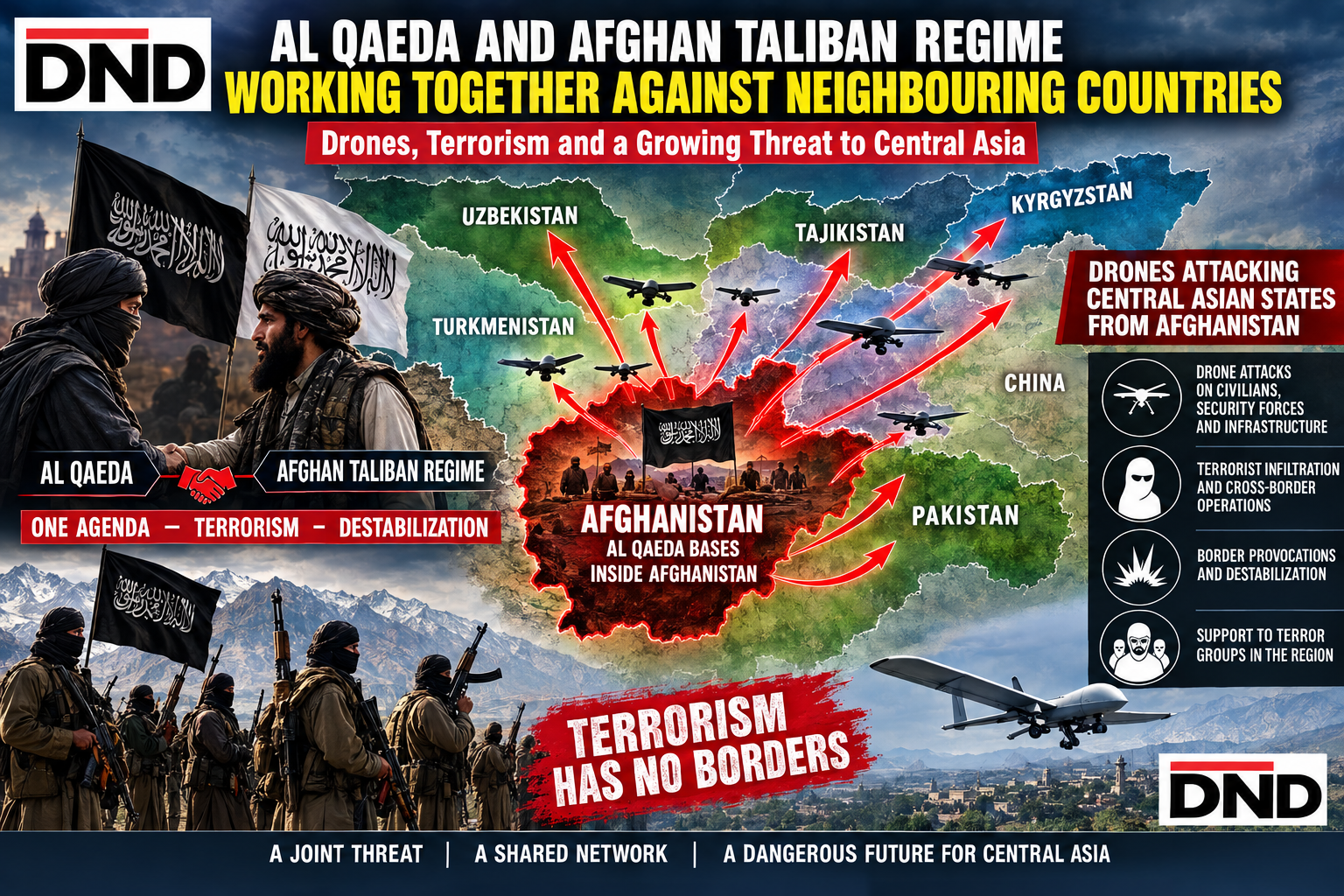
Ground realities in Afghanistan are changing as northern resistance groups have begun attacking and targeting the Afghan Taliban, while resistance continues in parts of Kamdesh Valley and Nuristan despite the Taliban’s reported recovery of several areas. Against this backdrop, reports indicate that the Afghan Taliban regime has deployed more than 30,000 hardcore fighters to northern Afghanistan and shifted a part of the al-Qaeda network towards areas bordering Central Asian countries.
According to information obtained through northern resistance groups, al-Qaeda has intensified efforts to organize and finance Central Asian terrorist networks. Approximately one month ago, the network allegedly held an important meeting in Dasht-e Archi area of Imam Sahib district in Kunduz province to discuss strengthening relations, financial support, recruitment, training and operational capabilities of these groups.
An individual using the alias Abu al-Hasan al-Maghrebi, a national of an Arab country, attended the meeting as a representative of al-Qaeda. According to the information, he has also been active in Panjshir province and maintains close relations with the Taliban Minister of Interior. He is reportedly responsible for equipping and supporting Central Asian terrorist centres and uses Telegram IDs for communication.
The meeting was reportedly held at a centre associated with Uyghur militants of the Turkestan Islamic Movement and was attended by commanders and representatives of various terrorist organizations.
The centre is reportedly headed by Haji Latif, a native of Jowzjan province who also uses a Telegram ID and is also described as a prominent official of the Islamic Movement of Uzbekistan (IMU).
“Drones, terrorism and growing threats to Central Asian state from Afghan soil”
Other participants reportedly included Muhammad Uyghuri, an influential member of the Turkestan Islamic Movement’s leadership Haji Tariq, described as an official of East Turkestan; and his deputy, Qari Mawaz Turkistani, who is responsible for the group’s financial affairs and also use Telegram IDs.
An individual operating under the alias Qari Rashid Turkistani, identified in the information as Qari Rashid and a member of the al-Qaeda network, was also reportedly present at the meeting.
Representatives of the Islamic Movement of Uzbekistan included Sheikh Abu Bakr Uzbekistani, who has worked alongside the Taliban for years and was previously a commander in the Islamic State group in Syria (ISIS), and Maulvi Abu Bakr, who currently oversees a training centre in Chahardara district of Kunduz province. Maulvi Abu Bakr is reportedly connected extensively with al-Qaeda and the Taliban. The centre managed by Sheikh Abu Bakr is said to receive direct supplies and financial support from the al-Qaeda network.
According to available information, members of the Turkestan Movement and the Islamic Movement of Uzbekistan viewed Abu al-Hasan al-Maghrebi’s participation as a significant development and a fundamental step towards strengthening their relations with al-Qaeda and securing additional financial assistance as Central Asian terrorist organizations remain heavily dependent on the network for funding and most Central Asian militants have been integrated into Taliban security forces. Nevertheless, al-Qaeda is continuing its efforts to strengthen its own ranks and expand the operational capacity of affiliated groups by providing the financial resources required to recruit additional fighters.
Although Taliban intelligence reportedly provides salaries and an additional monthly payment of 5,000 Afghanis to each family of members belonging to the Islamic Movement of Uzbekistan, Ansarullah and the Turkestan Movement, al-Qaeda continues to function as the overarching network and primary supporter of these organizations.
Its camps are reportedly engaged in recruiting new members and providing religious instruction and training in the use of weapons to young people and new recruits. The reported assistance highlights the network’s efforts to maintain the loyalty of affiliated fighters and reinforce its position among Central Asian militant organizations operating in Afghanistan.
According to information, individuals trained in Ghazni province have made considerable progress and are now capable of operating drones. Efforts are reportedly underway to equip centres in northern Afghanistan with the capabilities required for drone operations. The reported development points to an effort to expand the technical and operational capabilities of Central Asian terrorist networks beyond conventional weapons and training. The provision of drones, alongside financial support, recruitment and weapons instruction, could increase the operational capabilities of these groups if the reported plans are implemented.
Northern resistance groups claim that during one of the meetings, Sheikh Abu Bakr reportedly requested that al-Qaeda establish and financially support additional centres and schools across Afghanistan. In response, the al-Qaeda representative allegedly stated that plans had been prepared for two important centres in Panjshir and Paktia provinces and that these facilities would soon be made available to the groups concerned.
Representatives of Central Asian militant organizations also emphasized the need to strengthen existing centres in northern Afghanistan.
The reported plans suggest that the network intends to expand its infrastructure across several parts of the country, combining recruitment, religious instruction, weapons training and financial assistance.
The activities indicate that al-Qaeda may be seeking to reorganize and strengthen Central Asian militant organizations through funding, recruitment, weapons training and the introduction of drone technology.
The integration of these groups into Taliban security structures, coupled with plans to establish additional centres stretching from northern to eastern Afghanistan, raises concerns about the future security environment in the region.
The information suggest al-Qaeda as continuing to serve as a central source of financial and organizational support for Central Asian militant networks despite the reported assistance provided by Taliban intelligence to members and their families.
If substantiated, the alleged activities would indicate that Afghanistan remains a potential operating environment for transnational militant organizations seeking to rebuild their networks and expand their capabilities.
The development could have implications for Afghanistan’s northern neighbours and broader regional stability, particularly if armed groups operating near Central Asian borders acquire additional funding, trained personnel and drone capabilities.
The information was attributed to sources associated with northern resistance groups and researchers specializing in Islamic fundamentalist organizations. The allegations, including the identities of the participants, the reported meeting, financial arrangements and planned drone deliveries, could not be independently verified for this report.

