
DND Report
Kabul/Brussels: Afghanistan’s interim Taliban government has failed to provide even the most basic services to millions of Afghans who have returned to the country since late 2023, exacerbating an already severe humanitarian and economic crisis, according to the latest report by the United Nations High Commissioner for Refugees (UNHCR).
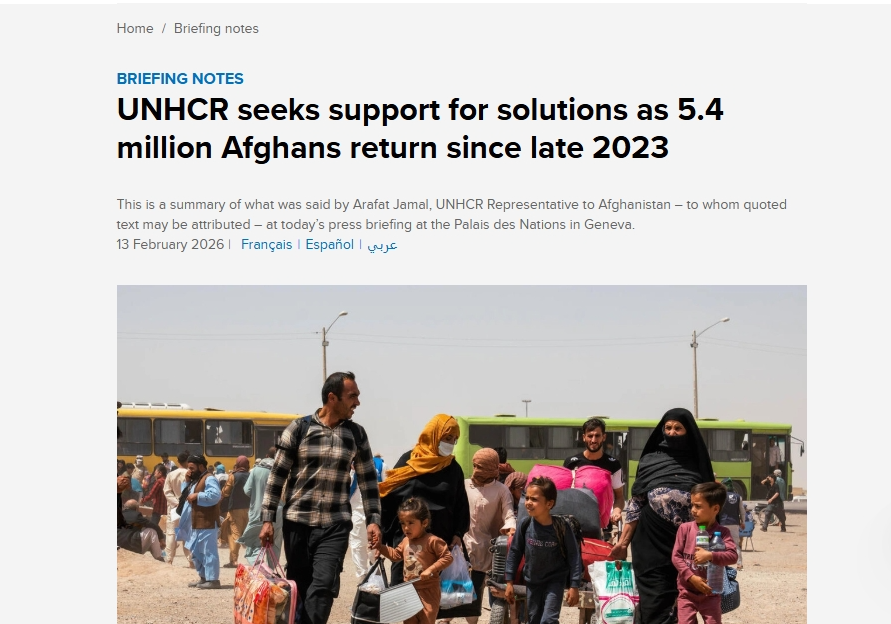
The UNHCR report states that more than 5.4 million Afghans have returned from neighboring and other countries since October 2023, yet the de facto authorities have not ensured access to essential facilities such as health care, clean drinking water, sanitation, regular meals, or even temporary shelters. Aid agencies say the scale of the crisis is so vast that the full extent of suffering remains underreported.
According to the report, just over half of returnees were able to find any form of work, mostly informal and unstable. More than 50 percent of returnee families lack civil documentation, including identity cards needed to access services, employment, or aid. Alarmingly, over 90 percent of returnees are surviving on less than $5 a day, underscoring the depth of poverty gripping the country.
UNHCR expressed serious concerns about the sustainability of mass returns. While 5 percent of surveyed returnees said they intend to leave Afghanistan again, more than 10 percent reported that a relative or community member has already re-migrated after returning. The report stresses that these decisions are not driven by a desire to migrate, but by the inability to rebuild a viable and dignified life in Afghanistan.
Humanitarian sources and analysts quoted in the report accuse the Afghan Taliban regime of allocating less than 2 percent of the funds it receives from international donors to public welfare, despite widespread need. Critics say the authorities have shown little willingness to prioritize public services, instead focusing on consolidation of power while ordinary Afghans struggle to secure food, water, and medical care.
UNHCR noted that, together with other UN agencies and partners, it is closely monitoring a deteriorating regional situation in which asylum space is shrinking and regulated migration pathways are narrowing. As a result, many Afghans feel compelled to undertake dangerous onward journeys, believing that Afghanistan offers them nothing but poverty and deprivation, with no access to basic necessities such as clean drinking water or health care.
For 2026, UNHCR has appealed for $216 million to support displaced people and returnees across Afghanistan. The agency warned that the speed and scale of returns have pushed the country deeper into crisis, compounded by a fragile economy, worsening humanitarian and human rights conditions—particularly for women and girls—and the growing influence of warlords operating under Taliban protection. Rights groups allege that in many areas, armed actors act with impunity, leaving civilians vulnerable to exploitation and abuse.
Economic indicators further highlight the strain. According to a recent World Bank report, rapid population growth fueled by mass returns contributed to a 4 percent decline in GDP per capita in 2025, placing additional pressure on already scarce resources.
Meanwhile, developments in Europe are adding to the urgency. After facing radicalization, sexual violence, and rising crime, several European countries have moved toward returning Afghan nationals. On 16 October 2025, 20 EU Member States signed a joint letter urging the European Commission to take coordinated steps to enable both voluntary and forced returns to Afghanistan.
The letter calls for a coherent European approach to Afghan nationals residing irregularly in the EU, particularly those deemed a threat to public order or national security. The signatories argue that credible migration policies require effective return mechanisms and demand tangible progress by the end of the year.
EU data show persistent challenges in enforcing returns. In 2024, 22,870 Afghans received return decisions, but only 435 were returned, resulting in a return rate of just 2 percent. Member States say this gap undermines confidence in migration and asylum systems and creates security risks. Belgium, where 2,815 Afghans are currently housed in reception centers, has reported a rise in serious incidents, which authorities have linked to the lack of effective return options.
The joint EU letter urges the Commission to strengthen coordination on returns, proposing a larger role for Frontex in return and reintegration, centralized EU funding to prevent fragmentation, and closer cooperation between the European Commission, the European External Action Service, and willing Member States. It also suggests the possibility of a joint administrative mission to Afghanistan and emphasizes that priority should be given to returning individuals who pose threats to public order or national security.
As Europe pushes for returns and millions struggle to survive back home, humanitarian agencies warn that without a fundamental shift in Taliban governance toward public welfare and human rights, Afghanistan risks sliding further into instability, poverty, and renewed cycles of forced migration.

