
Monitoring Desk
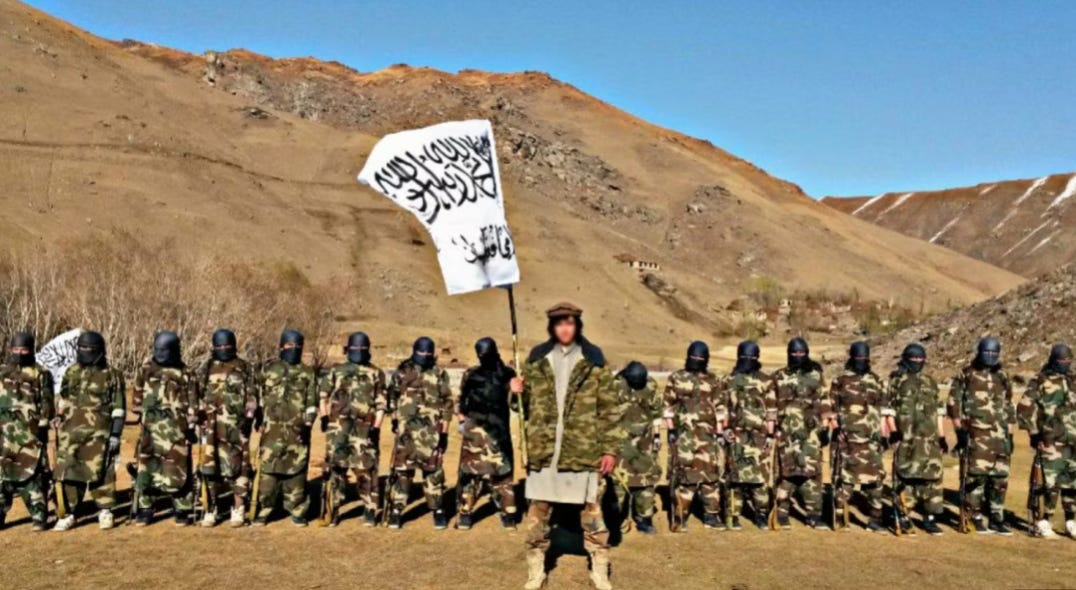
The Afghan Taliban regime has been providing intelligence, financial assistance and weapons to Jamaat Ansarullah, also known as Ansarullah Tajikistan or the “Tajik Taliban,” since returning to power in Afghanistan, raising serious security concerns for Tajikistan and the wider Central Asian region.
According to intelligence circles in Tajikistan, the militant organization receives direct financial support from the Taliban regime, including a share of revenues generated through mining operations in northern Afghanistan. Available information further suggests that some of the funding is transferred through cryptocurrency to Hanzala Tajikistan, who serves as the group’s financial chief.
Jamaat Ansarullah was founded in 2006 by Amriddin Tabarov, a former field commander during the Tajik Civil War who rejected the 1997 peace agreement. The organization, primarily composed of Tajik nationals, is an ethno-nationalist jihadist group seeking to overthrow the government of President Emomali Rahmon and establish an Islamic emirate in Tajikistan along the lines of Afghanistan’s Taliban system.
Following Tabarov’s death in 2015, leadership of the organization passed to Mahdi Arsalan, also known as Muhammad Sharipov, a Tajik national who fought alongside the Afghan Taliban and subsequently participated in the Syrian conflict.
International monitoring reports, including assessments by the United Nations Analytical Support and Sanctions Monitoring Team and the Foundation for Defense of Democracies’ Long War Journal, have documented the Afghan Taliban regime’s military assistance to Jamaat Ansarullah. According to these assessments, the Taliban equipped the group’s fighters with military hardware seized from US forces and deployed them to guard strategically important districts along the Afghanistan-Tajikistan border in Badakhshan province.
United Nations reports have also indicated that Jamaat Ansarullah operates dedicated training camps in Afghanistan’s Khost and Takhar provinces, where Al-Qaeda instructors are reportedly involved in training activities. The organization also maintains an infiltration unit known as Ansar in Kunduz province.
Security assessments issued in 2025 and mid-2026 by Tajik intelligence networks documented infiltration attempts in the Afghan-Tajik border region involving homemade explosives and drone strikes. These incidents also included deadly attacks targeting Chinese contractors operating near the border, highlighting the potential threat posed by militant networks operating in northern Afghanistan.
Meanwhile, the Afghan Taliban regime has significantly expanded mining activities since returning to power, particularly in gold, emeralds and rare minerals across northern provinces, including Badakhshan and Panjshir. The regime has reportedly signed more than 200 mining contracts with domestic and foreign companies.
Local Taliban commanders and allied militant factions deployed around mining sites frequently receive direct shares of revenues or extraction fees, which are used to finance their operational activities. Intelligence assessments indicate that this revenue-sharing arrangement has also become a source of financial support for militant organizations operating under Taliban patronage.
The alleged Taliban support for Jamaat Ansarullah has emerged as a major source of tension between Kabul and Dushanbe, making Tajikistan one of the most vocal opponents of the Taliban regime in Central Asia.
In response to growing security concerns, Tajikistan has strengthened security along its 843-mile border with Afghanistan. Dushanbe has also provided a platform to anti-Taliban resistance figures, including leaders of the National Resistance Front, while repeatedly warning international organizations that northern Afghanistan is increasingly becoming a potential launchpad for regional destabilization.
The alleged combination of financial assistance, military equipment, intelligence cooperation and cross-border militant deployments has raised concerns that Afghanistan could once again become a base for militant networks threatening the security of neighbouring Central Asian states.
Available information suggests that Ansarullah Tajikistan, ISIS‑Khorasan (ISKP) and Pakistani Taliban (TTP) collaborate under the leadership of Afghan Taliban, creating a complex, multi‑layered militant ecosystem in the Afghanistan–Pakistan–Tajikistan borderlands. This network characterized by overlapping loyalties, covert state-linked facilitation, and inter-group tactical cooperation that poses escalating risks to Central Asian stability, regional counterterrorism frameworks, and international security mandates.

