
DND Comment
Everybody who follows foreign affairs understands that something would definitely and drastically change in and around Iran after the US midterm elections. Russia fears that the US may re-enter Afghanistan with or without the permission of the Afghan Taliban, as Washington is providing hard cash to Kabul on a weekly basis to safeguard US interests in the region.
Iran is playing goody-goody with the Afghan Taliban and promising business opportunities as well as direct access to sea routes through Chabahar Port, so the Afghan Taliban may not support the US encircling of Iran in the near future. China, which tried its best to settle security-related issues with the Afghan Taliban, is now sitting calmly after getting nothing out of the Afghanistan-China friendly relations that Beijing offered to the Afghan Taliban by opening the Taliban’s embassy in China, investing in mines and minerals, and supporting the Afghan railway track. The Afghan Taliban refused to stop hosting Uyghur–Chinese and East Turkestan Islamic Movement foot soldiers. China, at the request of the Afghan Taliban, tried its best to fix Pak-Afghan issues and hosted talks between them but got nothing from Kabul, and the Pak-Afghan standoff continues. The Afghan Taliban involved Qatar, Turkey and Saudi Arabia to get permission from Pakistan to open Pak-Afghan borders, but Pakistan stood firm that nothing is allowed at the cost of Pakistan. The Afghan Taliban did not stop and pursued Russia to help them out, while India continues helping the Afghan Taliban to bleed Pakistan by sending funds and military hardware such as drones, etc.
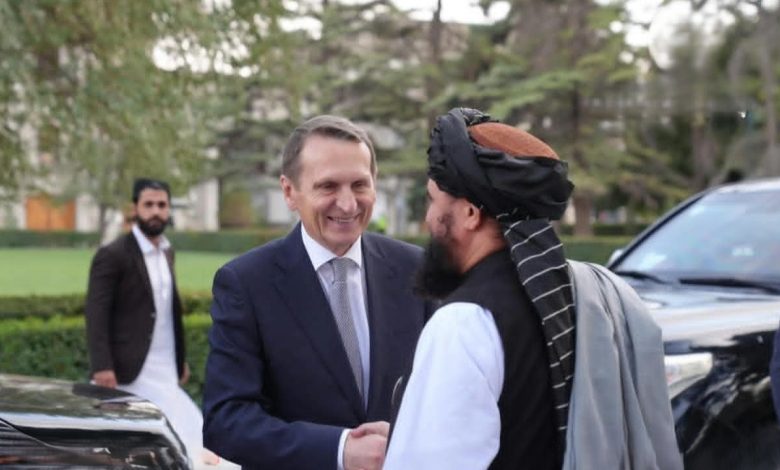
A series of Russian diplomatic, intelligence and security engagements between October 5 and 14 indicates that Moscow is engaging Islamabad, Kabul and New Delhi through different institutional channels without publicly committing itself to a single regional security alignment. Russian desire is sober and serious and must be appreciated.
On October 5, during the Moscow Format consultations on Afghanistan, Russian Foreign Minister Sergey Lavrov expressed fear of the return of US or NATO military infrastructure to Afghanistan or neighbouring countries. By neighbouring countries, he might have been referring to certain Central Asian countries that are too close to Washington nowadays and provided the Afghan Taliban with trade routes on the advice of Washington immediately after Pakistan closed border trade with Afghanistan. Lavrov also talked about strengthening counterterrorism cooperation with Kabul, including contacts between intelligence and law-enforcement agencies. Lavrov understands that the Afghan Taliban use terrorism as diplomatic leverage and they start attacking countries that do not accept their (Afghan Taliban’s) terms of relationship.
On October 12, Russian Deputy Security Council Secretary Aleksandr Venediktov raised the same issue and expressed fear of the return of American military infrastructure to Afghanistan.
On October 14, Russia’s Foreign Intelligence Service chief, Sergei Naryshkin, met Taliban intelligence chief Abdul Haq Wasiq.
The October 13 meetings of Russian Interior Minister Vladimir Kolokoltsev (Russia’s top internal security chief) with Pakistan’s military chief, Field Marshal Asim Munir; Interior Minister Mohsin Naqvi; and Foreign Minister Ishaq Dar also focused on counterterrorism, organised crime, security cooperation and intelligence-related information-sharing.
On October 14, Russian Deputy Security Council Secretary Aleksandr Venediktov and Indian Deputy National Security Adviser Pavan Kapoor co-chaired the 7th round of the India–Russia Special Mechanism on Pakistan and Afghanistan. Venediktov also met Indian National Security Adviser Ajit Doval. India’s newly appointed chargé d’affaires, Yatin Patel, met Taliban Foreign Minister Amir Khan Muttaqi on the same day.
There are reasons to believe that Russia is gearing up for the post-November 3 world, when US President Donald Trump will focus on three foreign policy objectives—two of which appear to underpin this activity: preventing renewed Western military access to Afghanistan for Iran, seeking to strengthen regional counterterrorism coordination, and maintaining Russian influence over the evolving security arrangements surrounding Kabul. If this is so, Russia should use its influence over its long-time friend India to stop funding terrorism in Pakistan and should inject sanity into the Afghan Taliban to stop bleeding Pakistan through terrorism because, in the current scenario, Pakistan may, in response to its own existential threats, welcome NATO forces inside Afghanistan, as Pakistan cannot allow the Afghan Taliban to continue martyring its sons and cannot afford to let the Afghan Taliban live peacefully while they are playing havoc with Pakistan’s peace.

