
Monitoring Desk: PTI rule in Khyber Pakhtunkhwa (KP) is over as President Zardari signed Emergency Rule. He signed the advice submitted by the Prime Minister Shehbaz Sharif regarding the security situation in Khyber Pakhtunkhwa. Telephone services have been suspended in Peshawar and there is news of House Arrest of Sohail Afridi.
The President signed the summary following the Federal Cabinet’s decision, the Prime Minister’s advice, reports from relevant agencies regarding the law-and-order situation, and the failure of negotiations with government delegations.
It is pertinent to mention the meeting of the Federal Cabinet, chaired by Prime Minister Muhammad Shehbaz Sharif, was held in Islamabad early morning today and the Cabinet conducted a detailed review of the situation in KP, taking into account the worsening law and order conditions in Khyber Pakhtunkhwa and the provincial government’s deliberate disengagement from the fight against terrorism.
The Cabinet recommended that the Prime Minister advise the President to exercise his constitutional authority and impose an emergency in Khyber Pakhtunkhwa province under Articles 232 and 234 of the Constitution of Pakistan, given the gravity of the situation. PM Sharif sent the advice to President Zardari who signed the Advice and the Emergency Rule of promulgated in KP thereafter. The Provincial Cabinet of KP was seized to work, Chief Minister Sohail Afridi lost all administrative powers that had been transferred to Governor Kundi till the time Emergency Rule will continue. It may be mentioned that PMLN government held talks with PTI to find a way out from the situation and such talks were criticized by the public of KP and thousands of journalists, politicians, academicians, former security and administration officials condemned talks with PTI that according to them is byword of TTP terror group.
Why Emergency Rule was needed in KP: A Summary of the security situation in Khyber Pakhtunkhwa
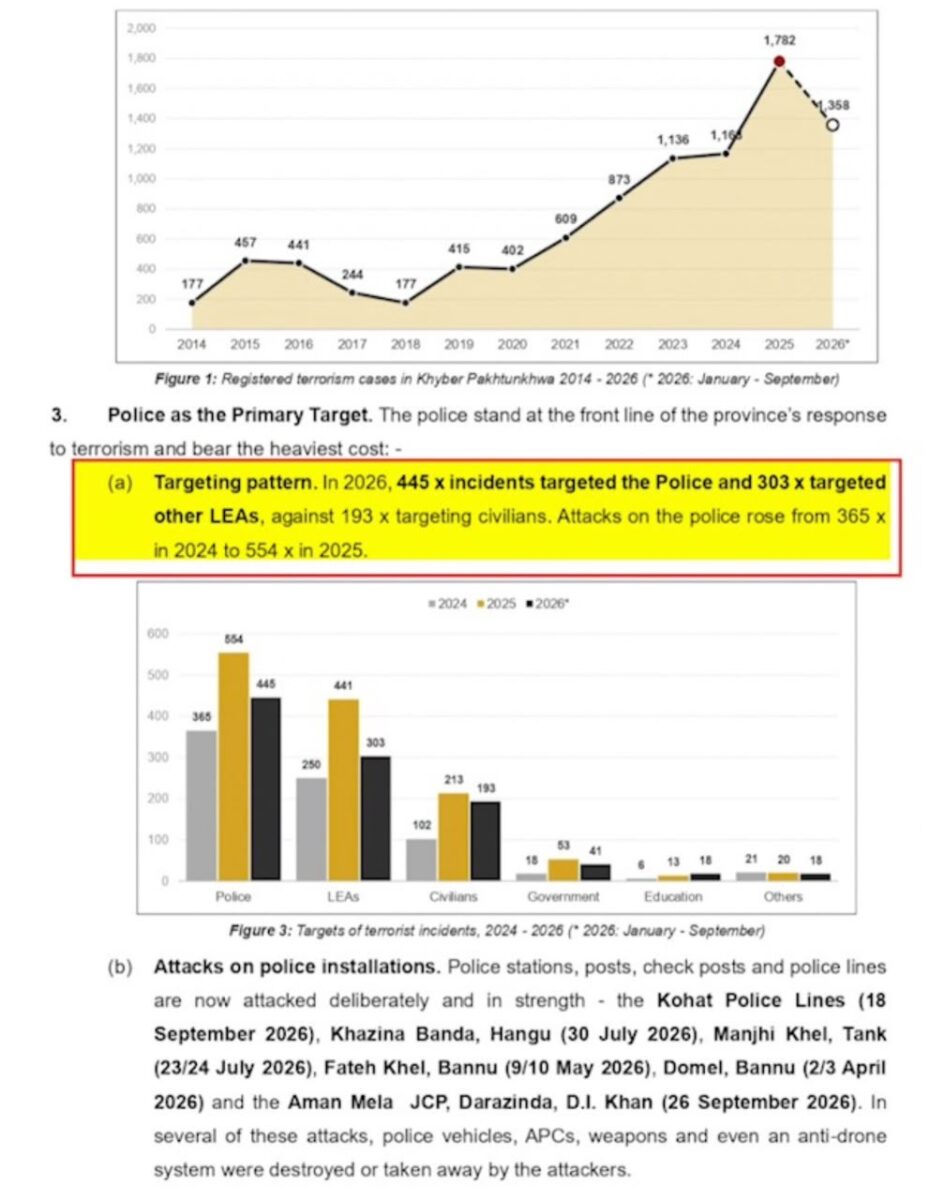
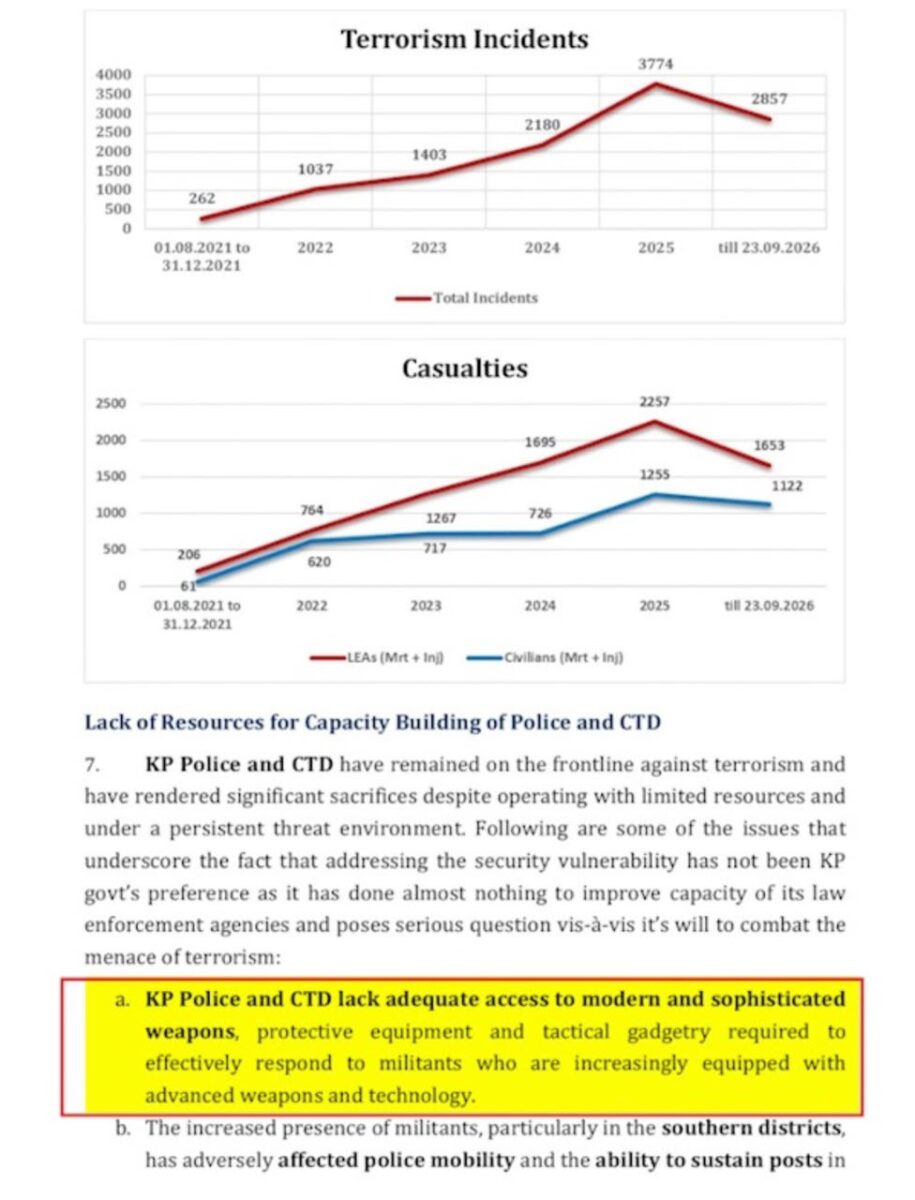
Khyber Pakhtunkhwa has witnessed a massive surge in terrorist attacks over the past two years, with incidents increasing by 195% between March 1, 2024, and September 23, 2026, raising serious concerns about the province’s deteriorating security situation and the preparedness of its counter-terrorism apparatus.
According to a report based on assessments by sensitive agencies, the continuous rise in terrorism has emerged as a major security challenge for the province. The report identifies terrorist elements operating from Afghanistan, local facilitators, and alleged shortcomings in the provincial government’s policies and counter-terrorism approach as factors contributing to the worsening situation.
The assessment suggests that a lack of preparedness, insufficient focus, and ineffective counter-terrorism measures at the provincial level have created opportunities for terrorist groups to strengthen their presence and operational capabilities.
It also identifies the growing interlinkages between terrorist networks, facilitation systems, and illicit activities as a serious security concern requiring coordinated action by law enforcement agencies and the provincial administration.
Police and security agencies have increasingly become the primary targets of terrorist attacks. According to the report, approximately 73% of the terrorist attacks recorded in 2026 targeted police personnel and security agencies, highlighting the growing pressure on frontline law enforcement institutions.
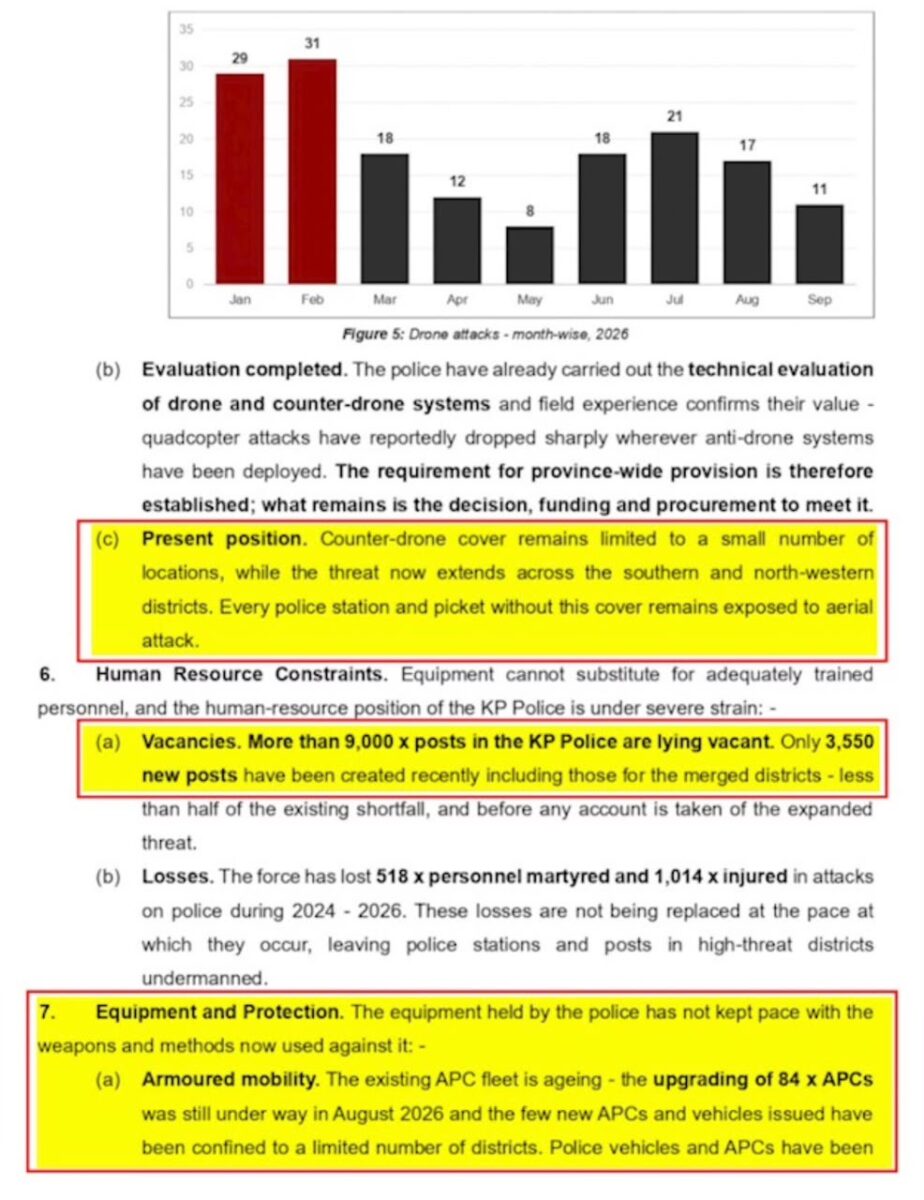
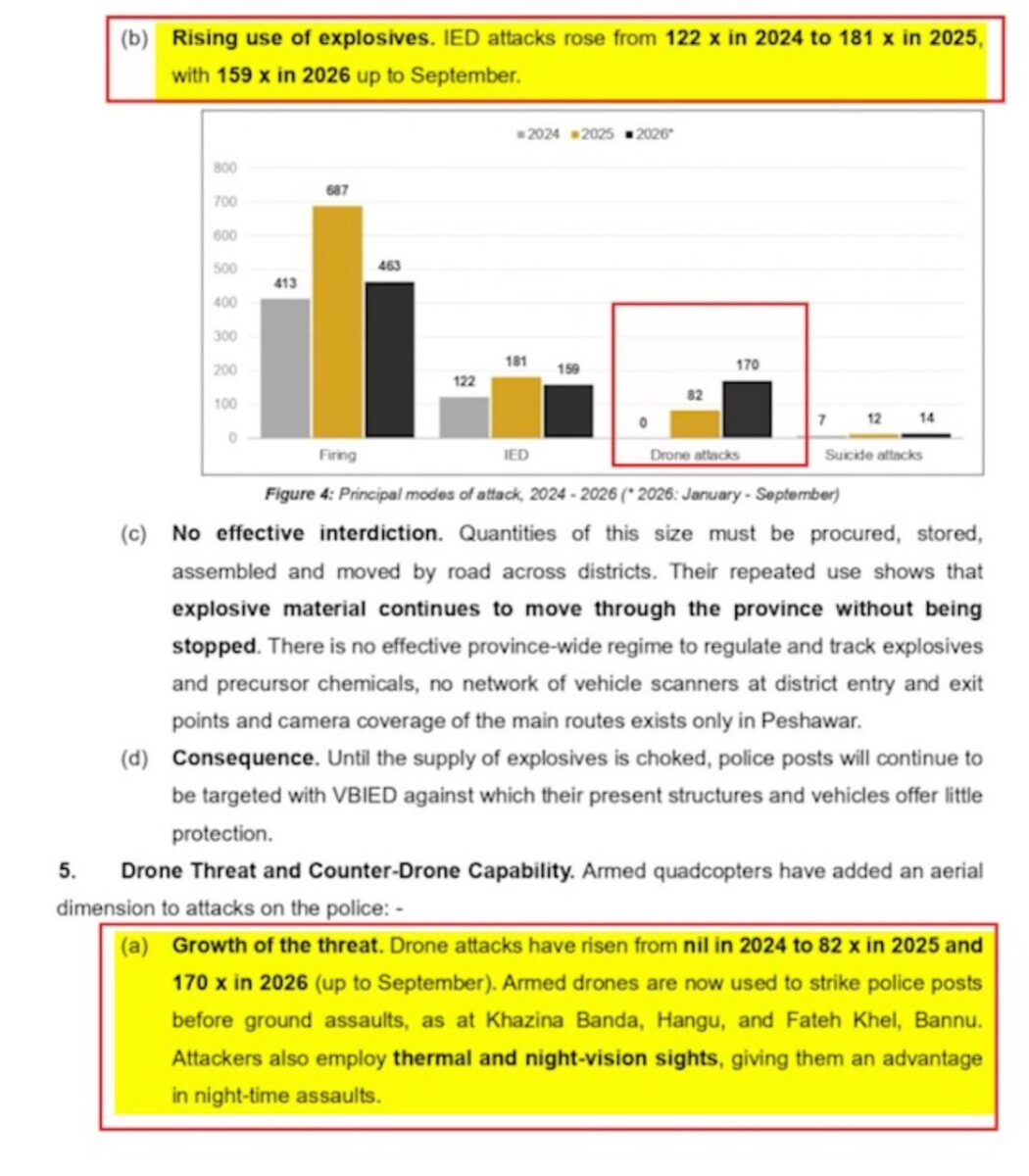
The report has also highlighted an alarming increase in the use of drones by terrorist elements in Khyber Pakhtunkhwa, indicating a shift towards evolving tactics that require modern surveillance, detection, and counter-drone capabilities.
While no drone attacks against police or security agencies were reported in 2024, the number of terrorist drone attacks reportedly reached 170 in 2026. The assessment also points to an approximately 107% increase in such attacks over the course of a year, underscoring the growing challenge posed by the use of unmanned aerial systems.
The increasing reliance on explosive-based attacks has further complicated the security situation. The number of improvised explosive device (IED) attacks reached 181 in 2025, while 159 such incidents had been recorded by September of 2026, according to the report.
The rising use of drones and IEDs highlights the need for police and counter-terrorism personnel to adapt to changing terrorist tactics through improved training, modern equipment, intelligence gathering, and operational preparedness.
The assessment raises concerns about the capacity of the Khyber Pakhtunkhwa Police and the Counter Terrorism Department (CTD) to respond effectively to the escalating threat.
More than 9,000 vacancies reportedly remain within the provincial police force, placing additional pressure on personnel operating in terrorism-affected districts. The report also identifies an acute shortage of modern weapons and essential operational equipment available to the police and CTD.
The shortage of armoured and protected vehicles is particularly concerning in the southern districts, where terrorist activity has placed law enforcement agencies under sustained pressure. A lack of adequately protected transport restricts police mobility, complicates operational deployments, and increases the risks faced by personnel during counter-terrorism operations.
The report further highlights deficiencies in modern surveillance and intelligence-gathering equipment. Police and CTD personnel reportedly lack sufficient access to advanced monitoring systems, night-vision devices, and thermal imaging equipment needed to detect and respond to threats, particularly in difficult terrain and during night-time operations.
The situation is also described as challenging in the merged districts, where police reportedly face shortages of training, resources, and operational capacity. These gaps limit their ability to respond effectively to evolving security threats.
The Counter Terrorism Department, a specialised force responsible for investigating terrorism-related cases and conducting counter-terrorism operations, is reportedly facing a severe shortage of specially trained personnel.
Despite its specialised mandate, the CTD continues to rely on the regular police force to meet its manpower requirements, according to the assessment. This dependence raises questions about the department’s ability to maintain specialised operational capabilities while responding to an expanding terrorism threat.
The report also identifies inadequate district offices and operational facilities as major constraints on the CTD’s performance. It calls attention to the need for specialised, modern, and robust infrastructure that can support intelligence-led operations, investigations, coordination, and rapid responses to terrorist threats.
The limited expansion of surveillance infrastructure has also been identified as a concern. The Safe City project, which was intended to cover Khyber Pakhtunkhwa, reportedly remains confined to Peshawar, leaving other districts without the intended benefits of an expanded integrated surveillance network.
The report indicates that improving the technological and operational capabilities of police and law enforcement agencies is essential to addressing the changing nature of terrorism in the province.
Expanding surveillance infrastructure, filling police vacancies, providing protected vehicles, upgrading intelligence and monitoring equipment, and strengthening specialised counter-terrorism facilities are among the measures highlighted by the assessment.
The findings point to the need for a comprehensive and coordinated security strategy involving the provincial government, police, CTD, and other relevant security agencies.
With terrorist attacks continuing to rise and armed groups employing increasingly sophisticated tactics, strengthening institutional preparedness and addressing critical operational deficiencies have become urgent priorities for restoring security across Khyber Pakhtunkhwa.
میرے خیبر پختونخوا کے بہادر عوام!
آج وفاقی حکومت نے خیبر پختونخوا میں امن کے قیام، عوام کی خوشحالی اور صوبے کی ترقی کے لیے ایک فیصلہ کیا ہے۔ ہمارا صوبہ دہشت گردی کے خلاف جنگ میں بے پناہ قربانیاں دے چکا ہے۔ ہمارے عوام، پاک فوج، پولیس, شہریوں اور قانون نافذ کرنے والے اداروں نے امن کی خاطر اپنی جانوں کے نذرانے پیش کیے ہیں۔ اب وقت آ گیا ہے کہ ہم ان قربانیوں کو رائیگاں نہ جانے دیں اور مل کر اپنے صوبے میں پائیدار امن قائم کریں.
میں اپنے تمام بھائیوں، بہنوں، بزرگوں اور نوجوانوں سے اپیل کرتا ہوں کہ آئیں، سیاسی اختلافات کو اپنی جگہ رکھتے ہوئے، اپنے صوبے کے امن، اپنے عوام کے تحفظ اور اپنی آنے والی نسلوں کے مستقبل پر متحد ہو جائیں۔ ہمیں اپنی ریاست کے شانہ بشانہ کھڑے ہو کر دہشت گردی کا مقابلہ کرنا ہے۔ ہمیں اپنے اختلافات کو اپنے صوبے کے مشترکہ مفاد کی راہ میں رکاوٹ نہیں بننے دینا۔
میں آپ کو یقین دلاتا ہوں کہ آپ کے حقوق کی آواز بننا، آپ کے مسائل کو متعلقہ فورمز پر اٹھانا اور آپ کے لیے مواقع پیدا کرنے کی جدوجہد کرنا میری ذمہ داری ہے. میں آپ کے ساتھ کھڑا ہوں۔ خیبر پختونخوا کے حقوق کے لیے بھی، یہاں امن کے قیام کے لیے بھی اور اس صوبے کی ترقی و خوشحالی کے لیے بھی۔ لیکن اس جدوجہد میں مجھے آپ کا ساتھ چاہیے۔
یہ صوبہ ہمارا ہے، اس کا مستقبل ہمارا مشترکہ خواب ہے اور اس خواب کو حقیقت میں بدلنا ہماری مشترکہ ذمہ داری ہے۔
میں آپ کا گورنر ہوں، لیکن اس سے بڑھ کر میں اس مٹی کا خادم اور آپ کے حقوق کا محافظ بن کر اپنا کردار ادا کرنا چاہتا ہوں۔ آئیے، مل کر خیبر پختونخوا میں امن لائیں،اور اپنے صوبے کی ترقی کے ایک نئے باب کا آغاز کریںپاکستان زندہ باد!
خیبر پختونخوا پائندہ باد !— Faisal Karim Kundi (@fkkundi) October 11, 2026
The Governor of Khyber Pakhtunkhwa, Faisal Karim Kundi, officially released his first address to the People of KP and said:
“The People welcome the Presidential Proclamation and want Peace, Stability, and Prosperity. They stand with Security Forces against Terrorism and Reject Violence, Unrest, and Lawlessness. Anyone taking the law into their own hands will face Strict legal Actions.
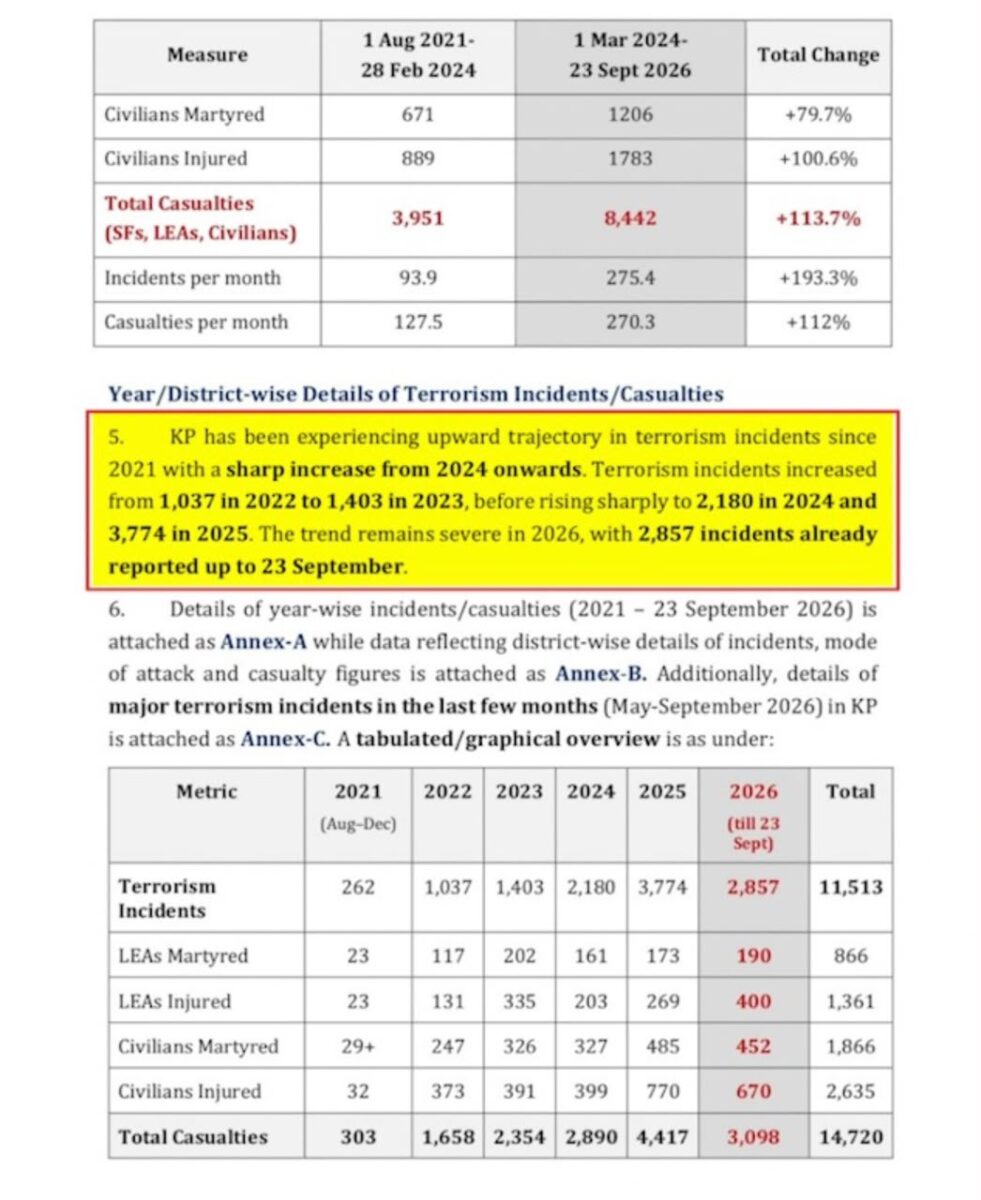
An unconfirmed report released by TTP showed more horrific scene of KP. According to TTP assessment 315 attacks in July, 406 in August and 334 in September – a total of 1,055 claimed attacks during the quarter. These figures are TTP’s own claims involving guerrilla attacks, armed clashes, sniper and laser-sighted attacks, ambushes, IEDs, targeted killings, quadcopter attacks and suicide operations. In July, TTP claimed 304 security personnel killed, 477 injured and 68 captured. Its August report claimed 294 killed, 352 injured and 31 captured, while its September infographic claimed 213 killed, 382 injured and 45 captured”

