The relationship between Pakistan’s civilian political parties, the state’s military establishment, public groups such as academicians, intellectuals, students, writers and historians has witnessed significant friction since ages, but this divide look intensified since 2022.
Observers and security analysts have documented distinct instances in which civilian parties diverged from or hesitated to explicitly endorse the specific positions advocated by the public regarding the Pakistan Tehreek-e-Insaf (PTI), the Afghan Taliban, counter-terrorism strategies, the demand for new administrative units, the announcement of much-needed governance reforms, and the revamping of the collapsed civil bureaucratic system. From the May 9 attacks on military installations to the JUI-F corruption saga, the political elite did not stand with the state’s interests but rather avoided taking a firm position to cleanse the national political landscape of unwanted elements. Whether it is the much-needed formation of new federating units or long-awaited structural reforms in civil administration, politicians, irrespective of their political affiliations, stand on the opposite side of the state’s interests. Major political parties, including the PPP and PML-N, have always found a narrow passage whenever serious action was required since 2022.
The lack of interest in taking stern action against vandals who attacked state monuments, including monuments commemorating martyrs and military establishments, became evident when political parties under the PDM government and subsequently the largely PML-N-nominated caretaker government refrained from collectively standing against PTI following the May 9 incident. As a result, many of those involved in the May 9 violence managed to reach Parliament through the 2024 general elections. This lukewarm behaviour of the political elite left several unanswered questions in the minds of the public: Why did the PPP and PML-N continue to talk about ‘dialogue’ and negotiations with PTI, which blatantly kept attacking state institutions, promoting the Afghan Taliban’s narrative on the TTP issue, and opposing security operations against terrorists in KP? Do the PPP and PML-N still think that JUI-F, which also supports the Afghan Taliban instead of Pakistan, would be their (PPP-PML-N) political partner in the future?
Following the attacks on military installations and monuments on May 9, 2023, the military establishment adopted a zero-tolerance policy, classifying the events as an “anti-state conspiracy” and advocating trials of civilian rioters under the Army Act. While the ruling Pakistan Democratic Movement (PDM) coalition, led by the Pakistan Muslim League-Nawaz (PML-N) and supported by the Pakistan People’s Party (PPP), publicly condemned the violence, it did not support the demand for trying the culprits in military courts. Despite calls from state factions and certain ministers to formally ban PTI, senior leadership from both the PPP and PML-N consistently floated the idea of “political dialogue”.
Political analysts noted that PPP Chairman Bilawal Bhutto-Zardari formed high-level committees specifically tasked with persuading government allies to pursue political engagement rather than the complete political elimination of PTI. Meanwhile, the PML-N government, after announcing a ban on PTI in July 2023, reversed the decision and expressed institutional reservations regarding the widespread use of military courts to try civilians. This cautious legal and political stance ultimately prevented a complete legislative consensus on entirely blacklisting PTI from the 2024 electoral framework, allowing independent candidates backed by PTI to participate and win a substantial share of parliamentary seats.
The situation was not much different when security forces demanded a clear political policy on counterterrorism, but political parties such as JUI-F continued to stand with the Afghan Taliban’s narrative.
When the military establishment announced Operation Azm-e-Istehkam to counter rising militancy, it faced immediate scepticism from regional leaders, including the Jamiat Ulema-e-Islam-Fazl (JUI-F) and opposition elements in KP. Major ruling parties (PML-N and PPP) were repeatedly compelled to assure the public that the operation would not cause mass civilian displacement, reflecting the civilian elite’s deep anxiety over fully backing unrestricted kinetic state operations without broad-based public approval.
The partner in the PDM government, the Jamiat Ulema-e-Islam-Fazl (JUI-F), led by Fazlur Rehman, has traditionally maintained a complex relationship with the state’s security doctrines, especially regarding Afghanistan. JUI-F shares historical, ideological, and religious ties (Deobandi lineage) with the Afghan Taliban leadership. While the state establishment has adopted an increasingly adversarial stance towards Kabul due to cross-border safe havens for the TTP, JUI-F leadership has frequently engaged in independent diplomacy. For instance, Fazlur Rehman undertook high-profile visits to Kabul to meet directly with senior Taliban officials, advocating religious solidarity and dialogue over the military’s preferred strategy of coercive pressure and cross-border kinetic strikes.
Despite JUI-F’s open divergence from the state’s aggressive posture towards Kabul, both the PML-N and PPP have historically maintained political alliances with the party. This partnership is driven by electoral arithmetic in the National Assembly and the Balochistan Provincial Assembly, demonstrating that the political elite frequently prioritises coalition-building and local political survival over enforcing a rigid, state-mandated alignment on foreign policy and counter-terrorism.
Regarding the formation of new federating units, both the PML-N and PPP are avoiding the much-needed public demand. The PML-N has repeatedly promised governance and structural reforms in Pakistan, and its leadership has acknowledged that governance has collapsed and the civil bureaucracy has become redundant. However, no formula or reform package has been announced in the last four years (2022 to date).
Why, on important national issues, does the political elite stand on the opposite side of what the public demands?
DND Report: A clandestine network involving the alleged seizure of properties belonging to the Commissionerate for Afghan Refugees in Peshawar and the facilitation of Pakistani citizenship for Afghan nationals in exchange for large sums of money has reportedly been uncovered. The network has links to JUIF and its leadership, according to local media reports.
Media reports have raised several questions, including how key government properties belonging to the Commissionerate for Afghan Refugees remained under the control of close associates of Fazl-ur-Rehman during the PDM government’s tenure—a period when a dangerous scheme was allegedly underway to facilitate Pakistani citizenship for Afghan nationals in exchange for substantial payments.
In the past, several journalists raised concerns about widespread corruption during the PDM government’s tenure, but the influence of the political elite reportedly kept such stories under wraps. DND News Agency also published a number of reports about alleged corruption during the PDM era. However, all efforts by the media appeared to go in vain, as no action was taken against those allegedly involved in corruption.
Now, what is being described as credible data about JUIF’s alleged corruption is surfacing, raising serious questions about the misuse of public funds and government properties.
One such issue concerns the use of government bungalows Nos. 4 and 5 in Hayatabad Phase 5, which were reportedly utilised by JUIF leaders, including Qari Rauf, Qari Hayatullah, Mamoon Ahmed Jan, and a brother-in-law of Zia-ur-Rehman.
According to reports described as verified, these very government bungalows served as transit points for facilitating the acquisition of Pakistani identity documents and citizenship by Afghan nationals in exchange for large sums of money.
Government resources, facilities, and the administrative machinery of the Commissionerate for Afghan Refugees were allegedly used for the benefit of specific individuals, reportedly acting on the directives of Fazl-ur-Rehman and his brother, Zia-ur-Rehman.
Media reports are now raising questions that Fazl-ur-Rehman must answer.
What were the actual motives behind removing Saleem Khan from his position and assigning additional charge to Abbas Khan? Did this administrative reshuffle pave the way for illegal activities?
Sources further indicate that Fazl-ur-Rehman’s political influence was allegedly exploited to secure extraordinary access to government institutions and resources.
Fazl-ur-Rehman must also address another set of questions:
Why should there not be a comprehensive investigation into the ownership, allotment, and use of these bungalows, as well as the identities of the individuals who resided there?
Did his close associates facilitate an illegal network involving state properties and the granting of Pakistani citizenship to Afghan nationals?
A transparent investigation into the matter is essential. The records of the Commissionerate for Afghan Refugees must be examined, and the relevant officers and officials held accountable if found involved in wrongdoing. Furthermore, the concerned institutions should present the facts before the public to establish who was responsible for the alleged misuse of government properties and the facilitation of Pakistani citizenship for Afghan nationals.
Since PDM government was headed by Mohammad Shehbaz Sharif who is again Prime Minister, therefore, today’s federal government is also preferring to keep silent on the issue of large-scale corruption of JUIF during PDM era.
Afghan Taliban are involved not only in hosting global terrorists but have also failed to fulfil the promises they made under the Doha Peace Accord, including the formation of an all-inclusive government, holding elections and ensuring human rights, particularly women’s right to education and equality.
Several United Nations reports indicate that the Afghan Taliban regime has become increasingly dangerous for global peace and that drug production has surpassed previous global records. Even then, the love affair between the Afghan Taliban and the United Nations continues. An interesting feature of this love affair is that the Taliban continuously violate the UN Travel Ban and Sanctions Enforcement regime (2021–2026), but the UN has never taken any action against them.
According to the George W. Bush Institute’s Taliban Travel Tracker, sanctioned Taliban officials received more than 60 travel exemptions between August 2022 and January 2025. The Institute also documented travel without the required exemptions to Bahrain, the United Arab Emirates, Kazakhstan and Turkmenistan.
The UN Security Council’s own reporting provides further evidence:
Eight international trips were reported in 2025 without accompanying exemption requests.
Eighteen exemption requests were approved, six were not approved and one was withdrawn, according to the Committee’s 2025 annual reporting.
Thirty-eight travel-exemption requests were approved through submissions by 11 member states between May 2024 and November 2025, according to the UN Monitoring Team.
Approved destinations included Cameroon, China, India, Oman, Pakistan, Qatar, Russia, Saudi Arabia, Türkiye, the UAE and Uzbekistan.
The UN Monitoring Team also found that some exemption requests were submitted after travel had begun or while it was underway, contrary to the Committee’s guidelines.
The latest case concerns Abdul Haq Wasiq, the Taliban’s intelligence chief, who remains subject to a UN travel ban (TAi.082). The UN Monitoring Team recorded three approved exemptions for him during its 2024–2025 reporting period.
On October 19, 2026, the UN authorised Wasiq to visit Abu Dhabi for medical reasons from October 20 to November 3. His reported travel involving Türkiye and subsequent participation in the SCO Plus security dialogue in Samarkand, Uzbekistan, on November 6, 2026, raise further questions. The publicly identified UAE exemption did not automatically authorise travel to these other destinations, and separate approvals have not been verified.
The evidence reveals a growing tension between international sanctions enforcement and regional diplomatic and intelligence cooperation. While the UN continues to authorise travel through formal exemptions, documented journeys without exemptions and repeated procedural failures demonstrate weaknesses in implementation.
Three questions require answers:
Why were sanctioned Taliban officials permitted to travel without the required exemptions to Bahrain, the UAE, Kazakhstan and Turkmenistan, and what consequences followed?
Did Türkiye and Uzbekistan obtain separate UN authorisations for Wasiq’s latest reported journeys, or did they permit his entry without the required approval?
If the UN has documented eight trips without accompanying exemption requests and repeated late submissions, what concrete enforcement measures have been taken against non-compliance?
The central question is whether the UN travel ban remains an effective international restriction or is gradually being undermined by regional diplomatic and intelligence interests.
List of promises given by Afghan Taliban in Doha Peace Accord and factual status of the issues
In diplomacy, nothing happens without a reason, not even a seemingly routine telephone call between two diplomats. Every visit, meeting, public engagement and diplomatic initiative carries a message, whether it is intended for a government, a business community, the media or ordinary citizens. Therefore, when Pakistan’s Ambassador to the Russian Federation, Faisal Niaz Tirmizi, travels thousands of kilometres from one end of Russia to another, visits regional capitals, meets governors, interacts with universities, engages business communities and addresses media organisations, these activities should not be viewed merely as routine diplomatic engagements.
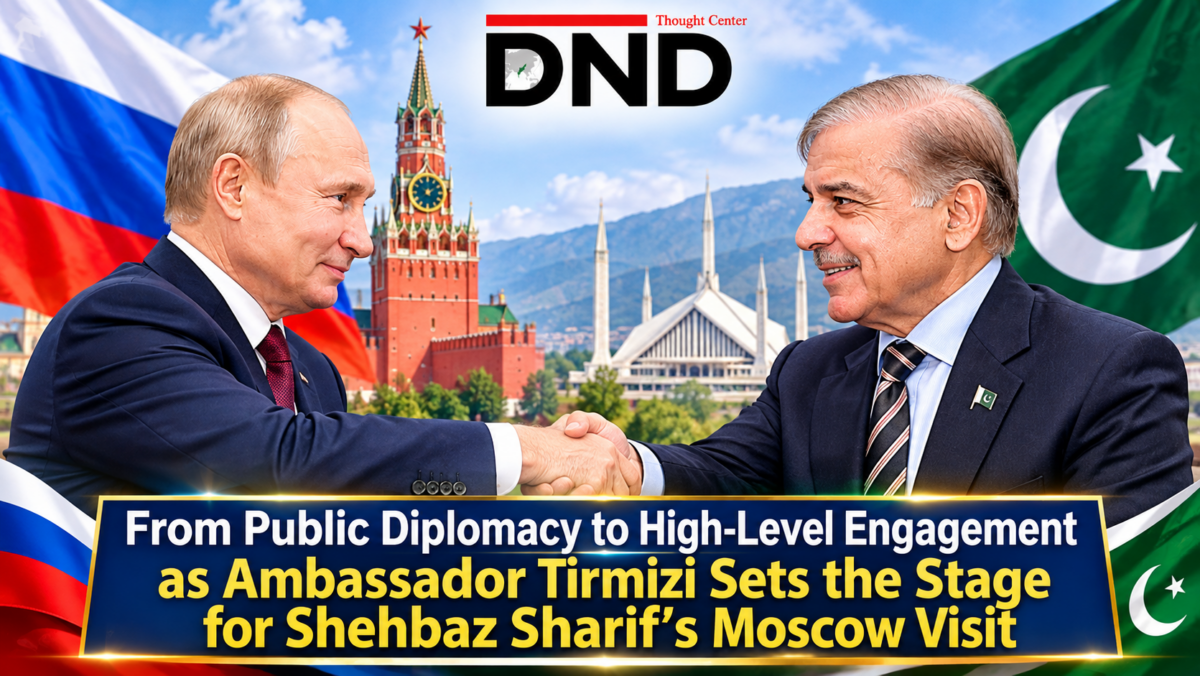
There is a much larger strategic objective behind this extensive outreach: placing Pakistan firmly in the consciousness of ordinary Russians and creating a positive perception of the country ahead of the upcoming visit of Prime Minister Shehbaz Sharif to Moscow in December 2026 and the expected visit of President Vladimir Putin to Islamabad to attend the forthcoming 2027 Shanghai Cooperation Organisation (SCO) summit in Pakistan.
The international system is undergoing a transformation in which emerging economic centres, regional organisations and alternative connectivity arrangements are acquiring greater importance. Pakistan’s geographical position gives it considerable potential to serve as a bridge between South Asia, Central Asia, the Middle East and Eurasia.
“Under the political leadership of Prime Minister Shehbaz Sharif and the strategic vision of Chief of Defence Forces Field Marshal Syed Asim Munir, instead of waiting for geopolitical developments to dictate the direction of bilateral relations, Pakistan is seeking to position Moscow as an important pillar of its evolving foreign policy”
The broader objective is to position Pakistan as an active participant in the emerging regional order rather than merely a country responding to decisions made by major international powers.
Importantly, stronger relations with Russia do not require Pakistan to compromise its longstanding partnerships with China and United States or other important countries. A mature foreign policy should allow Islamabad to maintain constructive relations with different international centres of power on the basis of mutual respect and national interests.
Its engagement with Russia is therefore consistent with a foreign policy that seeks to expand strategic options rather than remain confined to traditional geopolitical alignments.
Pakistan’s engagement with the Shanghai Cooperation Organisation has also been an important element of this evolving diplomatic outlook. Islamabad has increasingly recognised the SCO as a platform through which regional security, economic cooperation, connectivity and political dialogue can be advanced.
Public diplomacy is not an ornamental component of foreign policy. It is an essential instrument for building political understanding, generating economic opportunities and preparing the ground for high-level diplomatic engagements. In this context, Ambassador Tirmizi’s extensive outreach across Russia is part of a broader Pakistani diplomatic initiative to establish a sustainable relationship with Moscow that goes beyond government-to-government contacts. The objective is to make Pakistan a familiar, credible and attractive partner for Russian society, businesses, academia and regional institutions.
Pakistan’s diplomatic establishment, under the political leadership of Prime Minister Shehbaz Sharif and the strategic vision of Chief of Defence Forces Field Marshal Syed Asim Munir, appears to be pursuing a more proactive approach towards Russia. Instead of waiting for geopolitical developments to dictate the direction of bilateral relations, Islamabad is seeking to position Moscow as an important pillar of its evolving foreign policy.
This is a significant departure from a traditionally reactive approach in which Pakistan-Russia relations were often influenced by immediate regional circumstances or the priorities of other international partnerships. Pakistan has maintained longstanding and strategically important relationships with China and the United States, but its engagement with Russia has historically remained below its potential. The present diplomatic effort suggests that Islamabad wants to correct this imbalance and give Moscow the sustained political and economic attention it deserves.
The message is straightforward: Pakistan does not consider its relationship with Russia a temporary diplomatic assignment or an arrangement driven by a particular international crisis. It wants a long-term partnership based on mutual interests, economic complementarities, regional connectivity and an increasingly multipolar international order.
In this larger undertaking, seasoned career diplomat Ambassador Tirmizi is playing the role of a frontline diplomatic representative, taking Pakistan’s message beyond Moscow’s political and diplomatic circles and introducing it to different segments of Russian society. His mission is not simply to maintain relations with the Kremlin but also to create an environment in which ordinary Russians recognise Pakistan as a country with economic potential, cultural diversity, strategic importance and a willingness to develop mutually beneficial relations.
One of the most significant aspects of Ambassador Tirmizi’s tenure has been his emphasis on regional outreach. Russia is a vast federation, and its economic, industrial, agricultural, educational and technological potential is distributed across numerous regions. Limiting diplomatic engagement to Moscow would therefore mean overlooking substantial opportunities.
Ambassador Tirmizi became the first Pakistani envoy to visit several Russian regions that had never previously been reached by a Pakistani diplomat. From Vladivostok to Siberia, and from Dagestan to Chechnya, he has been introducing Pakistan as a country offering investment opportunities, with a civilisation stretching back thousands of years. He has also been working to dispel the misconception, held by many Russians, that the Indus Valley Civilisation flourished in what is now India.
Beyond promoting economic cooperation, particularly in agriculture and textiles, Ambassador Tirmizi has been highlighting Pakistan’s cultural diversity and drawing parallels with Russia, which is itself a multicultural federation. Such visits carry significance beyond their immediate commercial agenda. When a Pakistani ambassador meets a regional governor, addresses local institutions or interacts with business representatives, Pakistan becomes part of the local political and economic conversation. These engagements help establish direct institutional contacts that can eventually translate into trade agreements, investment initiatives, academic exchanges and business partnerships.
This is particularly important because Russia’s regional administrations, industrial centres and business communities possess considerable economic influence. Pakistani exporters, investors and technology companies need direct access to these markets rather than relying exclusively on diplomatic channels in Moscow.
The broader objective is to make the word ‘Pakistan’ familiar across Russian regions, not merely among officials dealing with South Asian affairs but also among businesspeople, students, researchers, journalists and ordinary citizens.
The timing of these initiatives is particularly important. High-level visits achieve their greatest impact when political and diplomatic groundwork has already been completed. A prime minister’s meeting with the Russian president can establish strategic direction, but the actual implementation of agreements depends on the institutional, commercial and public environment created before and after the visit. This is precisely where the Embassy of Pakistan’s public diplomacy initiatives acquire strategic importance.
The Moscow-Islamabad Media Forum, which brought intellectual and media engagement into the bilateral relationship, was an important initiative in this direction. Media organisations influence public perceptions, shape political discourse and help societies understand international developments. Engaging Russian media is therefore not simply an exercise in publicity; it is an investment in long-term mutual understanding.
The Embassy’s interactive sessions with leading Russian media outlets have also provided opportunities to explain Pakistan’s economic outlook, investment potential and foreign policy priorities. Such engagement is particularly relevant at a time when international perceptions of Pakistan are frequently influenced by security-related narratives, geopolitical rivalries and limited understanding of its economic and cultural potential.
Similarly, the Embassy’s engagement with student delegations, including representatives of the Kazan Academy of Youth Diplomacy and the Higher School of Economics, reflects an understanding that bilateral relations cannot be sustained exclusively through political leadership. Academic exchanges, university partnerships and youth engagement create networks that can continue developing long after the current diplomatic leadership has completed its assignments.
Ambassador Tirmizi is also working extensively to connect Pakistani universities with Russian educational institutions and bring Pakistani educationists and academics to Russia, with the objective of facilitating opportunities for Pakistani students to pursue education within the Russian academic system.
Recently held Pakistan-Russia technology webinars involving the Pakistan Software Export Board and Russian institutions have added another dimension to this effort. By bringing technology companies and relevant institutions together, the Embassy is exploring opportunities for cooperation in artificial intelligence, cybersecurity, cloud computing and enterprise software.
These initiatives collectively demonstrate that Pakistan’s diplomatic outreach is not confined to traditional political diplomacy. It encompasses economic, technological, educational, intellectual and public diplomacy, all of which contribute to building a more comprehensive relationship.
The real test of improved bilateral relations, however, will be the ability to convert political goodwill into measurable economic benefits.
Pakistan and Russia have already made progress in this direction. Pakistan’s entry into the Russian crude oil market was an important development, demonstrating that the two countries could explore practical economic cooperation despite geographical distance, international political complications and financial constraints.
Bilateral trade has crossed the $1 billion threshold, while both sides are exploring additional arrangements, including barter trade mechanisms, to address banking and payment-related difficulties.
However, the existing level of trade remains considerably below the potential of the two economies. Pakistan offers opportunities in agriculture, textiles, pharmaceuticals, information technology, surgical instruments and other export sectors. Russia, meanwhile, possesses considerable capabilities in energy, fertilisers, industrial technology, machinery, scientific research and advanced technological development.
The challenge is to develop a sustainable commercial framework through which these complementarities can be exploited.
This is why the proposed Pakistan-Russia Business Forum during Prime Minister Shehbaz Sharif’s December visit assumes particular importance. The participation of a substantial business delegation and the proposed engagement of more than 100 corporate entities from each side could provide an important platform for identifying commercial partners, negotiating business arrangements and exploring joint ventures.
A prime ministerial visit should not remain restricted to official statements and ceremonial exchanges. It must provide Pakistani and Russian businesses with a clear understanding of available opportunities, regulatory requirements, payment mechanisms and investment incentives.
The proposed Preferential Trade Agreement with Russia and the Eurasian Economic Union could be another important development. Formal progress towards such an arrangement would help create a more predictable trade environment and potentially improve Pakistani exporters’ access to Russian and other Eurasian markets.
For Pakistan, diversification of export destinations is not merely an economic preference; it is a strategic necessity. Greater engagement with Russia and the wider Eurasian economic space could reduce excessive dependence on a limited number of traditional markets while opening new opportunities for Pakistani businesses.
Energy cooperation and regional connectivity should also feature prominently in the anticipated discussions between Prime Minister Shehbaz Sharif and Russian President Vladimir Putin.
Pakistan’s energy requirements, industrial ambitions and infrastructure challenges make Russia an important potential partner. Both countries have discussed energy cooperation over the years, but the next stage requires practical arrangements, commercially viable projects and a mechanism for overcoming financial and technical obstacles.
The North-South Transport Corridor and long-term gas pipeline infrastructure are particularly relevant in this regard. Advancing the operational details of transport connectivity would provide Pakistan with opportunities to strengthen its links with Russia and the wider Eurasian region.
Such connectivity should not be viewed exclusively through the lens of bilateral trade. It could eventually contribute to a broader regional economic framework connecting South Asia, Central Asia and Eurasia.
Nevertheless, ambitious infrastructure projects require careful feasibility assessments, financial arrangements, technical planning and political continuity. The December visit should therefore aim to move discussions beyond general commitments towards clearly defined implementation mechanisms.
Similarly, cooperation in artificial intelligence, cybersecurity, cloud computing and other emerging technologies could introduce a new dimension into Pakistan-Russia relations. These are sectors in which long-term institutional partnerships, knowledge sharing and private-sector participation can generate benefits extending well beyond conventional trade.
The recent visit of Russian Interior Minister Vladimir Kolokoltsev to Islamabad, which included high-level meetings with Pakistan’s political and military leadership, has also demonstrated the growing importance of security and law-enforcement cooperation. Counterterrorism, intelligence coordination and institutional capacity-building are areas in which both countries have shared interests.
Taken together, these developments indicate that the relationship is gradually becoming multidimensional, encompassing energy, trade, infrastructure, technology and security.
Ambassador Faisal Niaz Tirmizi’s tenure in Moscow should be assessed within this larger strategic context.
An ambassador’s performance cannot be measured exclusively by the number of official meetings held, diplomatic receptions attended or statements issued. The more meaningful indicators are whether the ambassador has expanded the country’s institutional presence, introduced new economic opportunities, improved public perceptions and established channels of cooperation that can survive changes in diplomatic personnel.
By travelling beyond Moscow, engaging regional administrations, interacting with Russian universities, reaching out to media organisations and promoting technological and commercial partnerships, Ambassador Tirmizi has attempted to give Pakistan-Russia relations a broader social and economic foundation.
His approach also reflects an important principle of modern diplomacy: countries must invest in their image and relationships before they need political support, economic partnerships or strategic cooperation.
If Pakistan wants Russian businesses to consider its market seriously, Russian universities to establish academic partnerships with Pakistani institutions and Russian media to understand Pakistan beyond conventional geopolitical narratives, this engagement must be continuous.
It cannot begin a few weeks before a prime ministerial visit and disappear after the visiting delegation returns home.
This is why the Embassy’s extensive public diplomacy efforts should be viewed as part of a longer-term national undertaking. The immediate objective may be to prepare the ground for Prime Minister Shehbaz Sharif’s Moscow visit, but the ultimate objective should be to establish Pakistan as a permanent and meaningful partner in Russia’s political, economic and social outlook.
The December 2026 visit should not become the culmination of Pakistan’s renewed engagement with Russia. Instead, it should mark the beginning of a more ambitious phase.
The meeting between Putin and Shehbaz Sharif must produce a clear roadmap with measurable targets, implementation timelines and institutional mechanisms. The proposed business forum should be followed by practical business-to-business engagement. Trade liberalisation discussions should advance towards formal agreements. Energy cooperation should move towards commercially sustainable projects, while technological partnerships should be supported through institutional arrangements.
Both governments should also prioritise the resolution of banking difficulties, simplify visa procedures and explore direct air connectivity to facilitate business travel, tourism, academic exchanges and people-to-people contacts.
Pakistan must simultaneously encourage its private sector to take greater interest in the Russian market. Diplomats can open doors, organise meetings and facilitate institutional contacts, but businesses must ultimately identify opportunities, establish commercial relationships and invest in long-term partnerships.
There is also a need for continuity in public diplomacy. Russian universities, regional administrations, media organisations and cultural institutions should remain engaged with Pakistan through regular exchanges rather than occasional high-profile events.
The most important achievement would be to create a situation in which Pakistan is no longer an unfamiliar country to ordinary Russians but a recognised partner with whom they can identify commercial, educational, cultural and strategic opportunities.
Ultimately, diplomacy is about preparing the ground for tomorrow while delivering results today. A prime ministerial visit is important, a presidential summit is significant and commercial agreements are essential, but none of these can substitute for the sustained work required to build mutual confidence between two nations.
Ambassador Tirmizi’s extensive engagement across Russia is therefore much more than a series of diplomatic activities. It represents an effort to introduce Pakistan to a wider Russian audience, establish a positive national image and create an environment conducive to a stronger strategic partnership.
The political leadership in Islamabad wants Moscow to occupy a more prominent position in Pakistan’s foreign policy calculations. The upcoming Putin-Shehbaz summit provides an opportunity to translate that ambition into practical achievements.
The message from Islamabad is becoming increasingly clear: Pakistan wants to engage Russia not merely when circumstances demand it, but as a matter of long-term foreign policy priority. And the task of ensuring that the word ‘Pakistan’ occupies a positive, familiar and meaningful place in the Russian public consciousness is an important part of that mission. Therefore the upcoming visit of Prime Minister Shehbaz Sharif to Moscow in the first week of December 2026 must be understood against this wider diplomatic background. It is not simply another bilateral visit involving meetings between two heads of government. Rather, it represents an opportunity to consolidate the groundwork laid over the past several months and translate Pakistan’s renewed diplomatic engagement with Russia into concrete economic, commercial and strategic outcomes.
DND Report: In Pakistan, the discourse on ‘structural reforms’ is always present in newspapers and public discussions, but such reforms have never actually taken place, although everybody, even those running the country has confessed that the governance system has collapsed.
Delaying structural reforms suits those who benefit from the status quo because the powerful do not want to share the means (sources) of ‘prosperity’ with the public. The second most popular term in this discourse is ‘corruption’. Political scientists believe that a structural status quo always helps ‘structural corruption’ to flourish. Pakistan is caught between the need for structural reforms and the prevalence of structural corruption.
Whatever is appearing in the media about JUI-F and its chief, Fazl-ur-Rehman, and the allegations of corruption against them is a textbook example of how structural corruption enables people in Pakistan to amass fortunes, while nobody dares to raise a finger until a certain saturation point is reached.
Despite a long history of alleged involvement in corruption, JUI-F had never been seriously questioned in the past because it remained an ingredient of power politics, enjoyed the support of half a million students of religious schools, and maintained deep-rooted connections in Afghanistan and certain Middle Eastern countries. The most lethal tool JUI-F possesses is its religious smokescreen. In Pakistan, the misuse of blasphemy laws makes everybody afraid to question religious parties and religious personalities. Although the media is now digging into allegations of corruption involving JUI-F, political parties and their leaders are avoiding commenting on the alleged corruption involving Fazl-ur-Rehman’s family. The Mufti Mahmood Markaz, which is accused of encroaching on the Ring Road in Peshawar, remains untouched because demolishing or even touching a religious building in Pakistan, even when it involves an encroachment, requires a lion’s heart.
The majority of alleged corruption cases involving Fazl-ur-Rehman’s family are linked to the period when JUI-F was sharing power with the PPP and PML-N. Most of these cases reportedly relate to the Pakistan Democratic Movement (PDM) era. During 2022–23, some investigative journalists tried to dig into alleged corruption in ministries led by JUI-F, PPP and PML-N, but these journalists were made ‘silent’.
The latest news concerning alleged corruption within JUI-F is linked to allegations of selling party tickets. A serious issue has come to light: political party tickets are allegedly being distributed in exchange for large financial payments rather than being awarded on the basis of ideological commitment or political service.
According to available information and emerging details, a systematic practice of buying and selling tickets for the Senate, as well as the National and Provincial Assemblies, allegedly took place under the leadership of Jamiat Ulema-e-Islam (F) chief Fazl-ur-Rehman—a process that reportedly involved the collection of billions of rupees as financial kickbacks.
Several individuals have been identified in this regard, including contractors, business figures and others associated with political circles.
Details indicate that a Senate ticket from Balochistan was awarded to a contractor named Ahmed Khan in exchange for a payment of one billion rupees. It has also been alleged that Asad Mahmood (son of Faxul Rehman) played a role in brokering this deal. Similarly, a contractor named Abdul Shakoor is accused of securing a Senate ticket in return for facilitating a cross-border trade project with Iran.
In Khyber Pakhtunkhwa, the name of Fazl-ur-Rehman’s brother, Atta-ur-Rehman, has surfaced in connection with the alleged sale of National and Provincial Assembly tickets. According to reports, the price of a ticket was determined by a candidate’s prospects of winning in a particular constituency: the higher the likelihood of victory, the larger the amount demanded.
A serious revelation has also emerged concerning Usman Badini, a contractor hailing from Nushki. Usman Badini had reportedly already made a payment to secure a National Assembly seat; however, he was subsequently asked to pay an additional one billion rupees to finalise the allocation of the ticket.
This instance of alleged grave corruption is not merely a political irregularity; rather, it casts a serious shadow over the democratic system, the electoral process and the credibility of Jamiat Ulema-e-Islam (JUI-F).
Several critical questions demand immediate answers:
Have tickets for an ideologically driven Islamic political party been awarded to wealthy contractors and business figures making substantial financial payments instead of being given to the party’s own ideological workers?
To whom, and through what mechanism, was the one-billion-rupee payment made in exchange for a Senate ticket from Balochistan?
What was Asad Mahmood’s role in this deal?
Was Atta-ur-Rehman responsible for setting the prices and managing the arrangements for National and Provincial Assembly tickets in Khyber Pakhtunkhwa?
Who demanded an additional one billion rupees from Usman Badini, and on what grounds?
The time has come for an impartial investigation into all these allegations and for the individuals involved to come forward and clarify their positions. Accountability institutions must immediately investigate these serious revelations.
These allegations raise fundamental questions about the kind of democracy being practised in Pakistan, where seats in Parliament can allegedly be bought with money. Interestingly, Pakistan’s parliamentary system has also witnessed a situation in which one sister is a senator, another is an MNA through a reserved seat for women, and daughter of female MNA is also a member of Parliament through a reserved seat in a provincial assembly. This is the kind of democracy Pakistan is living with.
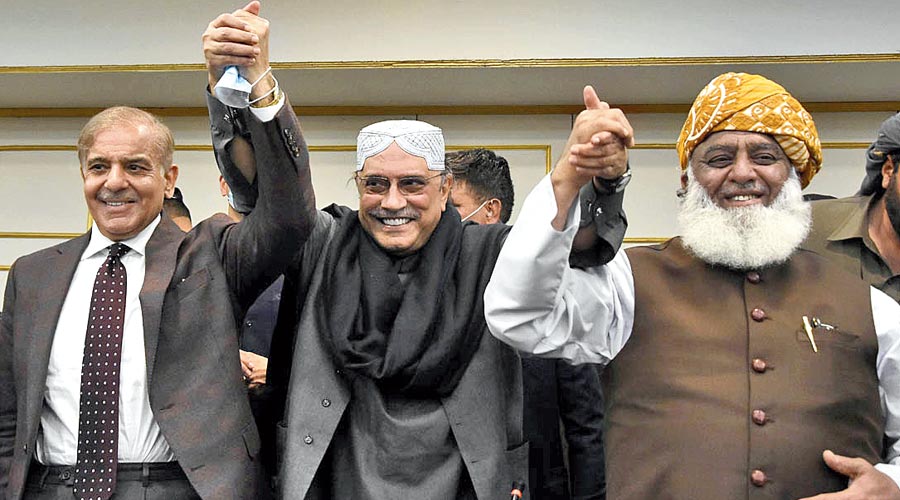
The majority of journalists believe that PML-N supreme leader Mian Nawaz Sharif and PPP’s political godfather, President Asif Ali Zardari, would prefer to distance themselves from the information and allegations concerning how JUI-F allegedly played havoc with the rule of law. They may need Fazl-ur-Rehman tomorrow, so why should they risk their cordial relations with Fazl-ur-Rehman and his political associates today? One should understand broader pattern of elites across parties using political power and religious influence to shield systemic corruption in Pakistan before demanding structural reforms that can block pathway for corrupt politicians.
The results of the US midterm elections are interesting, not simply because Republicans have suffered a political setback, but because the defeat has also exposed the declining influence of the old guard within the Democratic Party, particularly those associated with the pro-Israel lobby, AIPAC, and Washington’s traditional militaristic foreign policy.
The outcome represents a much bigger political message than an ordinary electoral reversal: American voters appear increasingly unwilling to finance endless overseas wars, support unconditional Israeli military adventures or accept a foreign policy that puts the interests of other countries ahead of America’s own domestic priorities.
“Results leave a lesson to White House that winning wars is not about destroying countries, and winning elections is not about starting wars”
Perhaps the most consequential outcome is that President Donald Trump has lost much of the political protection he enjoyed before the elections. Having suffered a major electoral defeat, he now faces a difficult choice: either reconsider the disastrous direction of his Iran policy or attempt to demonstrate American military strength through further escalation. The latter possibility is particularly dangerous because a president who has already suffered a significant political defeat may feel less constrained by electoral considerations when making decisions about war and peace.
Those who once hoped to see Trump emerge as a Nobel Peace Prize winner are now watching from the sidelines, perhaps sipping their lattes and smoking cigars, as the president who promised to end America’s overseas wars finds himself associated with one of the most consequential military confrontations of his presidency.
The irony is difficult to ignore. Trump built much of his political appeal on his criticism of America’s endless wars, his promise to put America first and his commitment to stop conflicts rather than initiate new ones. Yet, his decision to attack Iran, reportedly under considerable pressure from Israeli Prime Minister Benjamin Netanyahu, has placed his administration in direct contradiction with the political promises that helped bring him back to the White House.
The central argument of western writers is that the US midterm election results represent more than a setback for the Republican Party: they expose the collapse of the bipartisan pro-Israel, pro-war political establishment.
What makes these election results particularly interesting is the argument advanced by several Western political commentators that the defeat was not confined to Republicans. The traditional Democratic establishment, which had consistently supported unconditional military and financial assistance to Israel, also suffered a serious political setback.
For years, both major American political parties operated within an almost unquestionable bipartisan consensus on Israel. Democratic and Republican administrations alike continued providing military assistance, diplomatic protection and political support to successive Israeli governments, irrespective of their conduct in Palestine and the wider Middle East.
The Biden administration was particularly associated with this approach. Former President Joe Biden and his political establishment maintained unwavering support for Israel during Benjamin Netanyahu’s military campaign in Gaza, while continuing to approve weapons transfers and defend Israeli actions internationally. Kamala Harris, who served as vice president and subsequently became the Democratic presidential candidate, also remained within the established Democratic foreign policy framework.
The political establishment repeatedly presented this approach as a defence of democracy and regional stability. However, for an increasingly dissatisfied section of the American electorate, it represented an expensive foreign policy that prioritised overseas commitments over domestic economic and social concerns.
The same establishment also promoted an expansive vision of American global leadership through military alliances, political interventions and initiatives presented as international democratic cooperation. The Biden administration’s Democracy Summits and the rhetoric surrounding the so-called rules-based international order were part of this broader approach.
However, Washington’s credibility suffered because successive American administrations have themselves been accused of applying international law selectively, defending allies when convenient while invoking legal principles against geopolitical opponents.
As foreign policy adviser Matt Duss argued in a January 2025 assessment of the Biden administration’s foreign policy failures, international law increasingly appeared to be treated as an instrument against adversaries rather than a universally applicable standard.
This contradiction is not exclusive to Biden. Trump has also repeatedly faced accusations of violating international law. Nevertheless, the continuity between successive administrations demonstrates that the problem is considerably deeper than the personalities occupying the White House. It concerns the American foreign policy establishment itself.
One of the most significant political messages emerging from the elections concerns the influence of the American Israel Public Affairs Committee (AIPAC).
For decades, AIPAC and its political network exercised considerable influence over American electoral politics by supporting candidates favourable to Israel and campaigning against those advocating a more critical approach towards Israeli policies.
However, the growing electoral success of candidates openly questioning unconditional support for Israel suggests that the political environment is changing.
Reports of substantial campaign spending against pro-Palestinian candidates, including the reported expenditure of more than $40 million against Michigan candidate Abdul El-Sayed, illustrate the extent to which the Israel question has become a major electoral battleground. His reported electoral breakthrough, despite the financial resources deployed against him, is particularly significant.
As Beth Miller, political director of Jewish Voice for Peace Action, reportedly observed, the old bipartisan consensus on Israel is over.
This does not necessarily mean that Washington will immediately abandon its strategic relationship with Israel. American political institutions, defence interests, lobbying networks and established foreign policy commitments remain deeply entrenched. However, the emergence of candidates prepared to question unconditional military assistance to Netanyahu represents an important political development.
For the first time in decades, the political cost of supporting every Israeli military decision may be becoming greater than the electoral advantage traditionally associated with doing so.
This changing political environment could eventually create space for a more balanced American approach towards Palestine, the occupied West Bank and the wider Middle East. It could also encourage Washington to reconsider the continued supply of weapons that have contributed to the destruction of civilian communities.
The most immediate international consequence of the election results concerns Iran.
According to reporting by Axios, Vice President JD Vance had reportedly advocated an agreement to end the war and privately expressed strong reservations about Netanyahu’s assessment of Iran. Several senior officials within Trump’s administration were also reportedly uncomfortable with the prospect of renewed large-scale military operations.
The reported disagreement was not simply about the timing of military action. It concerned the strategic wisdom of allowing Israel to determine the direction of American foreign policy.
According to the reported account, Netanyahu was considered wrong in his assessment of several aspects of the Iranian confrontation, while Vance warned that the war could carry serious political consequences for Republicans in the midterm elections.
There were also reports that Trump had considered striking Iran before the elections under pressure from Netanyahu but ultimately decided to wait until the electoral outcome became clearer.
This raises a fundamental question: why should an American president allow the strategic calculations of a foreign leader to determine whether the United States enters another major war?
The United States possesses enormous military capabilities, but military superiority does not automatically translate into political victory. Iran has spent decades preparing for asymmetric warfare, developing missile and drone capabilities, strengthening its regional deterrence and preparing for the possibility of a prolonged confrontation.
The assumption that American airpower and overwhelming conventional military superiority could quickly compel Tehran to surrender its strategic positions was always questionable.
The consequences of the confrontation, including the disruption of the Strait of Hormuz, the regional security crisis and the enormous expenditure of military resources, demonstrate the risks of underestimating an adversary that has prepared for precisely such a confrontation.
Even after extensive military operations, the political objectives attributed to the American-Israeli campaign remain far more difficult to achieve than its proponents initially suggested.
Regime change has not necessarily followed military destruction. Iran’s strategic institutions have demonstrated resilience, while the country’s missile and drone capabilities and its capacity to impose costs on adversaries remain central considerations.
The reported preparations by the US military for potentially resuming large-scale combat operations, including the deployment of additional military capabilities to the region, therefore represent a dangerous development.
At the same time, Qatari mediation efforts to secure support from Washington and Tehran for a draft agreement offer a possible diplomatic exit.
The question is whether Trump will choose diplomacy or allow Netanyahu’s calculations and the demands of hawkish advisers to determine America’s next move.
The reported position of JD Vance deserves particular attention. Vance has long been associated with an American foreign policy that places greater emphasis on domestic priorities and avoids unnecessary overseas military commitments. His reported opposition to renewed escalation against Iran reflects a broader political constituency within the Republican Party that is increasingly sceptical of foreign interventions.
If the Axios reporting accurately reflects the internal debate, Vance and other senior officials understood that another major military confrontation could damage Trump’s political standing and undermine the Republican Party’s electoral prospects.
The mediators’ reported question to White House officials before the elections is equally revealing: what would Trump do if he lost?
The inability of his advisers to provide a clear answer reportedly reflected the uncertainty surrounding the administration’s strategic direction.
Now that the elections have delivered a serious setback, the situation has become more complicated.
Tehran’s public celebration of Trump’s political defeat may also influence the calculations in Washington. Mohsen Rezaei, secretary of Iran’s Supreme National Security Council, reportedly described the electoral outcome as a political defeat for Trump, alongside what he characterised as an Iranian strategic victory in the field and around Hormuz.
Such statements may irritate the American president and strengthen the arguments of those within his administration advocating a tougher military response.
However, a decision to resume war merely to demonstrate political strength or punish Tehran for celebrating an American electoral defeat would be an extraordinary strategic mistake.
The real test of American leadership is not how many bombs it can drop but whether it can achieve its political objectives without dragging an entire region into prolonged conflict.
Another important political development concerns Defence Secretary Pete Hegseth, whose future has reportedly come under scrutiny following the Republican electoral setback.
Hegseth was among the most vocal advocates of military escalation against Iran and represented the administration’s hardline approach towards the use of American military power.
His rhetoric about overwhelming military force, destruction and the elimination of perceived enemies reflected an assumption that American conventional superiority would be sufficient to achieve the desired results.
Yet, the fundamental weakness of this approach was its failure to distinguish between destroying military infrastructure and achieving sustainable political objectives.
Military campaigns can destroy facilities, eliminate commanders and inflict enormous damage. However, they cannot automatically manufacture a favourable political outcome, dismantle a country’s national identity or compel an adversary to abandon its strategic red lines.
The reported failure to achieve the broader objectives associated with the Iran campaign has consequently raised questions about the advice provided to Trump by his military and political advisers.
There have also been reports that Trump has begun questioning Hegseth’s performance and that the defence secretary could become a political casualty of the electoral defeat.
The irony is particularly striking. Hegseth’s supporters promoted an image of uncompromising military strength, while the administration’s critics argued that his approach was taking America towards a conflict whose strategic and economic costs had not been properly assessed.
If the reports about his possible removal prove accurate, it would demonstrate that the political consequences of a failed military strategy do not necessarily remain confined to the battlefield.
Hegseth may have sought to demonstrate American military supremacy through the Iran confrontation, but the political consequences could eventually reshape the leadership of the Pentagon itself.
For years, Washington has presented itself as the principal defender of the international rules-based order. However, successive administrations have weakened that argument through selective interpretations of international law and the use of military power outside universally accepted legal frameworks.
The Biden administration faced serious criticism over its approach to Gaza, while Trump’s administration has faced criticism over its military actions and threats against several countries.
The problem is that international law cannot remain credible if its application depends on whether a country is an American ally or adversary.
The world does not need another demonstration of American military superiority. It needs a United States willing to respect the same international principles that it demands from others.
This is particularly important for smaller countries, which depend on international law, sovereign equality and multilateral institutions to protect themselves against the coercive policies of major powers.
When Washington treats international law as optional, it weakens the very international system it claims to defend.
For Asia, the American electoral outcome carries mixed but potentially encouraging implications.
The region has little interest in becoming another battlefield for great-power competition. Its economic future depends on trade, investment, connectivity, energy security and regional stability.
For years, successive American administrations have strengthened military partnerships and security arrangements involving Japan, Australia, the Philippines, Taiwan and other regional actors as part of their strategy to contain China’s growing influence.
Washington has repeatedly presented these arrangements as necessary for regional stability. However, from Beijing’s perspective, they represent an expanding network of military pressure around China’s neighbourhood.
The same contradiction applies to American policies towards Hong Kong, Taiwan and other regional questions.
China’s economic rise has fundamentally altered the global balance of power. Rather than accepting this development as an inevitable feature of changing international economic realities, sections of the American establishment have increasingly treated China’s rise as a strategic challenge that must be contained through political, economic and military pressure. The consequences of this approach are not limited to China. They affect the entire Asian region.
Countries across Asia need economic cooperation and freedom from unnecessary military confrontation. They do not want to be forced into choosing sides in an increasingly polarised international environment.
A weakened bipartisan pro-war consensus in Washington could therefore create some diplomatic space for a more balanced American approach towards Asia. However, it would be naïve to expect a fundamental transformation overnight.
The American strategic establishment remains influential, and its geopolitical ambitions are not necessarily dependent on which party controls Congress or occupies the White House.
Nevertheless, the emergence of more diverse, anti-war and pro-Palestinian political voices in American electoral politics provides some reason for cautious optimism.
The midterm elections have delivered an important message to the White House: Americans do not necessarily support a foreign policy based on permanent military confrontation, unconditional support for foreign governments or the expenditure of unlimited taxpayer resources on overseas conflicts.
Trump won political support by promising to put America first and stop unnecessary wars. His decision to engage militarily with Iran has undermined that promise and created an increasingly difficult political situation.
He must now decide whether he wants to be remembered as the president who escalated another disastrous Middle Eastern war or the leader who recognised the limits of military power and pursued a diplomatic settlement.
The electoral defeat has also exposed the vulnerability of the old bipartisan consensus on Israel and the declining ability of powerful lobbying networks to guarantee political outcomes through financial influence alone.
However, the most dangerous possibility is that Trump may interpret his electoral defeat not as a warning against war but as a reason to become more aggressive abroad.
A president who believes he has little left to lose politically could be tempted to take decisions with consequences extending far beyond his remaining time in office. Such a calculation would be disastrous for the United States, Iran, the Middle East and the international community.
The world does not need another war to satisfy the political ambitions of Netanyahu, the ideological preferences of hawkish American officials or the domestic political frustrations of the White House.
If Trump genuinely wants to restore his legacy as a president committed to peace, he must listen to those advisers who favour diplomacy, including the reported position of JD Vance, and give Qatar’s mediation efforts a genuine opportunity.
America’s military might have already been demonstrated. What remains to be demonstrated is its political wisdom. Results leave a lesson to White House that winning wars is not about destroying countries, and winning elections is not about starting wars.
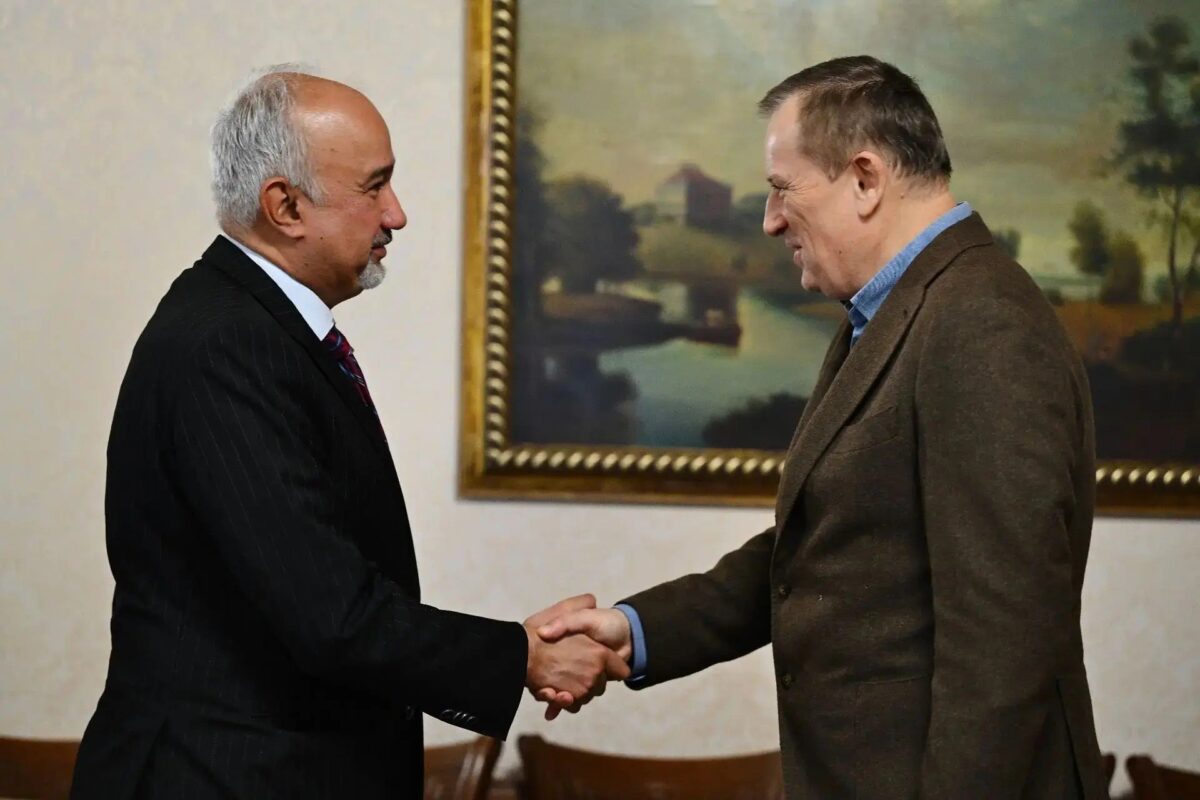
DND News:Governor of Russia’s Leningrad Region Alexander Drozdenko held a working meeting with Pakistan’s Ambassador to the Russian Federation, Faisal Niaz Tirmizi, to discuss bilateral relations, cultural ties and opportunities for developing mutually beneficial cooperation.
During the meeting, Ambassador Faisal Niaz Tirmizi shared his longstanding personal connection with Russia, explaining that he had been familiar with the country since childhood because of his father, who served in the state service and had spent some time in the former Soviet Union during his youth.
He recalled that his earliest impressions of life were associated with Leningrad, highlighting the historical and personal significance of the region for him.
The Ambassador also highly appreciated the cultural ties between Pakistan and Russia, as well as their shared history, emphasising the importance of strengthening people-to-people contacts and expanding mutual understanding.
Given Ambassador Tirmizi’s interest in ecological tourism, Governor Alexander Drozdenko offered to personally guide him on a visit to the Leningrad Region, which is known for its natural landscapes and tourism attractions.
“I am pleased that our meeting will mark the beginning of a meaningful dialogue and lead to successful joint projects,” Governor Alexander Drozdenko said.
The Leningrad Region is among Russia’s leading economic centres, offering considerable opportunities for international trade, investment and industrial cooperation.
In 2025, fixed capital investment in the region reached 1.6 trillion roubles, equivalent to 61 per cent of its gross regional product (GRP). Its ports handle approximately 25 per cent of Russia’s total export-import cargo turnover, maintaining trade links with 106 countries.
The region also has a strong agro-industrial sector, accounting for 41 per cent of food production in Russia’s Northwestern Federal District.
It ranks first in Russia in the production of eggs, lettuce and leafy greens, tea and coffee packaging, as well as milk yields per cow, reflecting its significant contribution to the country’s agricultural and food industries.
Besides its economic strength, the Leningrad Region is an important cultural and tourism destination. It welcomed more than 10 million tourists in 2025 and hosts over 700 cultural events annually.
The meeting between Governor Alexander Drozdenko and Ambassador Faisal Niaz Tirmizi reflects the potential for expanding Pakistan-Russia regional cooperation beyond traditional diplomatic engagement, particularly in trade, investment, agriculture, tourism and cultural exchanges.
DND News: Journalism in Pakistan has become a dangerous profession, offering only financial turbulence and threats from non-state actors, politicians, mafias, goons and sometimes even official quarters.
Investigative journalism and independent-minded journalists also face tremendous economic strangulation within their organisations if they do not comply with the unreasonable demands of their owners, who are now mostly real estate developers and politicians.
“Journalism Is Not a Crime”
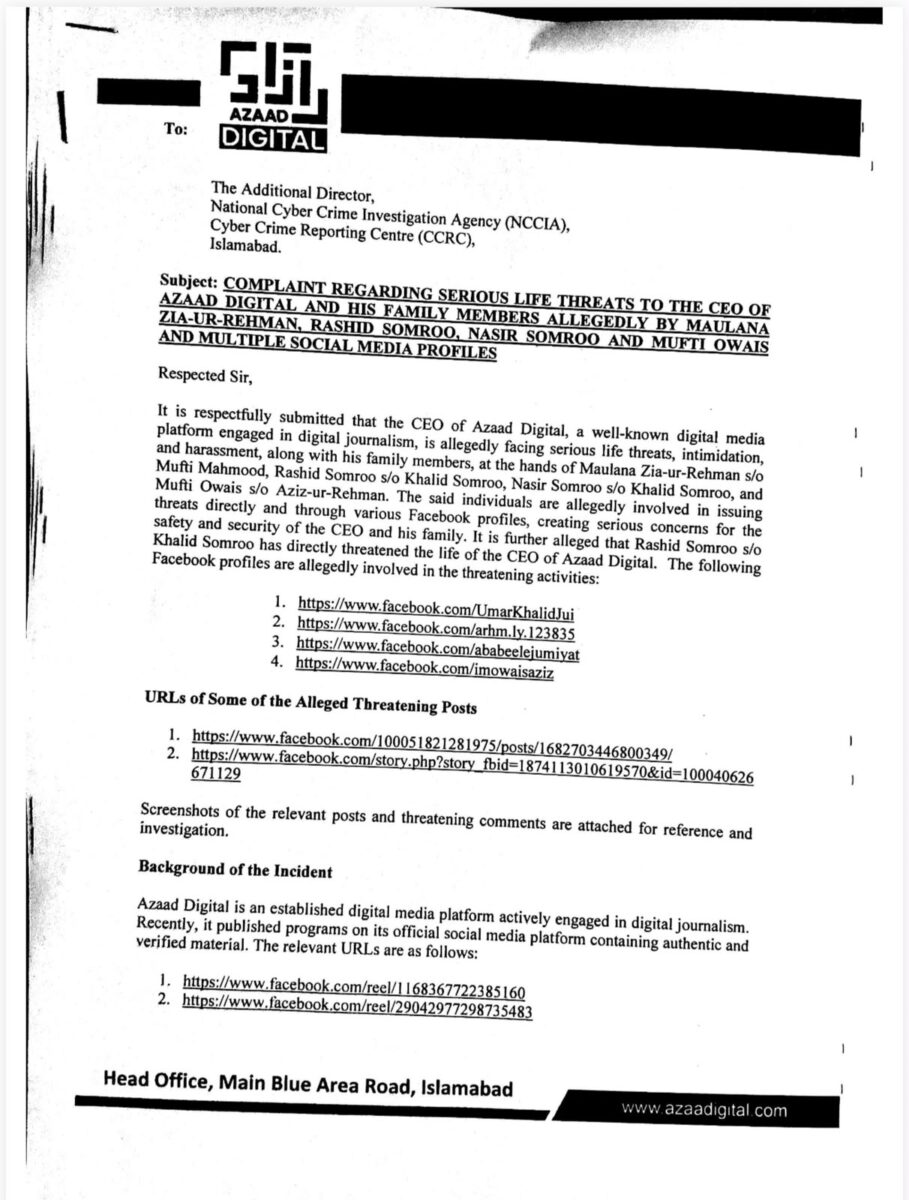
The latest case of such a situation involves Azad Digital, as Adeel Umar, Desk In-charge at Azad Digital, has requested protection and legal action from the NCCIA on behalf of the CEO of the online news platform.
The complaint accuses Zia-ur-Rehman and others of issuing direct threats and engaging in harassment. According to the complaint, Rashid Soomro allegedly issued death threats against the CEO of Azad Digital. The allegations include the posting of threatening content and comments through various Facebook accounts. Four Facebook profiles have been linked to these threatening activities in the complaint.
The CEO and his family began facing threats following the broadcast of programmes by Azad Digital. Screenshots and web links to the threatening posts and comments have been attached to the complaint filed by Azad Digital. A request has been made to the NCCIA to identify the individuals involved in issuing the threats, as well as the owners and operators of the social media accounts.
The complaint requests strict legal action against all responsible parties under the relevant laws. Describing the matter as extremely serious and urgent, Azad Digital has requested an immediate investigation.
It is pertinent to mention that the same kind of threats from JUI-F were also received by an unguarded and upright journalist, Aqeel Yousafzai. Hailing from Swat, Aqeel is a well-educated journalist. He is the author of several academic research papers and books. One of his books, War Theatre, is among the best books on regional security dynamics and challenges. The book details militancy, regional conflict and political instability in Pakistan and the wider region, particularly focusing on the resurgence of militant groups and cross-border attacks. He is an Afghan affairs expert whose work is characterised by investigative reporting, historical analysis and first-hand observations, making him a key voice in understanding the complexities of Pakistan’s security landscape.
In one of his interviews, Aqeel shared some facts that triggered a hate campaign against him by JUI-F because he revealed that Pakistan’s security agencies had credible information that, during a meeting between JUI-F chief Fazlur Rehman and Mullah Haibatullah, the Ameer of the Afghan Taliban, Fazlur Rehman told Mullah Haibatullah that he (Fazlur Rehman) cared more about Afghan interests than those of Pakistan.
Is it acceptable to threaten journalists and their families in response to political dissent or journalistic activities? The NCCIA has been requested to ensure the safety of the CEO of Azad Digital and his family and conduct a transparent investigation into the complaint.
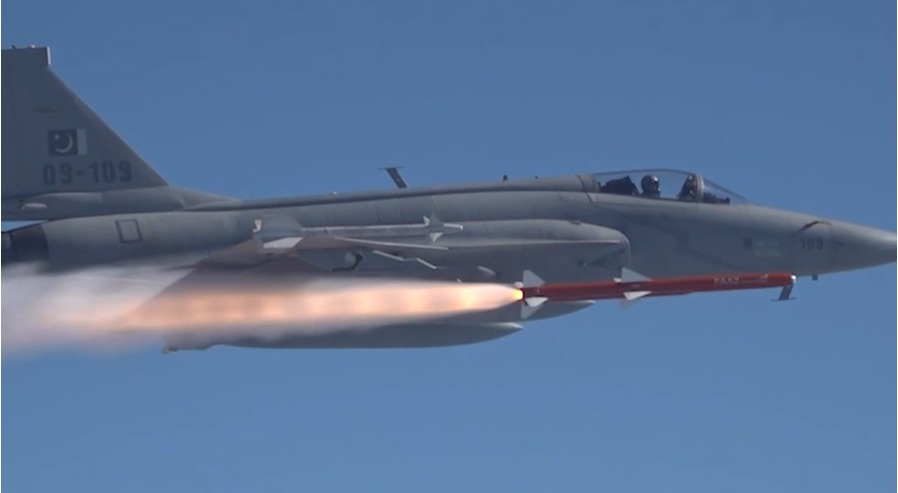
Rawalpindi, 3 November, 2026: Pakistan has conducted successful flight test of first indigenously developed Fa’az air- to-air missile, marking another significant milestone in the advancement of national aerospace and defense capabilities. Equipped with state-of-the-art terminal guidance system, it can engage enemy aerial targets at longer ranges.
Fa’az will significantly enhance operational flexibility of Pakistan Air Force, further strengthening the country’s overall defense posture. The successful flight test underscores the technical maturity, innovation and self reliance achieved by Pakistan’s defense industry.
Pakistan conducted successful flight test of first indigenously developed Faaz air- to-air missile
The launch was witnessed by senior officers of the Pakistan Armed Forces, along with distinguished scientists and engineers who played a pivotal role in the development of this advanced weapon system. The president, Prime Minister of Pakistan, COAS & CDF and Services Chiefs have congratulated the scientists and engineers on this remarkable achievement.
The Houthi-Saudi conflict has escalated sharply after the informal ceasefire that followed the 2022 UN-brokered truce broke down. In July 2026, the Houthis declared a “maritime embargo” and naval blockade on Saudi-linked vessels in the Bab al-Mandab Strait, citing a Saudi siege on Houthi-controlled areas and an airstrike on Sanaa International Airport that they blamed on Riyadh. The roots run deeper. The killing of Hussein Badreddin al-Houthi by Yemeni forces in 2004 gave the movement a new turn, and a decade later the Houthis took over Sanaa.
In 2015, Mohammed bin Salman launched Operation Decisive Storm, and the years of war that followed pushed Yemen to the edge of famine. The conflict is no longer only Yemeni. It is now a front in the wider US-Israeli war on Iran, the Houthis main backer and has turned a local insurgency into a threat to Gulf energy routes. That puts Pakistan in a delicate position: bound to Riyadh by a defense pact, yet already acting as a mediator between Washington and Tehran, and a country that chose neutrality when Saudi Arabia launched its air campaign in Yemen in 2015.
Pakistan has pledged to stand shoulder to shoulder with Riyadh twice, in September 2025 and again in August 2026, yet it has not sent a single reported strike into Yemen. After a deadly attack on Riyadh’s international airport, the Foreign Office reaffirmed its “firm and unshakeable” commitment to Saudi security under the Makkah Joint Defense Agreement. Actions back the words. Reuters, citing a Pakistani official, reported that Pakistan has deployed between 30,000 and 40,000 troops to help defend Saudi land borders and intercept drones and missiles, while the DG ISPR, Lt Gen Ahmed Sharif Chaudhry, has confirmed that Pakistani forces are on the ground in multiple capacities. Yet the Foreign Office has said no military response to the Houthis is under discussion for now and that Pakistan will act “when time comes”. Islamabad is backing Riyadh in words and deployments while avoiding a Yemen war. This is deliberate strategy, not hesitation.
The Makkah pact’s first meeting with Tehran showed where Pakistan’s value lies. On October 26, Saudi Defence Minister Prince Khalid bin Salman, Field Marshal Asim Munir and Turkish intelligence chief Ibrahim Kalin met Iranian President Masoud Pezeshkian, the first high-level contact between Iran and the pact’s members since the war began. Riyadh described the visit as an attempt to open channels and head off renewed escalation, and as support for mediation led by Qatar and Pakistan.
It may be remembered delegations from Turkiye, Saudi Arabia, Pakistan, and Iran attended a quadripartite meeting hosted by Secretary-General of Iran’s Supreme National Security Council Mohsen Rezaee in Tehran, Iran on October 26, 2026 that was attended by Iranian President Masoud Pezeshkian, Iranian Foreign Minister Abbas Araghchi, Turkish MIT Head Ibrahim Kalın, Saudi Arabian Defense Minister Prince Khalid bin Salman, and Pakistani Chief of Army Staff Asim Munir.
For Islamabad, the meeting suggests that a defence partnership with Saudi Arabia need not close the door on Iran, and that it is one of the few capitals that can sit at both tables. The four sides agreed to keep talking, yet the Iran-backed Houthis struck Saudi Arabia again soon afterwards. Whether diplomacy can restrain that war is now the question.
The recent meeting in Iran involving Saudi and Pakistani leadership has opened a channel for dialogue. Nevertheless, renewed Houthi attacks on Saudi Arabia serve as a reminder of how fragile these diplomatic efforts remain. For Pakistan, the challenge is not only to uphold its defence commitments to Riyadh but also to preserve its diplomatic ties with Tehran as tensions across the region continue to rise. The real test for Islamabad now is whether it can translate its position between competing regional interests into meaningful progress towards stability.